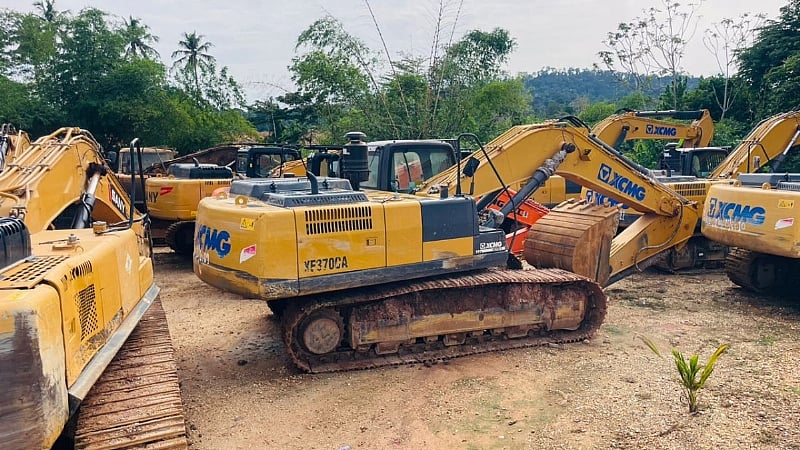
The Ghanaian government, under the leadership of the Ministry of Lands and Natural Resources, has launched a major offensive against illegal mining, targeting the machinery that fuels this destructive activity. Minister Emmanuel Armah-Kofi Buah announced the impoundment of 1,200 excavators at the Tema Port, a critical entry point into the country. This drastic measure signals a heightened commitment to combatting illegal mining, locally known as “galamsey,” which has ravaged Ghana’s environment and water resources. The excavators are currently undergoing a validation process before any decisions are made regarding their release or further action. This action aims to exert greater control over the influx and deployment of heavy machinery commonly used in illegal mining operations, preventing their easy access to ecologically sensitive areas.
The impoundment of the excavators is not a solitary action but forms a crucial component of a wider collaborative effort involving various government agencies. The Ministry of Lands and Natural Resources is working in conjunction with the Ministry of Transport, the Ghana Revenue Authority (Customs Division), and the Ghana Ports and Harbours Authority. This inter-agency collaboration aims to tighten security measures at all major entry points, effectively cutting off the supply of equipment used in illegal mining. By pooling resources and expertise, these agencies seek to close loopholes that have historically allowed the unregulated importation and movement of excavators, bolstering the government’s resolve to tackle the galamsey menace.
The newly established National Anti-Illegal Mining Operations Secretariat (NAIMOS) plays a pivotal role in coordinating these multifaceted efforts. Serving as the operational hub, NAIMOS integrates security, environmental, and legal approaches into a comprehensive anti-illegal mining strategy. This centralized command center streamlines communications and operations, ensuring a more effective and synchronized response to illegal mining activities across the country. The secretariat’s establishment underscores the government’s commitment to adopting a more holistic and coordinated strategy in addressing the complex challenges posed by galamsey.
The seizure of the excavators marks a significant escalation in the government’s campaign to dismantle illegal mining networks. This decisive action aims to cripple the operational capacity of illegal miners by restricting access to the heavy machinery essential for their operations. Excavators are instrumental in large-scale illegal mining, enabling rapid and extensive land clearing, which leads to deforestation, habitat destruction, and water pollution. By intercepting these machines at the port of entry, the government aims to disrupt the supply chain and curb the expansion of illegal mining activities.
This operation also emphasizes the government’s commitment to protecting Ghana’s fragile ecosystems. Illegal mining has devastating consequences for the environment, including widespread deforestation, soil erosion, and water contamination with heavy metals like mercury. These practices not only degrade the natural landscape but also pose serious health risks to communities dependent on these resources. The seizure of the excavators is a clear signal that the government intends to prioritize environmental protection and hold perpetrators of environmental damage accountable.
The government views the fight against galamsey as a multifaceted challenge requiring a robust and coordinated response. The impoundment of the excavators is just one element of a broader strategy that includes strengthening regulatory frameworks, enhancing enforcement capabilities, and promoting sustainable alternatives to illegal mining. The success of these efforts hinges on sustained inter-agency collaboration, effective implementation of regulations, and ongoing public awareness campaigns to foster community participation in protecting Ghana’s natural resources. This resolute action signifies a renewed determination to combat illegal mining and safeguard the environment for future generations.