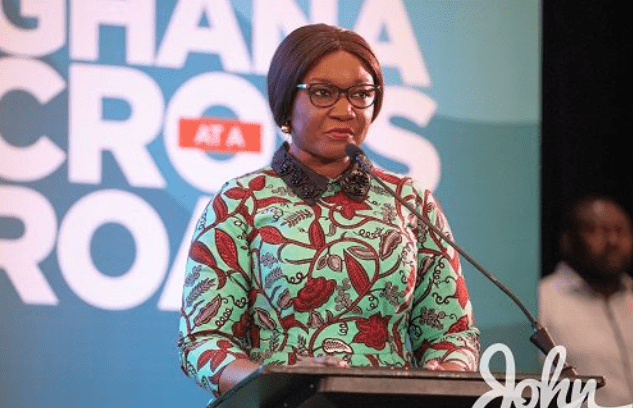
Joyce Bawah Mogtari, the spokesperson for John Dramani Mahama’s 2024 campaign, has articulated a vision that underscores the inclusivity and breadth of the former President’s initiatives as Ghana approaches its general elections. In a social media update on October 18, Mogtari pointed out that Mahama’s policies are designed to uplift all sections of society, with a particular emphasis on women and small to medium enterprises (SMEs). These groups are recognized as vital components of Ghana’s economic landscape. Through her statements, Mogtari portrays Mahama as a leader fundamentally dedicated to enhancing the quality of life for every Ghanaian, irrespective of their social or economic background. Her remarks highlight Mahama’s sincerity, knowledge, and unwavering commitment to serving the people of Ghana.
A cornerstone of Mahama’s proposed policies, according to Mogtari, is the Enhanced Markets Policy. This initiative aims to redevelop and modernize markets across Ghana, providing upgraded facilities that would improve the working conditions for traders, market women, and their clientele. Mogtari emphasizes the necessity of creating a “cleaner, safer, and more hygienic environment” for market-goers, addressing significant concerns that have historically impacted the informal sector, which is integral to the economic framework of Ghana. By focusing on these improvements, the policy is designed to stimulate economic growth in a sector that employs millions of Ghanaians.
Another vital element of Mahama’s campaign is the empowerment of women, an issue that has consistently been a focus during his administration. Mogtari indicates that Mahama’s leadership will foster initiatives such as the Women’s Development Bank, which is targeted specifically at promoting and supporting women-led and women-owned businesses. This initiative exemplifies Mahama’s broader approach of prioritizing gender equality and women’s economic empowerment. Mogtari articulates that the National Democratic Congress (NDC), under Mahama’s guidance, has focused on a developmental model that emphasizes growth from the grassroots level, recognizing the instrumental role women play not only in economic empowerment but also in job creation.
Mogtari’s insights into Mahama’s policy framework reflect a strategic orientation towards inclusivity. By emphasizing the significance of SMEs and women in the economic development narrative, Mahama’s campaign appears aimed at addressing systemic inequalities that have persisted in Ghanaian society. The acknowledgment of women and small businesses as catalysts for economic growth aligns with contemporary global narratives surrounding development, which increasingly prioritize the role of marginalized communities in driving sustainable progress.
Furthermore, the emphasis on modernization within the informal market sector illustrates a recognition of the pivotal role that these markets play in everyday life. Modernizing facilities not only aims to boost productivity but also enhances the overall health and safety of vendors and customers alike. By directing attention and resources towards this segment of the economy, Mahama’s agenda reflects an understanding of the practical realities faced by everyday Ghanaians, thereby fostering a sense of trust and relatability among the electorate.
In conclusion, Joyce Bawah Mogtari’s assertions about John Mahama’s campaign illustrate a vision of governance that is deeply rooted in principles of inclusivity and empowerment. Mahama’s commitment to uplifting women and supporting SMEs through specific policies like the Enhanced Markets Policy and the Women’s Development Bank showcases a strategic approach to economic development that promises to address long-standing inequalities in Ghanaian society. As the elections approach, this framework not only seeks to galvanize support among voters but also lays out a blueprint for a more equitable future for all Ghanaians.