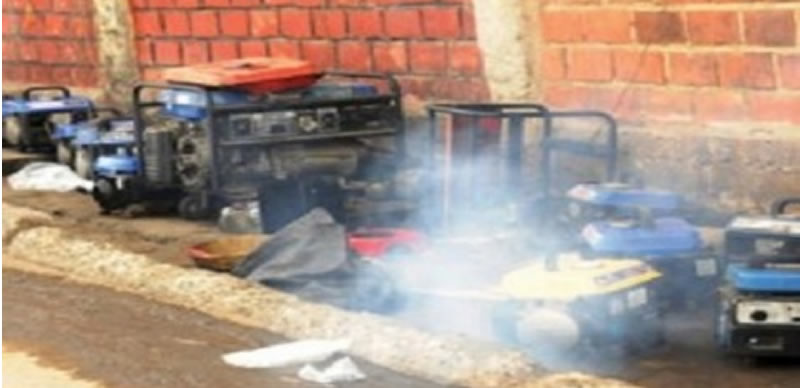
Nigeria’s persistent struggle with unreliable power supply continues to impose a significant financial burden on its government, as evidenced by the substantial budgetary allocations for generator fuel costs across various Ministries, Departments, and Agencies (MDAs). The proposed 2025 budget reveals a staggering N40.81 billion earmarked for petrol and diesel to power generators in 593 MDAs, a clear indicator of the nation’s ongoing dependence on alternative power sources and the inadequacy of the national grid. This substantial expenditure underscores the deep-rooted challenges within the power sector, hindering economic progress and diverting crucial funds from other essential services. The frequent grid collapses experienced in 2024, totaling 12 incidents, further highlight the fragility of the power infrastructure and the urgent need for comprehensive reforms.
The debilitating impact of unreliable power supply extends beyond government agencies, crippling businesses and impeding economic growth. The Manufacturers Association of Nigeria (MAN) reported a 7.69% increase in spending on alternative energy sources in the first half of 2024, reaching a staggering N238.31 billion. This escalating cost, driven by higher fuel prices and the necessity for self-generation, underscores the heavy toll unstable power takes on businesses. Despite claims of improvement in electricity supply by the Minister of Power, the reality on the ground paints a different picture, with small businesses and manufacturers continuing to bear the brunt of an inadequate power infrastructure. The ripple effects of this power deficit are felt throughout the economy, hindering productivity, increasing operational costs, and stifling competitiveness.
A closer examination of the 2025 budget reveals a concerning surge in proposed spending on generator fuel across various MDAs. The Nigerian Army leads the pack with a proposed allocation of N3.897 billion for generator fuel, followed by the State House at N1.999 billion, and the Economic and Financial Crimes Commission (EFCC) at N1.195 billion. These substantial allocations reflect the pervasive nature of the power problem and the extent to which government operations rely on generators. Other notable allocations include N250 million for Ministry of Defence generator maintenance, N399.58 million for the Nigerian Defence Academy, and N567.97 million for the Ministry of Foreign Affairs. These figures collectively paint a picture of widespread reliance on generators across government entities.
The budget also highlights significant allocations for generator fuel in other critical sectors. The National Obstetric Fistula Centre has budgeted N1.42 billion for fuel, a substantial sum that raises questions about the reliability of power supply to such a critical healthcare facility. Media organizations, including the Ministry of Information and National Orientation, Federal Radio Corporation of Nigeria, and Voice of Nigeria, have also allocated considerable funds for generator fuel, reflecting the challenges faced by the media industry in ensuring continuous operations. Similarly, security agencies such as the Nigerian Security and Civil Defence Corps, the Directorate of State Services, and the National Intelligence Agency have allocated substantial amounts, indicating the critical need for uninterrupted power supply for national security operations.
Further analysis reveals significant allocations within other MDAs, showcasing the widespread nature of the generator fuel expenditure. The Nigerian Correctional Services, Office of the Head of the Civil Service of the Federation, Auditor-General for the Federation, and Police Formations and Commands have all budgeted substantial sums for generator fuel, reflecting the pervasive reliance on alternative power sources across various government functions. These allocations, while necessary in the current context, highlight the urgent need for sustainable solutions to address the power deficit. The continued dependence on generators represents a significant drain on public resources that could be better utilized for other essential services.
In response to the escalating energy costs and the unsustainable nature of relying on generators, the House of Representatives Committee on Renewable Energy has urged the government to adopt renewable energy solutions across MDAs. This recommendation underscores the need for a long-term strategy to address the power crisis and reduce the financial burden associated with generator fuel. Transitioning to renewable energy sources offers a sustainable path towards energy independence, reduces reliance on fossil fuels, and mitigates the environmental impact associated with generator emissions. Implementing renewable energy solutions in government facilities could serve as a catalyst for wider adoption across the country, promoting sustainable development and reducing the nation’s carbon footprint.