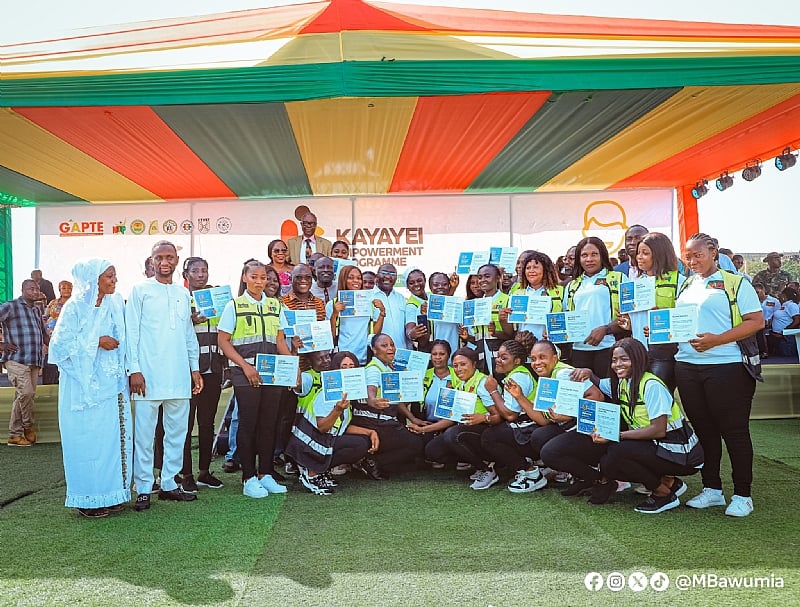
Vice President Dr. Mahamudu Bawumia, the New Patriotic Party (NPP) candidate for the upcoming elections, recently shared the impactful outcomes of the Kayayei Empowerment Programme (KEP) during a Facebook post on November 27. This initiative aims at enhancing the livelihoods of head porters, commonly referred to as kayayeis, by providing them with essential skills through training programs. Dr. Bawumia revealed that 5,000 kayayeis have already benefitted from this empowering scheme, designed under the National Entrepreneurship and Innovation Programme (NEIP). He noted that among the recent successful participants, 22 former kayayeis received certificates after qualifying as bus drivers, marking a significant step towards altering the narrative around the capabilities and potential of these individuals.
Dr. Bawumia highlighted the diverse skill sets that beneficiaries of KEP have developed, ranging from laundry products and bakery production to beauty services such as manicures and makeup artistry. This comprehensive approach not only empowers the kayayeis economically but also equips them with practical skills that can lead to sustainable livelihoods. By focusing on various modules, the program aims to provide personalized opportunities that align with the interests and aspirations of the participants. Such emphasis on skill development stands in stark contrast to past initiatives, particularly those from the previous government led by former President Mahama, which Dr. Bawumia suggested merely provided temporary solutions without addressing the core issues affecting the kayayeis.
The Vice President expressed his pride in the remarkable transformations witnessed among the kayayeis, stressing that these women possess the same potential and intellect as any other group in society. He articulated a vision rooted in empowerment, asserting that the programme embodies a shift towards impactful and long-lasting solutions for economic hardship, rather than superficial aid. By sharing the inspiring stories of beneficiaries, he underscored the importance of recognizing and nurturing the capabilities of individuals often marginalized due to their socio-economic circumstances. This transformation narrative is aimed not only at uplifting the kayayeis but also at instilling a broader sense of possibility and hope within communities across Ghana.
Dr. Bawumia’s commitment to expanding such programs resonates with broader developmental goals, indicating a strategic approach towards fostering economic independence among the youth. He affirmed his intention to grow these initiatives significantly if elected as President in 2024, emphasizing a forward-looking agenda that prioritizes job creation and entrepreneurial opportunities. By promoting economic independence, he aims to address systemic issues while simultaneously empowering a generation that can drive Ghana’s socio-economic progress. This perspective aligns with the government’s overarching objectives of reducing unemployment rates and enhancing the quality of life for various populations.
In presenting this narrative, Dr. Bawumia not only aims to showcase the successful implementation of KEP but also to position himself as a candidate with a genuine understanding of the challenges faced by the vulnerable population of kayayeis. His remarks suggest a transformative vision rooted in hope and empowerment, countering what he describes as the ineffective strategies of his predecessors. By advocating for a sustainable approach to economic development, he seeks to build momentum for the upcoming elections, appealing to voters with a message of change that is grounded in tangible successes.
In conclusion, the KEP exemplifies a model of integrated social empowerment that fosters individual agency and economic advancement among disadvantaged groups. Dr. Bawumia’s focus on skills training, personal development, and economic independence paves the way for a more inclusive future, aiming to alter the status quo experienced by the kayayeis. His advocacy for expanding these initiatives underscores a commitment to transformative governance that prioritizes the welfare of Ghana’s youth. It remains to be seen how this approach will resonate with the electorate, but the results thus far shed light on a path toward economic empowerment that could redefine lives and communities in Ghana.