









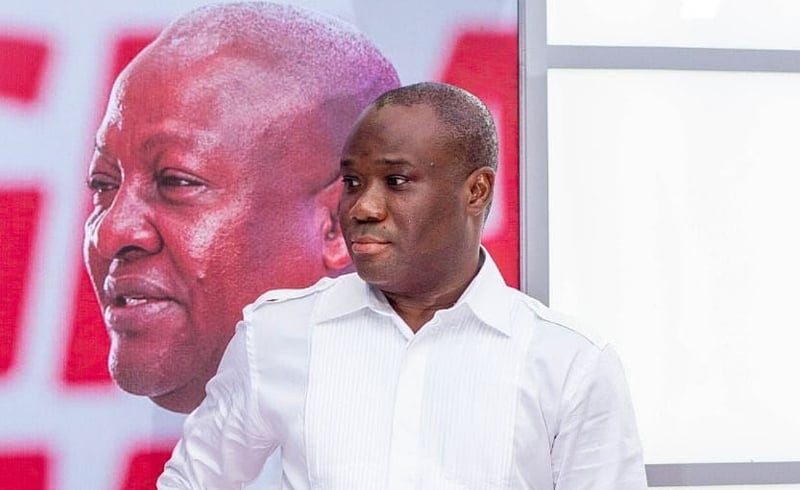
Felix Kwakye Ofosu, a prominent voice within the National Democratic Congress (NDC), has launched a critique against the preceding New Patriotic Party (NPP) administration, centering his argument on the alleged bloated size of the government. Ofosu contends that the NPP government, particularly within the Office of the President, harbored an excessive number of political appointees, a practice he deems fiscally irresponsible and promises will be rectified under the newly elected NDC government led by President John Dramani Mahama. He underscores the financial burden of such a large administrative structure, asserting that it contributed significantly to unnecessary government spending. This critique forms a key pillar of the NDC’s argument for a more streamlined and economically prudent approach to governance.
Ofosu’s core allegation revolves around the sheer number of political appointees serving under the previous administration, claiming that they numbered in the hundreds within the Office of the President alone. He challenges the public to verify this information, emphasizing the scale of what he perceives as administrative excess. This excessive staffing, he argues, directly translates into inflated government expenditure, diverting resources that could be better utilized for developmental projects and social welfare programs. He contrasts this with the promised approach of the Mahama administration, pledging a significantly reduced number of presidential staffers and aides, assuring the public that the number will be less than half of what was observed under the NPP. This commitment to a leaner government structure serves as a cornerstone of the NDC’s strategy to regain public trust and demonstrate fiscal responsibility.
Further solidifying his argument, Ofosu refutes counter-claims suggesting that the Mahama administration has itself secretly expanded the ministerial cabinet. He categorically states that the number of appointed ministers stands at 56, directly challenging the veracity of opposing claims. He points to the involvement of Ofoase Ayirebi MP, Kojo Oppong Nkrumah in the vetting process as evidence of transparency, suggesting that Nkrumah, as a member of the opposition, would be aware of any discrepancies in the stated number. This rebuttal serves to preemptively address potential criticisms and reinforce the NDC’s narrative of responsible governance.
Ofosu then delves into the economic rationale behind maintaining a smaller government structure. He illustrates the direct correlation between the number of ministerial appointments and government expenditure, using the example of official vehicles. He highlights the significant cost associated with providing luxury vehicles, such as Land Cruisers, to a large number of ministers, arguing that reducing the number of ministers directly translates into savings on these expenditures. This practical example provides a tangible illustration of how a leaner government can lead to cost savings, a message aimed at resonating with the public’s concerns about prudent financial management.
The overarching message conveyed by Ofosu is the Mahama administration’s commitment to fiscal prudence and responsible governance. He contrasts the alleged excesses of the previous NPP administration with the promised austerity of the NDC, emphasizing the commitment to minimizing unnecessary expenditure and prioritizing development. This narrative seeks to position the NDC as the fiscally responsible choice, capable of steering the nation towards economic stability and sustainable growth.
In essence, Ofosu’s critique of the previous administration’s size serves as a platform to showcase the NDC’s commitment to a different approach. By highlighting the alleged extravagance of the NPP’s staffing practices, he sets the stage for the Mahama administration to demonstrate its commitment to a more streamlined and cost-effective government. This commitment to fiscal responsibility, coupled with the promise of prioritizing development over unnecessary expenses, forms a central theme in the NDC’s strategy to build public confidence and deliver on its promises of economic progress.









