









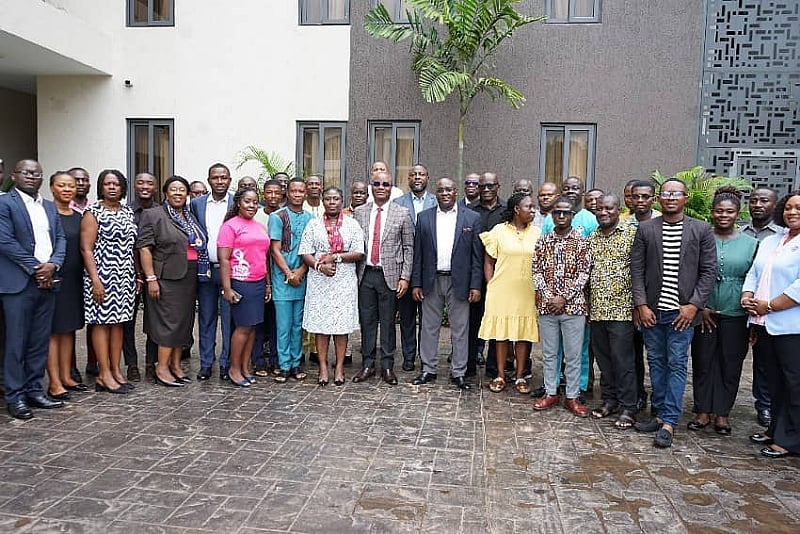
The recent media capacity-building workshop on financial and business reporting, organized by the Bank of Ghana (BoG), was a significant event held in Kumasi from October 17 to 18, 2024. This two-day event aimed to enhance journalists’ comprehension of crucial economic issues, including monetary policy decisions and their implications for the broader economy. As part of its mission to improve the media’s capacity to report accurately on important economic matters, the workshop provided an array of sessions covering topics such as Monetary Policy Practice in Ghana, Understanding Inflation Dynamics, Developments in Foreign Exchange, and Macroeconomic Analysis. Additionally, there was a focus on the significance of macroeconomic indicators and how to interpret the Monetary Policy Committee (MPC) Data Pack, along with discussions around the concept of the Next of Kin.
BoG officials took the opportunity to explain complex economic terminology during the workshop, thus enabling journalists to navigate and interpret the intricacies involved in the nation’s monetary policies more effectively. The training sought to empower the media with a robust understanding of the mechanisms that drive economic policies while ensuring accurate communication to the public. In his opening remarks, Bernard Otabil, Director of Communications at the Bank of Ghana, underscored the importance of these workshops in empowering journalists to relay accurate and insightful information regarding the operations of the BoG, which plays a crucial role in Ghana’s economic development.
Otabil pointed out that by enhancing journalists’ understanding of BoG operations, they would be well-positioned to convey the institution’s work effectively to the broader public, thereby actively contributing to the nation’s developmental efforts. He further emphasized the need for journalists to engage with the BoG whenever they encounter confusing or unclear economic information, encouraging them to fact-check before publication to help prevent the dissemination of misinformation. This recommendation highlights the collaborative relationship that can be fostered between the media and the central bank to ensure transparency and accuracy in economic reporting.
The workshop received praise from various stakeholders, notably from Kingsley E. Hope, the Ashanti Regional President of the Ghana Journalists Association (GJA). Hope commended the Bank of Ghana for its initiative to organize the educational workshop, which he described as a necessary step towards improving the financial reporting skills of journalists. He highlighted the importance of such programs in deepening the understanding of monetary practices and grasping the broader economic landscape of Ghana. He also acknowledged the value of innovative storytelling techniques, which journalists could employ to better engage their audiences while providing accurate information.
Hope urged the Bank of Ghana to consider making these workshops a regular occurrence, reinforcing the idea that ongoing professional development is essential in the fast-evolving field of financial journalism. By continuously offering training opportunities, the BoG can support journalists in staying abreast of economic trends and developments. This continuous education is critical not only for the individual journalists but also for the media landscape in Ghana as a whole, fostering a more informed public discourse regarding economic issues.
In conclusion, the media capacity-building workshop organized by the Bank of Ghana represents a proactive step towards strengthening the relationship between financial institutions and the media. By equipping journalists with a deeper understanding of economic issues, policies, and reporting techniques, the workshop positions them to better fulfill their role as informed communicators in the economic sphere. The commendable initiative by BoG reflects a commitment to transparency and knowledge sharing that is vital for enhancing the quality of financial reporting in Ghana. As such, the call for more frequent workshops underscores the necessity of ongoing training and collaboration, which can ultimately contribute to a more informed society that is capable of engaging with complex economic realities.









