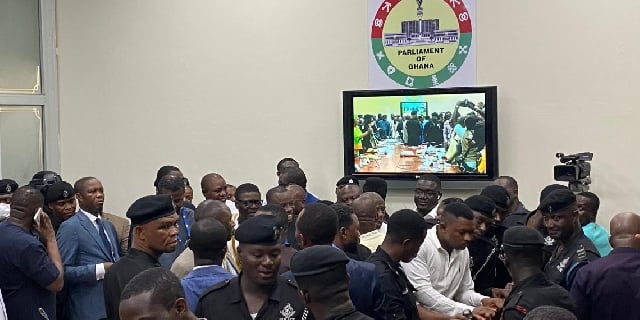
The disruptive events that marred the parliamentary vetting process of ministerial nominees became the subject of a dedicated investigation by a Special Committee formed by the Speaker of Parliament, Alban Bagbin. The chaos, marked by heated confrontations among Members of Parliament (MPs), ultimately led to the suspension of four lawmakers and the initiation of a formal inquiry to unravel the circumstances surrounding the disturbances. Among those who appeared before the committee was Samuel Okudzeto Ablakwa, Minister for Foreign Affairs nominee, who offered a significant perspective on the events, asserting that he was the primary target of the orchestrated disruptions.
Ablakwa’s testimony painted a picture of deliberate targeting, alleging that the sequence of events during the vetting process was not random, but rather a calculated scheme to obstruct his confirmation. He argued that the timing and nature of the disruptions pointed directly to an attempt to derail his vetting process specifically. This claim introduces a new layer of complexity to the investigation, shifting the focus from a general assessment of the disturbances to a deeper examination of potential political motivations and targeted actions against a specific nominee.
The Special Committee, chaired by Ho West MP Emmanuel Bedzrah, bears the responsibility of untangling the complexities of the events. Their mandate includes identifying the individuals or groups responsible for instigating the disruptions and recommending appropriate actions to address the misconduct. Ablakwa’s testimony adds a significant dimension to their investigation, necessitating a thorough examination of potential political machinations behind the disorder, beyond simply addressing the immediate acts of disruption.
The implications of Ablakwa’s testimony are far-reaching. If his claims hold true, they suggest a deeper issue of political maneuvering within the parliamentary processes, potentially utilizing disruptive tactics to influence the outcome of ministerial confirmations. This raises concerns about the integrity of the vetting process and the potential for its manipulation for political gain. The committee’s investigation therefore takes on greater significance, as its findings could expose potential abuses of power and contribute to ensuring the fairness and transparency of future nomination processes.
The investigation faces the challenging task of meticulously reconstructing the events of the disrupted vetting process. This involves collecting testimonies from various witnesses, reviewing available documentation and recordings, and analyzing the sequence of events to determine the veracity of Ablakwa’s claims. The committee must also consider the wider political context within which the disruptions occurred, assessing potential motivations and identifying any individuals or groups who might have orchestrated the chaos.
The outcome of the investigation will have significant repercussions for the individuals involved and for the broader political landscape. If the committee confirms Ablakwa’s allegations, it could lead to disciplinary actions against those responsible for orchestrating the disruption and potentially trigger broader reforms to safeguard the integrity of the ministerial vetting process. The investigation’s findings will contribute to a deeper understanding of the dynamics at play within the Parliament and enhance public trust in the democratic processes of the nation. Moreover, it sets a precedent for addressing future disruptions and upholding the decorum and integrity of parliamentary proceedings.