









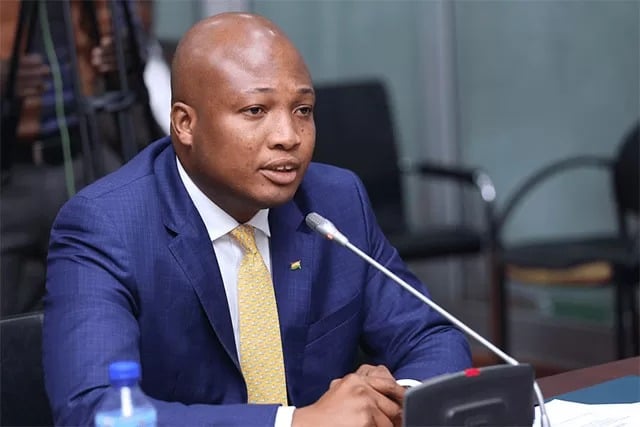
The establishment of Operation Recover All Loot (ORAL), a committee formed by former President John Mahama to investigate and retrieve allegedly stolen state assets, has sparked a contentious debate in Ghana’s political landscape. Samuel Okudzeto Ablakwa, the chairman of ORAL and a Member of Parliament, has vehemently defended the initiative against criticism, particularly from those within the opposing New Patriotic Party (NPP). He argues that the apprehension expressed by certain NPP members suggests a potential fear of being exposed for illicit activities carried out during their time in office. This stance positions ORAL as a necessary mechanism to hold public officials accountable and reclaim misappropriated resources, while critics view it as a politically motivated tool with dubious constitutional grounding.
The core of the controversy revolves around the perceived legitimacy and necessity of ORAL. Ablakwa insists that the committee’s objective is solely to recover stolen public resources, emphasizing that individuals with nothing to hide should not be concerned. He points to the support received from some NPP members, such as Obiri Boahen and Dr. Nyaho Tamakloe, as evidence of the initiative’s broad appeal and non-partisan nature. He further questions the motives behind the strong opposition from individuals like Alexander Afenyo-Markin, the former Majority Leader, implying that their anxieties stem from a fear of exposure. This narrative frames ORAL as a crucial check on power and a mechanism to ensure transparency and accountability within the government.
Conversely, critics like Afenyo-Markin argue that ORAL is an unnecessary duplication of existing anti-corruption institutions and a veiled attempt at political harassment. They contend that Ghana already has established bodies tasked with investigating and prosecuting corruption, rendering ORAL redundant. Moreover, they raise concerns about the committee’s potential to destabilize governance by creating an atmosphere of fear and undermining the authority of these established institutions. This perspective paints ORAL as a politically driven instrument designed to target opponents and disrupt the smooth functioning of government, rather than a genuine effort to combat corruption.
The debate surrounding ORAL also highlights the broader issue of trust and accountability within Ghana’s political system. Ablakwa’s assertion that only those with something to hide should fear the committee’s work implies a deep-seated suspicion of corruption within the government. This sentiment resonates with public concerns about the misuse of public funds and the lack of consequences for those involved in such activities. On the other hand, the criticism of ORAL as a politically motivated witch-hunt reflects a counter-narrative of distrust, suggesting that accusations of corruption are often used as political weapons rather than genuine attempts to address wrongdoing.
The clashing perspectives on ORAL underscore the complex interplay between politics and accountability in Ghana. The initiative’s proponents argue that it is a necessary tool to address systemic corruption and reclaim stolen resources, while its detractors view it as a politically charged instrument that undermines existing institutions and threatens due process. This ongoing debate raises fundamental questions about the effectiveness of current anti-corruption mechanisms and the need for stronger measures to ensure transparency and accountability within the government.
Ultimately, the success or failure of ORAL will depend on its ability to demonstrate its impartiality and effectiveness in recovering stolen assets. If the committee can successfully expose and prosecute cases of corruption without resorting to politically motivated targeting, it may gain broader public support and contribute to strengthening Ghana’s anti-corruption framework. However, if it is perceived as a tool for political vendettas, it risks further eroding public trust and exacerbating political divisions. The ongoing controversy surrounding ORAL serves as a crucial reminder of the challenges facing Ghana in its ongoing fight against corruption and the need for a balanced approach that respects due process while effectively addressing this critical issue.









