









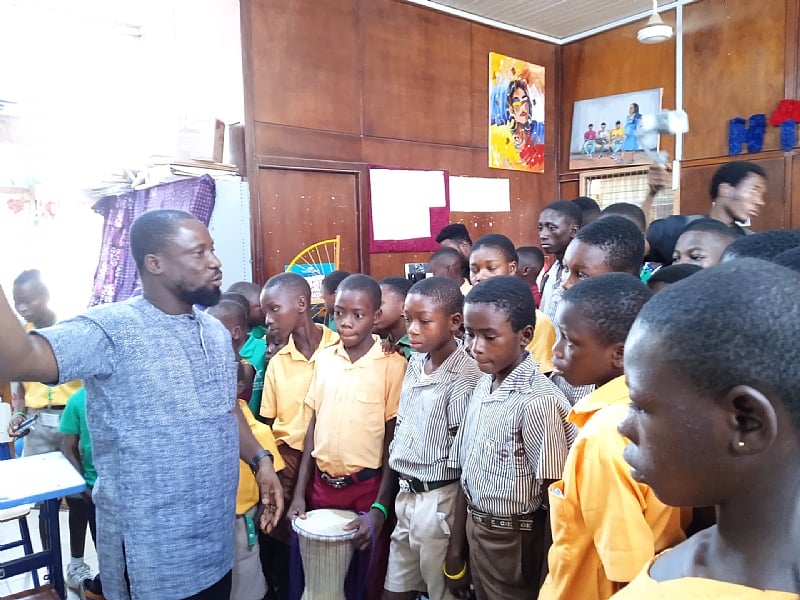
A group of 72 children from several villages in the Adaklu district of Ghana’s Volta Region embarked on an enriching educational tour to the Industrial Art Department of Ho Technical University. Organized by Friends of Adaklu (FOA), a local NGO, the tour aimed to expose the children to a wide array of career possibilities within the arts and inspire them to consider vocational paths that foster creativity and self-reliance. The children explored the five sections of the department: textiles, ceramics, painting, sculpture, and graphic design, receiving firsthand demonstrations of the creative processes involved in each discipline. Lecturers and students engaged the children, explaining the techniques and meanings behind the diverse artworks on display.
The Head of Department, Dr. Richard Selase Gbadegbe, utilized the artwork to convey important life lessons, highlighting pieces that depicted the negative consequences of drug abuse and teenage pregnancy. He encouraged the children to prioritize their education and avoid detrimental behaviors that could hinder their future success. This approach underscored the broader educational objective of the tour, which extended beyond technical skills to encompass valuable life lessons and moral guidance. The interactive nature of the tour allowed the children to ask questions, fostering a deeper understanding of the artistic process and the potential careers available in the creative industries.
Robert Tornu, Programs and Policy Advisor at FOA, emphasized the organization’s commitment to empowering the children with skills that promote self-employment and sustainable development. He encouraged them to identify local resources and consider how they could be utilized for responsible production, echoing the principles of Sustainable Development Goal 12. This focus on responsible production and consumption aligns with a broader vision of fostering environmentally conscious entrepreneurship within the Adaklu community. The goal is to equip the children with the skills and mindset to create sustainable livelihoods within their own communities, rather than seeking employment elsewhere.
The educational tour is part of a larger initiative designed to enhance the economic and cultural landscape of the Adaklu district, particularly the Nunya Village, FOA’s entrepreneurial hub. By attracting tourists and art enthusiasts to the region, FOA hopes to create new opportunities for collaboration and economic growth. The Nunya Village encourages students to blend traditional culture and creativity with innovation, fostering a unique artistic identity for the region. This initiative seeks to create a sustainable ecosystem where local businesses, such as hotels and shops, benefit from increased tourism, further contributing to the overall economic well-being of the community.
Madan Stella Kudah, Country Director of FOA, advocated for more frequent educational tours to Ho Technical University, emphasizing the importance of exposing young learners to diverse career possibilities. She also extended an invitation to art and craft students and professionals to visit Nunya Village and share their expertise with the budding entrepreneurs, furthering the exchange of knowledge and skills. This collaborative approach seeks to build a bridge between academia and the practical application of artistic skills within a community setting, fostering a dynamic environment for learning and growth.
Charles Vicku, a Ceramics Lecturer at HTU, highlighted the enduring value of skills acquired through the study of industrial art. He stressed that these skills, unlike conventional jobs that can be lost, remain with an individual for life, providing a foundation for self-reliance and entrepreneurship. Vicku emphasized the practical relevance of the five disciplines within industrial art, connecting them to the necessities of daily life, from clothing and shelter to marketing and artistic expression. This perspective reinforces the importance of vocational training and its potential to empower individuals with practical skills that translate into tangible economic opportunities. He further elaborated on the holistic nature of the industrial arts program, emphasizing its potential to equip graduates with the skills necessary for financial independence and meaningful contributions to society. By mastering these skills, graduates can establish their own businesses, create valuable products, and secure their financial futures.









