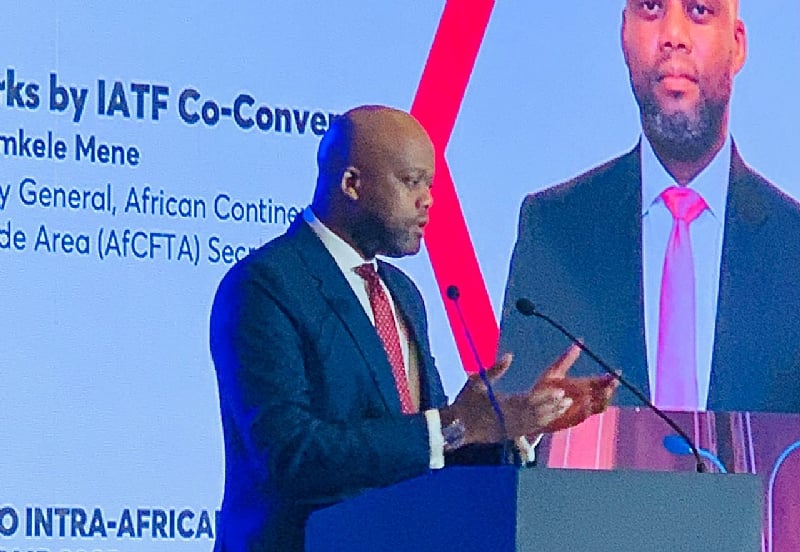
The Urgency of Expanding Africa’s Role in Global Trade: A Call to Action
His Excellency Wamkele Mene, Secretary-General of the African Continental Free Trade Area (AfCFTA), has voiced a critical concern regarding Africa’s persistently low participation in global trade. While acknowledging the positive momentum building around intra-African trade, Mr. Mene emphasized the continent’s stagnant share of global commerce. This stagnation, he argued, represents a missed opportunity for Africa’s economic growth and development, particularly given the continent’s immense potential. Current estimates suggest intra-African trade hovers between 15% and 18%, though this figure likely underrepresents the actual volume due to the significant, yet often unmeasured, contribution of informal cross-border trade, smallholder farmers, and Small and Medium Enterprises (SMEs). Comparing these figures with other regions, such as the European Union with over 70% intra-regional trade and Asia with approximately 60%, highlights the substantial gap Africa needs to bridge to become a more competitive player in the global marketplace.
Mr. Mene’s concern underscores the urgent need for a multi-pronged approach to address the systemic issues hindering Africa’s trade expansion. Simply signing diplomatic agreements, he cautioned, will not suffice. The real challenge lies in dismantling the tangible and intangible barriers that impede the free flow of goods and services within Africa and beyond. These obstacles include tariff and non-tariff barriers, regulatory inconsistencies, and various trade prohibitions that create friction and discourage investment. Without addressing these fundamental issues, the expected benefits of the AfCFTA and other trade initiatives will remain elusive. Investment, both domestic and foreign, requires a conducive environment characterized by predictable regulations, streamlined processes, and reduced barriers. This conducive environment is essential for fostering confidence and incentivizing the kind of economic activity that will drive sustainable growth and development across the continent.
Central to Mr. Mene’s message is the importance of collaboration and shared responsibility among key stakeholders. Governments, development finance institutions, and the private sector must actively work together to prioritize trade-enabling infrastructure and policies. This collaborative effort must extend beyond mere rhetoric and translate into concrete actions that facilitate trade and investment. Investing in critical infrastructure, such as transportation networks, efficient ports, and reliable energy supply, is crucial to reducing logistical bottlenecks and transaction costs. Similarly, harmonizing regulations and simplifying customs procedures are essential steps towards creating a more seamless and integrated African market. The private sector, as the engine of economic growth, needs to be actively engaged in shaping policies and driving innovation to maximize the benefits of the AfCFTA.
The upcoming 2025 Intra-African Trade Fair (IATF), scheduled for September in Algeria, represents a significant opportunity to catalyze progress. Mr. Mene highlighted the IATF as a vital platform for showcasing African businesses, particularly SMEs and young entrepreneurs, enabling them to connect with potential partners, scale their operations, and enhance their competitiveness. This event provides a unique opportunity for businesses across the continent to forge new partnerships, explore investment opportunities, and access broader markets. By bringing together businesses, investors, and policymakers, the IATF serves as a crucial incubator for driving intra-African trade and promoting economic integration. It is also a platform for sharing best practices and fostering innovation in key sectors, which can help to drive productivity and competitiveness across the continent.
The AfCFTA Secretariat, under Mr. Mene’s leadership, is committed to actively supporting these initiatives and providing the necessary tools for African businesses to thrive. Key initiatives, such as the Pan-African Payment and Settlement System and the Africa Trade Gateway, are specifically designed to streamline financial transactions, simplify trade procedures, and reduce the cost of doing business across borders. The Pan-African Payment and Settlement System will facilitate cross-border payments in local currencies, reducing the reliance on foreign currencies and lowering transaction costs. The Africa Trade Gateway will provide a digital platform for connecting African businesses with buyers and suppliers across the continent and globally, facilitating access to information and markets. These tools are crucial for empowering African businesses to participate more actively in global trade and realize their full potential.
Ultimately, increasing Africa’s share in global trade requires a fundamental shift in mindset and a concerted effort to break down the barriers that have historically held the continent back. Mr. Mene’s call to action emphasizes the urgency of this task and the need for collaborative and decisive action. The potential for growth and prosperity is immense, but realizing this potential requires a commitment to creating a conducive environment for trade, investment, and innovation. The AfCFTA provides a solid framework for achieving this goal, but its success hinges on the active participation and unwavering commitment of all stakeholders. By working together, African nations can unlock the continent’s vast economic potential and ensure that Africa takes its rightful place as a major player in the global economy.