





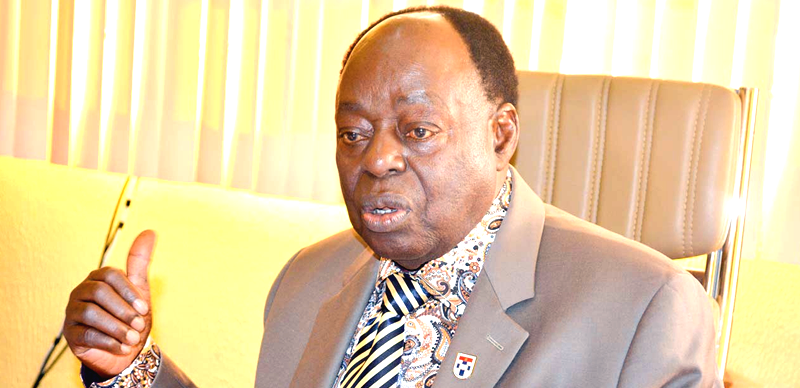
A legal battle has erupted between prominent Nigerian lawyer Aare Afe Babalola and activist Dele Farotimi, stemming from allegations of defamation contained in Farotimi’s book, “Nigeria and Its Criminal Justice System.” Babalola, founder of Afe Babalola University and a Senior Advocate of Nigeria (SAN), filed a petition with the Ekiti State Commissioner of Police, alleging that Farotimi’s book makes several defamatory statements that question his integrity and accuse his law firm, Afe Babalola & Co., of unethical practices, including corruption within the judiciary.
The controversy revolves around a 2013 Supreme Court judgment concerning a 254-hectare land dispute in Lagos. Babalola represented the Gbadamosi Eletu family, who were awarded the land after a prolonged legal battle. The judgment, however, sparked further litigation from affected estates, for whom Farotimi acted as counsel. In his book, Farotimi criticizes the judgment and accuses Babalola of manipulating the Supreme Court to secure a favorable outcome for his client. Specific excerpts from the book cited in the petition include accusations of Babalola “corrupting the Supreme Court” and engaging in “judicial brigandage.”
Babalola’s petition provides a detailed background of the land dispute, tracing the case from the initial sale of the land in 1977 to the Ojomu family, the subsequent acquisition by the Lagos State Government, and the eventual Supreme Court ruling. He emphasizes that the court found the Ojomu family acted in bad faith by attempting to reclaim the land after selling it. He also outlines the subsequent variation of judgment and the intervention of the Lagos State Government to maintain public peace and order, which led to compensation for the Eletu family. Babalola argues that Farotimi’s accusations are baseless and designed to tarnish his reputation and damage his law firm’s credibility.
The petition further asserts that Farotimi’s statements have been widely circulated online and through media interviews, causing significant damage to Babalola’s reputation and causing clients to lose trust in his firm. Babalola highlights his extensive legal career spanning over six decades, emphasizing his contributions to Nigerian jurisprudence, legal education, and the training of numerous lawyers, including several SANs. He emphasizes his role as a respected scholar, author, and philanthropist, and points to his establishment of Afe Babalola University as evidence of his commitment to education. He argues that Farotimi’s accusations are a direct attack on his legacy and the integrity of his work.
The situation escalated dramatically with Farotimi’s arrest in Lagos and subsequent remand in prison custody by an Ado-Ekiti magistrate court. He faces a 16-count charge of criminal defamation. Babalola, in his petition, calls for a thorough investigation into Farotimi’s claims, demanding the retrieval of all copies of the book and a halt to its further distribution. He also urges authorities to address what he describes as Farotimi’s admitted “disregard for the rule of law,” citing an excerpt from the book where Farotimi states he did not study law to follow the rules.
This case has brought into sharp focus the tension between freedom of speech and the potential for defamation, particularly when it concerns individuals in positions of power and influence. Babalola’s extensive legal career and contributions to Nigerian society are weighed against Farotimi’s allegations of corruption and misconduct within the judiciary. The ongoing legal proceedings will ultimately determine the validity of Farotimi’s claims and the extent of the damage done to Babalola’s reputation. The outcome will also likely have implications for the broader conversation surrounding accountability within the Nigerian legal system.








