









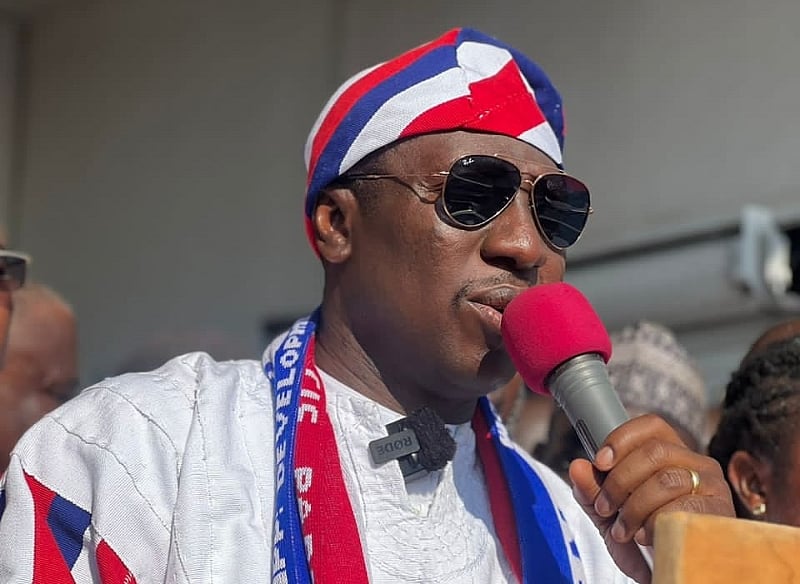
The aftermath of the recent general elections in Ghana has begun to unravel, revealing potential fault lines within the National Democratic Congress (NDC), according to Alexander Afenyo-Markin, the outgoing Majority Leader of Parliament and Member of Parliament for Effutu. Afenyo-Markin’s observations, based on the first parliamentary session following the elections, suggest that internal power struggles are already brewing within the NDC, potentially setting the stage for a dramatic reshaping of the party’s leadership landscape in the years leading up to the 2028 elections.
Afenyo-Markin alluded to palpable tensions within the NDC ranks, hinting at behind-the-scenes maneuvering and conversations regarding the party’s future leadership. While he refrained from disclosing specific details or naming the individuals involved in these discussions, he emphasized that the parliamentary session offered a glimpse into the emerging power dynamics. He believes these early signs of internal strife will significantly influence the NDC’s trajectory in the coming years and may ultimately play a crucial role in the 2028 electoral outcome. His observations paint a picture of a party already grappling with the question of succession, even before the dust has settled on the most recent election.
The outgoing Majority Leader’s comments suggest that the jostling for power within the NDC may revolve around the potential successor to former President John Mahama, the party’s current leader. Although Mahama has not publicly announced any intentions to step down, Afenyo-Markin’s remarks imply that discussions regarding his eventual replacement are already underway within the party. This early maneuvering highlights the potential for internal divisions and power struggles that could emerge as various factions within the NDC position themselves for future leadership roles.
Afenyo-Markin’s assertions go beyond mere observation of internal party dynamics. He expresses a strong conviction that the Ghanaian public will eventually come to recognize what he perceives as the NDC’s true nature. He predicts a sense of regret among voters who supported the NDC in the recently concluded elections, suggesting that the party’s actions and internal conflicts will ultimately disillusion its supporters. This prediction reflects Afenyo-Markin’s belief that the NDC’s internal struggles will negatively impact its public image and erode public trust in the party’s ability to govern effectively.
Afenyo-Markin’s analysis paints a picture of a politically charged atmosphere in the wake of the elections. His observations highlight the potential for significant shifts in the political landscape, particularly within the NDC. The alleged internal struggles within the party, coupled with Afenyo-Markin’s predictions of public disillusionment, suggest a period of uncertainty and potential upheaval for the NDC. The coming years will likely be crucial in determining how these internal dynamics play out and whether the NDC can effectively navigate these challenges to maintain its political standing.
The insights shared by Afenyo-Markin offer a glimpse into the complex power dynamics and potential future trajectory of Ghanaian politics. His observations regarding the NDC’s internal struggles, the early maneuvering for future leadership, and his prediction of public disillusionment suggest a potentially volatile period for the party. The coming years will undoubtedly be a test of the NDC’s resilience and its ability to address these internal challenges while maintaining public trust and support. Whether the party can effectively manage these internal dynamics will significantly impact its future political prospects and its ability to compete effectively in the 2028 elections.









