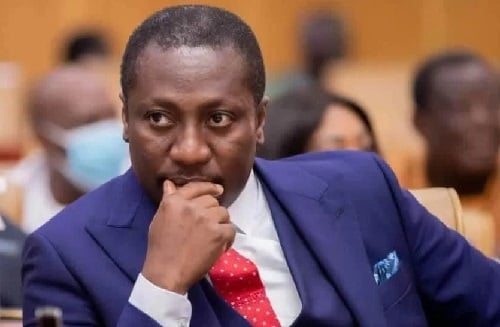
Alexander Afenyo-Markin, the Member of Parliament for Effutu, has predicted a scenario of widespread redundancy among NDC MPs should the party fulfill its campaign promise of forming a lean government. This prediction stems from the NDC’s stated intention to limit the number of ministerial appointments to 60, encompassing both full and deputy ministers. Given the NDC’s significant majority in Parliament, estimated at over 170 seats, Afenyo-Markin argues that a large number of their MPs will be left without substantive roles within the government. He projects that approximately 35 to 40 MPs will be appointed to ministerial positions, leaving around 140 of their colleagues with limited influence and responsibilities within the legislative process. This situation, Afenyo-Markin suggests, will render these MPs largely redundant, reducing their parliamentary contributions to mere symbolic gestures.
Afenyo-Markin’s argument centers on the disparity between the large number of NDC MPs and the limited ministerial positions available in a lean government. He posits that the vast majority of NDC MPs, having been elected with the expectation of playing a significant role in governance, will find themselves marginalized and without the platform to effectively contribute to policy-making. This lack of engagement, he contends, will lead to disillusionment and frustration among the affected MPs, potentially impacting their commitment to parliamentary duties and their ability to serve their constituents. Furthermore, he anticipates that this scenario will create internal tensions within the NDC as MPs compete for limited resources and influence.
The Effutu MP draws a parallel with the challenges faced by the previous administration, which also struggled to maintain consistent attendance in Parliament. He suggests that the same issues will plague the NDC, as MPs without ministerial portfolios may find it difficult to justify their presence in Parliament, particularly given the demands and expectations of their constituents. Afenyo-Markin anticipates that this dynamic will lead to absenteeism and a decline in the overall effectiveness of the legislature. He predicts that the Speaker of Parliament will eventually be compelled to address the issue of dwindling attendance, just as the previous Speaker had to do.
Afenyo-Markin’s concerns extend beyond the immediate impact on parliamentary proceedings. He foresees a significant strain on the relationship between the redundant MPs and their constituents. He argues that these MPs, despite lacking ministerial positions and the accompanying resources, will face pressure from their constituents to deliver on promises and address local needs. This pressure, combined with the limited resources at their disposal, will create a difficult situation for the MPs, potentially leading to frustration and disillusionment among their constituents. This, in turn, could undermine the MPs’ standing within their constituencies and damage the NDC’s overall political support.
The core of Afenyo-Markin’s argument rests on the premise that a lean government, while potentially beneficial in terms of efficiency and cost-saving, can create significant challenges for a party with a large parliamentary majority. He highlights the difficulty of balancing the need for a smaller, more agile government with the need to effectively engage and utilize the expertise and experience of a large number of elected representatives. He suggests that the NDC’s plan for a lean government, while well-intentioned, may inadvertently create a two-tiered system within the party, with ministerial appointees holding significant power and influence while the majority of MPs are relegated to the sidelines.
Afenyo-Markin’s analysis paints a picture of potential dysfunction within the NDC’s parliamentary caucus, arising from the mismatch between the number of MPs and the limited ministerial positions available. He warns of potential consequences, including decreased parliamentary effectiveness, strained relationships between MPs and their constituents, and internal tensions within the NDC. This perspective highlights the complexities of forming a government, particularly when balancing the desire for a lean and efficient structure with the need to effectively engage all elected members of parliament. It remains to be seen whether the NDC will be able to mitigate these potential challenges and maintain a cohesive and effective parliamentary presence.