









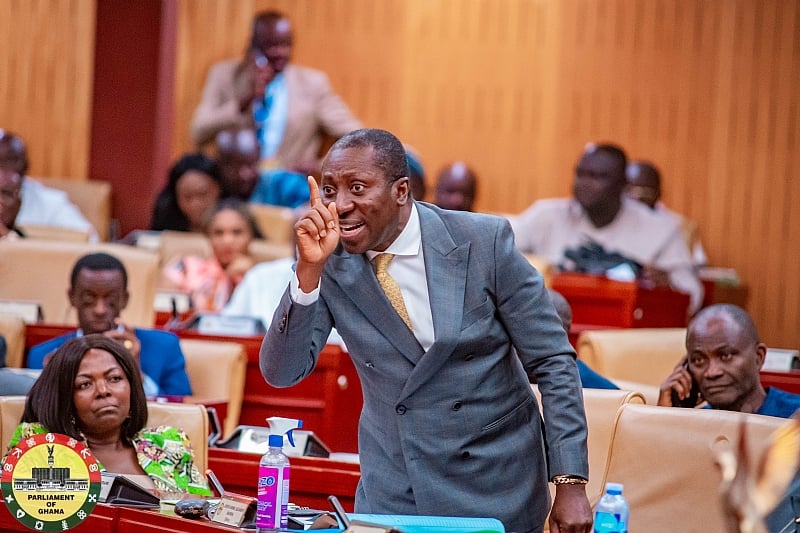
The political landscape in Ghana has undergone a significant shift following the 2024 general election, with the ruling New Patriotic Party (NPP) experiencing a substantial defeat. This outcome has paved the way for the National Democratic Congress (NDC) to assume the majority position in the incoming parliament, while the NPP transitions to the role of the minority. This change in power dynamics presents new challenges and opportunities for both parties, particularly in terms of leadership and legislative influence. Hon. Alexander Afenyo-Markin, the outgoing Majority Leader, has expressed his willingness to embrace this new reality and lead the NPP as the Minority Leader in the upcoming parliament.
Hon. Afenyo-Markin, representing the Effutu Constituency, has publicly acknowledged the NPP’s defeat and the subsequent shift in parliamentary control. Despite the disappointment of the electoral outcome, he has expressed a strong desire to lead the NPP’s minority caucus, emphasizing his commitment to building a formidable and effective opposition. His willingness to take on this role signals a determination to maintain the party’s presence and influence within the legislative arena, even from a minority position. This also highlights the evolving nature of leadership within the NPP, adapting to the changing political climate.
The outgoing Majority Leader’s statement underlines the importance of a robust opposition in a democratic system. A strong minority party serves to scrutinize government policies, hold the ruling party accountable, and provide alternative perspectives on critical issues. Hon. Afenyo-Markin’s ambition to lead a “formidable” minority suggests an intention to actively engage in parliamentary debates, challenge government proposals, and advocate for the interests of their constituents. This proactive approach aims to ensure that the NPP remains a relevant and influential force in Ghanaian politics, despite their electoral setback.
While acknowledging the sting of defeat, Hon. Afenyo-Markin has also expressed optimism about the NPP’s future prospects. He believes that the party can reclaim its majority status in the next general election, emphasizing the need for hard work and strategic planning. This forward-looking perspective suggests a commitment to rebuilding the party’s base, addressing the factors that contributed to their electoral loss, and formulating a more effective strategy for future campaigns. This long-term vision demonstrates the resilience of the NPP and their determination to remain a major player in Ghanaian politics.
The transition from majority to minority status presents significant challenges for the NPP. They will have to adapt to a new role, with less direct influence on legislative processes. They will also need to rebuild party morale and regain public trust after their electoral defeat. However, this period also offers opportunities for the party to reflect on its performance, re-evaluate its policies, and strengthen its internal organization. The willingness of experienced leaders like Hon. Afenyo-Markin to take on new roles within the party suggests a commitment to navigating these challenges and positioning the NPP for future success.
The dynamics of the upcoming parliament will be significantly different with the NDC in the majority. This will require both parties to adjust their strategies and approaches to legislative work. The effectiveness of the NPP as the minority will depend on their ability to build consensus, negotiate effectively with the ruling party, and articulate their positions persuasively. The success of the NDC, on the other hand, will hinge on their ability to govern responsibly, implement their promised policies, and address the needs of the Ghanaian people. The interactions between the two parties will shape the legislative landscape and ultimately determine the direction of the country’s political trajectory.









