









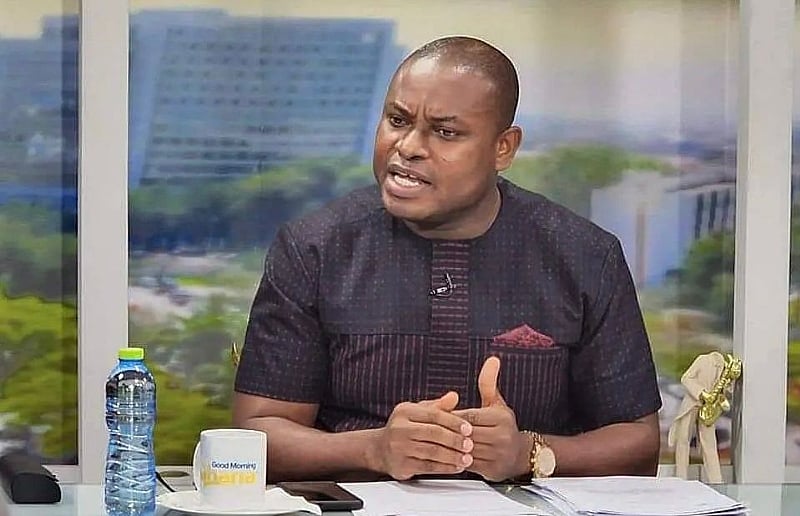
The controversy surrounding suspicious flights landing in Ghana has ignited a heated debate between the ruling government and the opposition New Patriotic Party (NPP). At the heart of the issue are allegations of cocaine trafficking and illicit financial flows, fueled by inconsistencies in the government’s narrative and calls for a thorough investigation. Richard Ahiagbah, the NPP’s National Communications Director, has vehemently argued that the conflicting accounts surrounding the flights warrant a deeper probe into these serious accusations. He insists that the government’s attempts to dismiss the allegations have only served to create further discrepancies, prompting a need for clarity and accountability.
The focal point of the contention revolves around two specific flights: Air Med Flight N823AM and Cavok Air Antonov 12B. Rev. John Ntim Fordjour, Member of Parliament for Assin South, initially raised concerns about these flights, suggesting their potential involvement in illicit activities. He publicly urged the Ministry of National Security to disclose the cargo manifests of both aircraft, fueling suspicion and prompting a defensive response from the government. Ahiagbah has stepped forward to defend Fordjour’s position, arguing that the MP is under no obligation to provide further evidence beyond the initial tip-offs he has already furnished. He countered arguments suggesting that Fordjour should provide concrete proof, emphasizing that the onus lies on the government to investigate the allegations based on the information already available.
Central to Ahiagbah’s argument is the claim of contradictory statements issued by government officials. He pointed to inconsistencies in the official narrative surrounding the destination and duration of one of the flights. The government initially claimed the aircraft was not destined for Ghana but later admitted that it did indeed land in the country and remained for five days. This discrepancy, Ahiagbah argues, represents a significant red flag and a compelling justification for a comprehensive investigation into the matter. He emphasized that such an investigation would not incur additional costs beyond what the government is already spending to combat illicit activities.
The core issue at stake transcends mere logistical discrepancies. The allegations leveled by the NPP represent a serious challenge to the government’s commitment to combating drug trafficking and illicit financial flows. The perceived lack of transparency and the conflicting explanations surrounding the flights have only served to amplify concerns about potential wrongdoing. Ahiagbah’s insistence on an investigation underscores the opposition’s determination to hold the government accountable and ensure a full and transparent airing of the facts.
The government’s response to these allegations has been characterized by attempts to downplay the concerns and dismiss them as politically motivated attacks. However, the inconsistencies highlighted by Ahiagbah have created a significant public relations challenge, forcing the government to address the growing calls for greater transparency. The situation remains fluid, with the opposition continuing to press for an official investigation and the government facing increasing pressure to provide a clear and convincing account of the events surrounding the suspicious flights.
The outcome of this controversy has far-reaching implications for Ghana’s political landscape. The allegations of drug trafficking and illicit financial flows strike at the heart of public trust and raise concerns about the integrity of state institutions. The government’s handling of the situation will be closely scrutinized, both domestically and internationally, and its ability to effectively address these concerns will play a significant role in shaping public perception and influencing future political discourse. The call for an investigation represents a pivotal moment in the ongoing power struggle between the ruling party and the opposition, with the potential to significantly impact the balance of power and the future direction of the country.









