





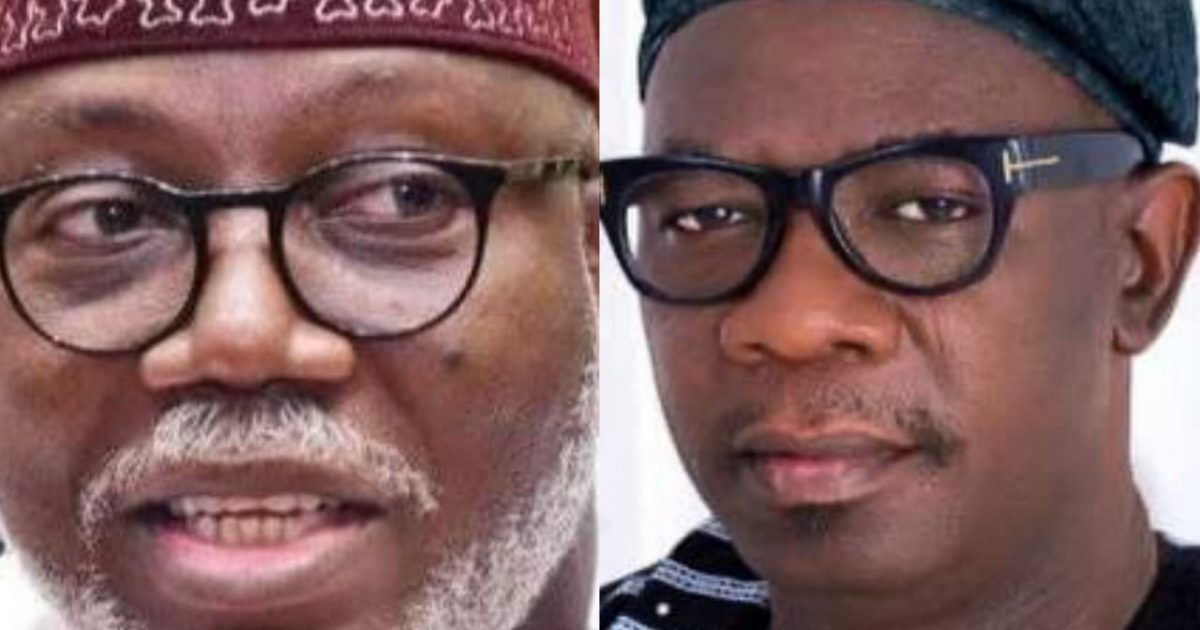
Challenging the Outcome: Agboola Ajayi Contests Ondo Governorship Election Results
The political landscape of Ondo State remains charged following the November 16, 2023, governorship election. Agboola Ajayi, the Peoples Democratic Party (PDP) candidate, has formally challenged the declared victory of Governor Lucky Aiyedatiwa of the All Progressives Congress (APC) by filing a petition with the Ondo State Election Petition Tribunal. This legal maneuver, initiated 24 days after the election, underscores the deep-seated discontent within the PDP camp regarding the electoral process and its outcome. Ajayi, speaking at the PDP Secretariat in Akure, expressed his disappointment, characterizing the election result as a "miscarriage of democracy." While refraining from divulging the specific grounds of his petition, he emphasized his party’s commitment to seeking justice through legal channels.
The PDP candidate’s assertions center on allegations of INEC’s partiality and the manipulation of the Bimodal Voter Accreditation System (BVAS). Despite pre-election warnings and legal actions aimed at ensuring INEC’s neutrality, Ajayi alleges that the electoral body failed to uphold its impartiality, leading to a result that, according to him, does not reflect the will of the Ondo State electorate. He further contends that the BVAS, intended to enhance transparency, was exploited for manipulative purposes. This claim adds another layer of complexity to the already contested election result, raising questions about the integrity of the technology employed in the electoral process.
Ajayi’s accusations are not limited to INEC’s conduct. He also addressed allegations of vote-buying and voter compromise, vehemently denying that the people of Ondo State sold their votes. He attributed the somber mood following the election announcement to widespread dissatisfaction with the outcome, asserting that the people’s will was not for sale. This counters the narrative potentially propagated by the opposing side, highlighting the stark contrast in perceptions of the election’s fairness and legitimacy.
The PDP’s petition to the election tribunal marks a critical juncture in the post-election legal battles. Ajayi expressed confidence in the judiciary’s ability to deliver justice, despite acknowledging concerns about its integrity. This statement reflects a delicate balance between expressing faith in the legal system and acknowledging the prevailing anxieties surrounding its impartiality. He urged the judiciary to rise to the challenge and uphold the principles of democracy, emphasizing the importance of free and fair elections in determining Ondo State’s leadership. This call for judicial integrity places the tribunal under intense scrutiny, as its decision will significantly impact the state’s political trajectory.
Further complicating the legal landscape is a previous lawsuit filed by Ajayi challenging the qualifications of Aiyedatiwa and his deputy. This suit, dismissed by the Federal High Court in Akure, was deemed to lack locus standi and to have been filed outside the statutory 14-day window prescribed by the Electoral Act. The court’s decision, based on procedural grounds, underscores the intricate legal maneuvering that has characterized the post-election period. This earlier setback for Ajayi highlights the legal hurdles he faces in his pursuit of overturning the election results.
The unfolding events in Ondo State exemplify the fragility of democratic processes and the importance of robust legal frameworks to address electoral disputes. Ajayi’s petition, INEC’s role, the alleged manipulation of BVAS, and the public perception of the election’s fairness are all interwoven threads in a complex tapestry of legal and political contestation. The outcome of the tribunal’s deliberations will not only determine the governorship of Ondo State but also set a precedent for future electoral disputes, shaping the ongoing discourse on electoral integrity and the pursuit of justice within the Nigerian political system. As the legal battle unfolds, the nation watches closely, recognizing the implications for the future of democratic governance in Nigeria. The resolution of this dispute will undoubtedly shape the political landscape of Ondo State and contribute to the broader national conversation on electoral reform and the strengthening of democratic institutions.








