





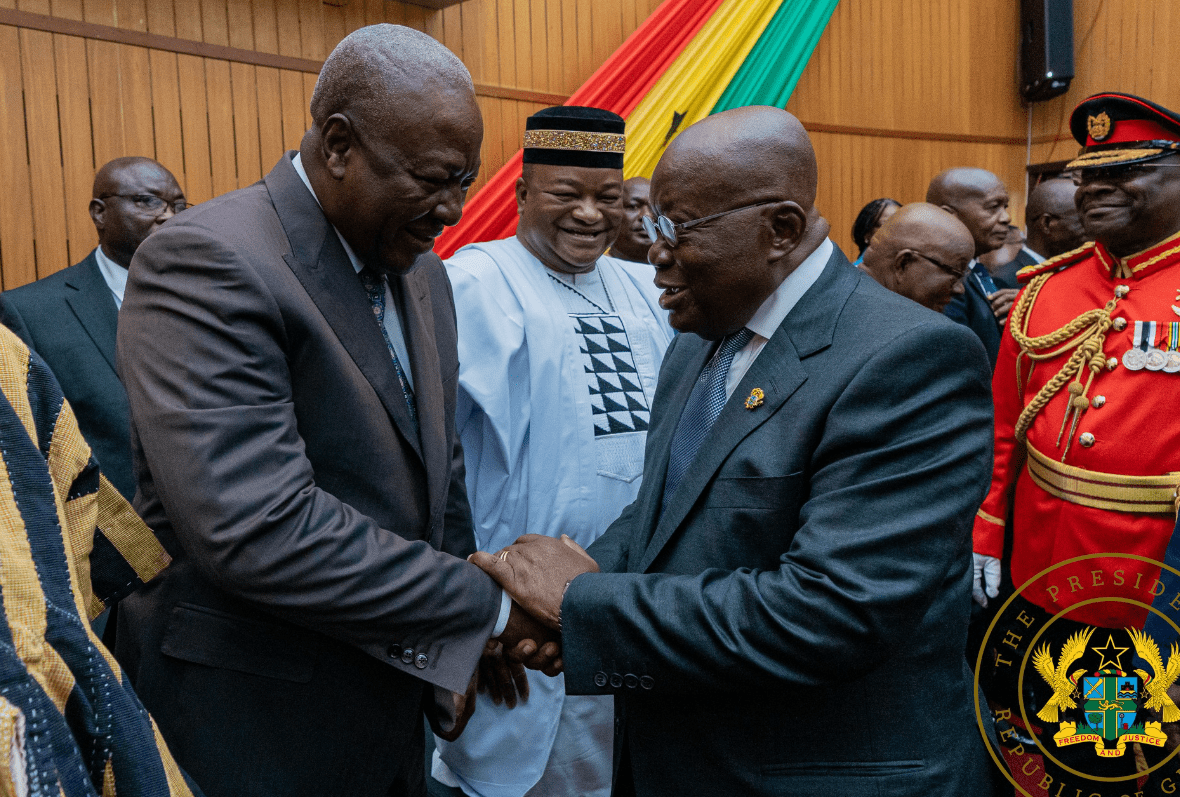
President Akufo-Addo’s address to the nation carries a significant economic message for the incoming Mahama administration: achieve a debt-to-GDP ratio of 55% by the end of its term. This target, according to the outgoing president, serves as a crucial benchmark for demonstrating Ghana’s commitment to fiscal responsibility and establishing a robust foundation for sustainable economic growth. Akufo-Addo highlighted the progress made during his tenure, citing a reduction in the debt-to-GDP ratio from 79.2% in September 2024 to 74.6% in October 2024, with projections indicating a further decline to the targeted 55% by 2028. He emphasizes that maintaining this trajectory is paramount for securing long-term financial stability and urged the incoming government to prioritize debt reduction as a key policy objective.
The 55% debt-to-GDP target is not an arbitrary figure; it aligns with the ongoing economic reforms implemented under Ghana’s economic recovery programs, including the current International Monetary Fund (IMF) arrangement. These programs recognize debt sustainability as a critical component of macroeconomic stability. Akufo-Addo acknowledged the increase in public and publicly guaranteed debt during previous economic challenges but underscored the government’s commitment to servicing its debts, evidenced by consistent coupon payments on both domestic bonds and Eurobonds. He further emphasized the significant reduction in the debt stock, amounting to GH₵46.8 billion, bringing it down to GH₵761.01 billion in October 2024 from GH₵807.79 billion in September 2024.
The outgoing president’s emphasis on debt sustainability reflects a broader concern for maintaining investor confidence and ensuring access to international financial markets. A high debt-to-GDP ratio can raise concerns about a country’s ability to repay its debts, potentially leading to higher borrowing costs and reduced access to credit. By achieving the 55% target, Ghana aims to signal its commitment to fiscal prudence and create a more favorable environment for investment and economic growth. This focus on debt reduction also frees up government resources that can be allocated to critical sectors such as education, healthcare, and infrastructure development, contributing to broader socio-economic progress.
Akufo-Addo’s parting advice to the incoming finance minister underscores the importance of meeting debt obligations. He stressed the necessity of avoiding default, highlighting the government’s commitment to honoring a $346 million coupon payment to Eurobond holders on January 3rd, 2025. This action serves as a practical example of the outgoing administration’s commitment to debt servicing and sets a precedent for the incoming government to follow. Defaulting on debt obligations can have severe consequences, including damage to a country’s credit rating, limited access to future borrowing, and a negative impact on investor confidence.
The challenge presented by Akufo-Addo to the incoming Mahama administration is not merely a matter of fiscal prudence; it is a call for continued economic stability and sustainable growth. Achieving the 55% debt-to-GDP target requires a sustained commitment to fiscal discipline, sound economic policies, and effective implementation of ongoing reforms. It necessitates a clear understanding of the link between debt sustainability and broader economic development, recognizing that responsible debt management is not just about reducing numbers, but about creating a more stable and prosperous future for Ghana.
The incoming administration must navigate a complex economic landscape, balancing the need for fiscal consolidation with the demands for social spending and investment in crucial sectors. Successfully achieving the 55% debt-to-GDP target will require a multi-pronged approach that includes revenue enhancement, expenditure optimization, and structural reforms that promote sustainable economic growth. This task requires strong political will, effective policy coordination, and ongoing engagement with international partners, including the IMF, to ensure that Ghana remains on a path towards long-term economic stability and prosperity.








