









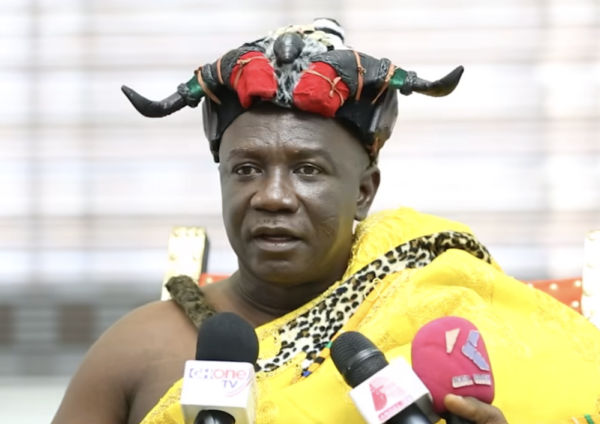
Nana Boadi Amponim Abodade III, the Krontihene of Akyem Asoum, has expressed profound gratitude and unwavering support for President-elect John Mahama, drawing a poignant parallel between him and the biblical Good Samaritan. He believes Mahama is destined to rescue Ghana from its current socio-economic woes, which he attributes to the alleged corruption and mismanagement of previous administrations. In an interview with GHOne, Nana Abodade III lamented the dire state of the nation, asserting that Ghana has been metaphorically “stripped naked and left bleeding” by those entrusted with its leadership. He expressed fervent hope that Mahama’s incoming administration will serve as a balm to the nation’s wounds, restoring its health and prosperity.
Nana Abodade III’s analogy to the parable of the Good Samaritan in Luke 10:29 underscores the depth of his belief in Mahama’s potential to heal and restore Ghana. Just as the Good Samaritan tended to the injured traveler left by the roadside, Nana Abodade III believes Mahama will care for Ghana, which he perceives as having been similarly abandoned and wounded by its previous leaders. This evocative imagery paints a picture of a nation in desperate need of compassionate leadership and decisive action to address its challenges. He contends that the “robbers,” representing corrupt officials, have plundered the nation’s resources, leaving it vulnerable and impoverished. Mahama, in his view, is the compassionate figure who will not only attend to the nation’s immediate needs but also pursue the recovery of stolen assets.
The Krontihene’s pronouncements reflect a broader sentiment among a segment of the Ghanaian populace. For many, Mahama represents a beacon of hope for a more prosperous and equitable future. They believe he possesses the necessary experience and vision to steer the nation towards stability and progress. This sentiment, however, also underscores the deep-seated anxieties and frustrations that exist within Ghana regarding governance and accountability. Nana Abodade III’s words echo the yearning for a leader who will prioritize the welfare of the people and hold those responsible for past misdeeds accountable.
The comparison to the Good Samaritan also carries significant symbolic weight. It positions Mahama as a figure of compassion and selfless service, someone who is willing to go above and beyond to aid those in need. This image resonates deeply within a culture that values community and mutual support. By invoking this biblical figure, Nana Abodade III elevates Mahama to a moral high ground, presenting him as a leader who embodies the values of empathy and altruism. This portrayal seeks to solidify Mahama’s image as a leader who will prioritize the welfare of the Ghanaian people above personal gain.
The expectation of Mahama to “recover the loot” highlights the public’s frustration with corruption and the desire for accountability. It underscores the belief that past administrations have mismanaged resources and engaged in illicit activities, depriving the nation of its rightful wealth. This demand for accountability is a critical aspect of the public’s hopes for Mahama’s presidency. It reflects a desire for a leader who will not only address the current challenges but also tackle the root causes of the nation’s economic woes. This expectation, however, also places a significant burden on the incoming administration to deliver on these promises of retrieving misappropriated funds.
Nana Abodade III’s expression of gratitude and unwavering support for Mahama can be interpreted as both a gesture of goodwill towards the incoming president and a public call for action. His words convey not only hope but also a sense of urgency. The metaphor of Ghana being “stripped naked and bleeding” serves as a powerful reminder of the nation’s vulnerabilities and the pressing need for decisive leadership. This emphatic plea for change emphasizes the high stakes involved in the transition of power and the immense responsibility placed upon Mahama to deliver on the hopes and expectations of the Ghanaian people. The Krontihene’s public endorsement serves as a rallying cry for unity and a call for all stakeholders to work together towards a brighter future for Ghana.









