









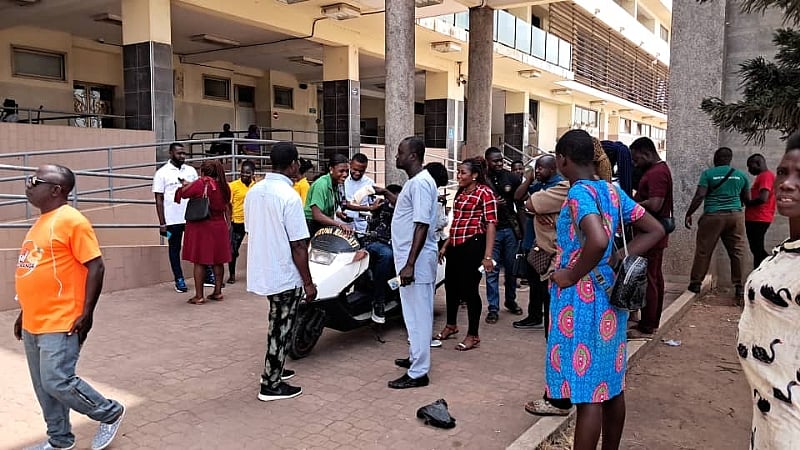
The incident at the Ashanti Regional office of the National Sports Authority (NSA) on Thursday, January 9, 2024, unfolded as a dramatic display of employee discontent, culminating in the forceful removal of the Regional Director, Kwame Baah Mensah, from his position. A group, alleged to be affiliated with the National Democratic Congress (NDC) task force, stormed the NSA offices located at the Baba Yara Sports Stadium and demanded Mensah’s immediate departure, along with the surrender of his office keys and official vehicle. This action ignited a chain of events that exposed deep-seated grievances within the NSA staff.
Contrary to expectations of resistance or fear, the arrival of the task force seemed to embolden the NSA employees. A significant number of staff members openly expressed their support for the forceful removal of Mensah, indicating a widespread dissatisfaction with his leadership. Their grievances painted a picture of alleged mismanagement, victimization, and financial impropriety. Accusations of unpaid allowances, coupled with alleged corrupt practices, fueled the staff’s resentment, creating an environment ripe for revolt. The seemingly spontaneous eruption of support for Mensah’s removal suggests that these grievances had been simmering beneath the surface for some time, awaiting a catalyst to bring them to the forefront.
The allegations against Mensah paint a troubling picture of his tenure as Regional Director. Staff members claimed he engaged in victimization tactics, creating a hostile work environment. The alleged failure to pay due allowances further exacerbated the situation, adding financial strain to the existing discontent. Perhaps most damaging were the accusations of corrupt practices, which, if substantiated, would represent a serious breach of public trust. The convergence of these factors contributed to a climate of distrust and animosity, ultimately leading to the dramatic events of January 9th.
The intervention of law enforcement became necessary to manage the escalating situation. Officers from the Asokwa District Police Command were deployed to the NSA offices to restore order and ensure the safety of all involved. Amidst the commotion and the jubilant reactions of some staff members, the police successfully escorted Mensah out of the premises in a private vehicle, preventing any potential escalation of the confrontation. This action ensured that the situation, while tense, did not devolve into physical violence or further disruption.
Even as Mensah was being escorted away, the staff’s demonstration of disapproval continued. They prevented him from taking packs of bottled water from his office, asserting that these were purchased with NSA funds and therefore belonged to the organization, not to the departing director. This seemingly minor act symbolizes the depth of their resentment and their determination to hold Mensah accountable, even in his final moments at the office. It underscores the perception among the staff that Mensah had misused his position and resources, further fueling their justification for his removal.
The incident at the Ashanti Regional NSA office reveals a stark breakdown in the relationship between the director and the staff. The allegations of mismanagement, victimization, and corruption, coupled with the enthusiastic support for Mensah’s removal, suggest a deeply dysfunctional work environment. The events of January 9th serve as a stark reminder of the importance of transparency, accountability, and fair treatment in any organization, especially those entrusted with public funds and resources. The incident also highlights the potential consequences of neglecting employee grievances, which can fester and ultimately erupt in disruptive and damaging ways. A thorough investigation into the allegations against Mensah is crucial to determine the veracity of the claims and to address the underlying issues that led to this dramatic confrontation. Furthermore, the incident underscores the need for robust mechanisms for addressing employee grievances and ensuring accountability within the NSA and other public institutions.









