









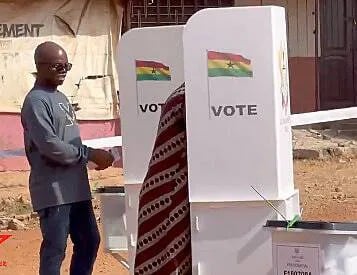
The recent Ghanaian parliamentary primaries witnessed a controversial incident involving Dr. Stephen Amoah, the Deputy Finance Minister and incumbent Member of Parliament for Nhyiaeso. A video circulating on social media platforms, particularly X (formerly Twitter), captured Dr. Amoah seemingly glancing at another voter’s ballot paper during the voting process at the Nhyiaeso polling station. This action sparked a wave of mixed reactions across the online sphere, with some Ghanaians condemning the act as a breach of electoral privacy and a potential attempt to influence the voter, while others dismissed it as an inconsequential gesture, perhaps driven by curiosity or mere oversight.
The controversy surrounding Dr. Amoah’s actions adds another layer of complexity to his political career. A finance expert by profession, he gained prominence within the ruling New Patriotic Party (NPP) after unseating the former MP, Kennedy Kwasi Kankam, in the 2019 party primaries. His subsequent appointment as Deputy Finance Minister further solidified his position within the government. The video incident, however, casts a shadow over his image as a public servant and raises questions about his adherence to the principles of free and fair elections.
The video itself depicts Dr. Amoah casting his vote with an air of confidence and optimism, expressing positive expectations regarding his re-election bid and the success of his preferred presidential candidate. However, the focus quickly shifted from his initial display of assurance to the seemingly furtive glance at another voter’s ballot. This seemingly minor detail has become the center of public scrutiny, amplified by the ongoing electoral process and the heightened sensitivity surrounding the integrity of the voting procedure.
The incident involving Dr. Amoah highlights the growing influence of social media in shaping public discourse and holding political figures accountable. The rapid dissemination of the video across various platforms ensured swift public awareness and triggered immediate reactions from a wide spectrum of Ghanaians. This underscores the power of citizen journalism and the increasing importance of transparency in political processes. While some argue that the incident was blown out of proportion, others maintain that it represents a potential violation of electoral ethics, regardless of the intent behind it.
The broader implications of this incident extend beyond the individual actions of Dr. Amoah. It raises concerns about the potential for subtle forms of voter intimidation or influence, particularly in contexts where power dynamics might be at play. The act of observing another person’s ballot, even if unintentional, can create an atmosphere of unease and potentially discourage voters from exercising their right to choose freely and privately. This incident serves as a reminder of the importance of upholding the sanctity of the ballot box and ensuring that all voters feel safe and empowered to participate in the democratic process without fear of observation or coercion.
Beyond the immediate controversy, the incident raises questions about the need for greater voter education and awareness regarding electoral procedures and the rights of individual voters. Clear guidelines and protocols regarding voter privacy and the handling of ballot papers should be emphasized to prevent similar incidents from occurring in the future. The incident also underscores the role of electoral officials in maintaining order and ensuring that voting procedures are followed meticulously. The responsiveness of electoral bodies to such incidents and their willingness to investigate and address potential violations of electoral integrity are crucial for building public trust and confidence in the democratic process. The outcome of any investigation into this particular incident will be closely watched, as it will set a precedent for how similar cases are handled in the future.









