









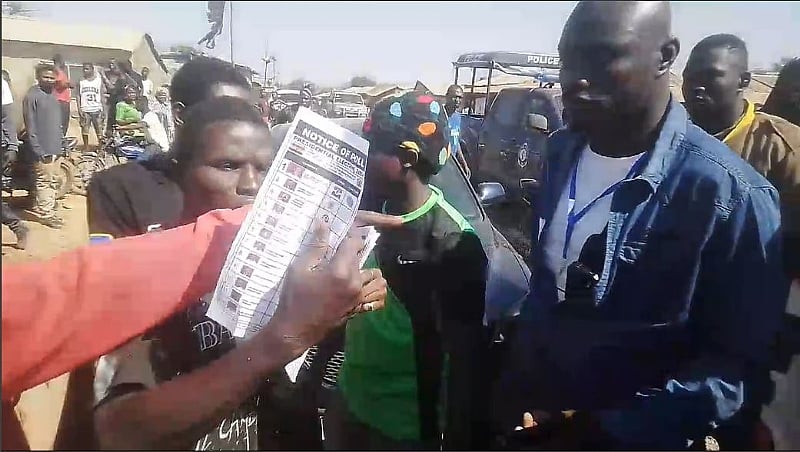
The serenity of the Animgazanga JHS polling station in the Bolga Central constituency was shattered by the dramatic arrest of a man identified as Rufai. Accused of possessing suspected printed ballot papers, Rufai was apprehended by police, sparking a flurry of activity and raising concerns about the integrity of the electoral process. Eyewitnesses reported that Rufai was caught in possession of the materials, leading to his immediate detention and subsequent transfer to the regional police headquarters for questioning. This incident has cast a long shadow over the ongoing elections, highlighting the vulnerability of the system and the imperative for stringent adherence to electoral laws.
The discovery of the alleged ballot papers in Rufai’s possession immediately fueled speculation and accusations. Members of the New Patriotic Party (NPP) swiftly countered the allegations, asserting that the papers were not authentic ballot papers but rather sample ballots used for voter education, particularly targeting individuals unfamiliar with the voting process. This claim, however, has been met with skepticism by some, who question the timing and circumstances surrounding Rufai’s possession of these materials within a polling station. The ambiguity of the situation has further intensified the ongoing political tensions within the constituency.
Adding another layer of complexity to the situation is the resounding silence from the regional police PRO, who has declined to comment on the ongoing investigation, citing the need to maintain the integrity of the process. This lack of official information has fueled speculation and allowed various narratives to circulate, further exacerbating the uncertainty and tension surrounding the incident. While the police conduct their investigation, the community remains on edge, anxiously awaiting the outcome and its potential impact on the election results.
Meanwhile, the National Democratic Congress (NDC) has leveled accusations of vote-buying against some NPP members, adding fuel to the already charged political atmosphere. These allegations, though yet to be substantiated, have further raised questions about the fairness and transparency of the electoral process in the Bolga Central constituency. The NDC’s claims paint a picture of potential attempts to manipulate the election outcome, creating a climate of distrust and undermining the confidence of voters in the integrity of the democratic process.
The confluence of these events – the arrest of Rufai, the disputed nature of the ballot papers, the silence of the police, and the vote-buying accusations – has created a highly volatile situation in the Bolga Central constituency. The unfolding drama has not only disrupted the electoral process but also exposed deep-seated political divisions and mistrust between opposing factions. As the investigation continues, the focus remains on determining the truth behind Rufai’s possession of the materials, the veracity of the vote-buying claims, and ultimately, ensuring the integrity of the election outcome.
The incident serves as a stark reminder of the importance of transparency and accountability in electoral processes. The need for thorough investigations, prompt information dissemination, and impartial oversight is crucial to maintain public trust and ensure the legitimacy of democratic elections. The events at the Animgazanga JHS polling station underscore the fragility of democratic systems and the constant vigilance required to safeguard them against manipulation and malpractice. The outcome of the investigation and the subsequent actions taken will significantly impact not only the Bolga Central constituency but also the broader perception of electoral integrity in the region.









