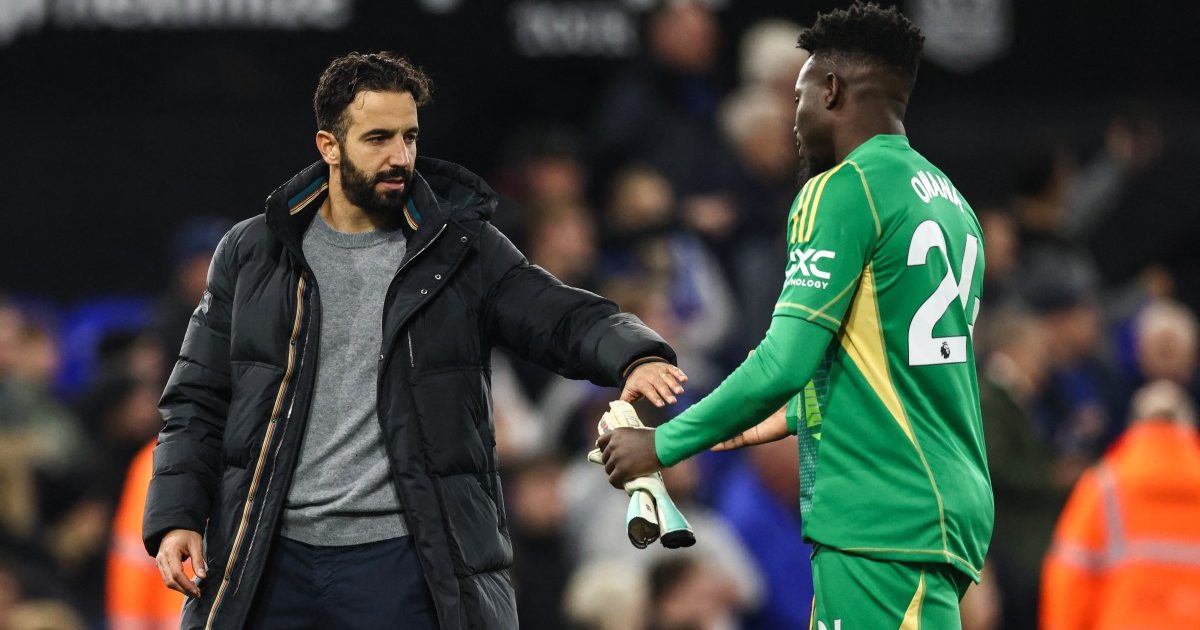
Ruben Amorim’s arrival at Manchester United heralded a wave of optimism, a beacon of hope in the turbulent waters following Erik ten Hag’s dismissal. The young Portuguese manager, plucked from Sporting Lisbon mid-season, carried the weight of expectation on his shoulders, tasked with reviving a slumbering giant. However, the initial euphoria has swiftly dissipated, replaced by a stark reality of dwindling performances and mounting pressure. United’s form has plummeted, leaving Amorim grappling with the enormity of the task ahead and acknowledging the precarious nature of his position. The honeymoon period is decidedly over, and the 39-year-old manager finds himself battling for survival in the unforgiving world of elite football management.
The Wolves defeat, a 2-0 humbling at Molineux, serves as a microcosm of United’s current woes. It marked their third consecutive loss, a trifecta of disappointment that includes a League Cup exit to Tottenham and a demoralizing 3-0 home defeat to Bournemouth. The manner of these losses, coupled with the team’s overall lackluster displays, has painted a grim picture. United currently languish in 14th place, closer to the relegation zone than the coveted Champions League spots, a position unthinkable for a club of their stature. The weight of history hangs heavy, with Amorim becoming the first United manager since Walter Crickmer in 1932 to lose five or more of his first ten matches in charge. The parallels to such a distant past underscore the severity of the current crisis.
Amorim’s candid post-match assessment reflects the gravity of the situation. He acknowledges the inherent pressures of managing Manchester United, a club where expectations are stratospheric and patience wears thin quickly. His words, “The manager of Manchester United can never, no matter what, be comfortable,” resonate with the precarious reality of his position. The hefty buyout clause paid to secure his services offers no shield against the ruthless nature of the football industry. Results dictate survival, and Amorim recognizes that his future hinges on turning the tide and delivering improved performances. The admission that he has “no idea” how long the revival will take further highlights the daunting challenge ahead.
Compounding the difficulties is the timing of Amorim’s arrival. Stepping into the managerial hot seat mid-season presents a unique set of challenges. Inheriting a squad mid-stream, without the benefit of a pre-season to implement his philosophies and reshape the team, places him at a distinct disadvantage. The lack of time to assess the players, instill his tactical approach, and build team cohesion is a significant hurdle. Amorim has been thrust into the deep end, forced to navigate the choppy waters of a struggling team while simultaneously trying to implement his vision. The inherited squad, its dynamics, and existing issues present a complex puzzle that requires careful dismantling and reconstruction.
The Wolves match exposed the fragility of United’s current setup. Captain Bruno Fernandes’ sending off for a second yellow card shortly after half-time further hampered the team’s efforts. The subsequent goals, one directly from a Matheus Cunha corner and another assisted by Cunha for Hwang Hee-chan in stoppage time, compounded the misery. These moments of individual error and defensive vulnerability underscore the systemic issues plaguing the team. Amorim’s task is not only to address the immediate concerns but also to implement long-term solutions that can rebuild the team’s foundations. He needs to foster a winning mentality, instill tactical discipline, and address the individual shortcomings that have contributed to the team’s downfall.
Amorim’s focus, for now, is on survival. He acknowledges the enormity of the task, stating, “Difficult moments are part of football, and I knew it would be tough. Right now, it’s really hard. We need to survive to buy time and then improve the team.” This pragmatic approach reflects the immediate priorities. Stabilizing the ship, arresting the slide, and building a platform for future progress are the key objectives. The long-term vision remains, but the immediate focus is on navigating the turbulent present. The pressure is immense, the challenges are significant, and the clock is ticking. Amorim’s tenure at Manchester United may be short-lived unless he can engineer a dramatic turnaround and restore the club to its former glory. The upcoming match against Newcastle represents another critical test, a chance to demonstrate progress and offer a glimmer of hope to the disillusioned fanbase. The future remains uncertain, but Amorim’s determination and resilience will be crucial in determining whether he can weather the storm and succeed in this demanding role.