









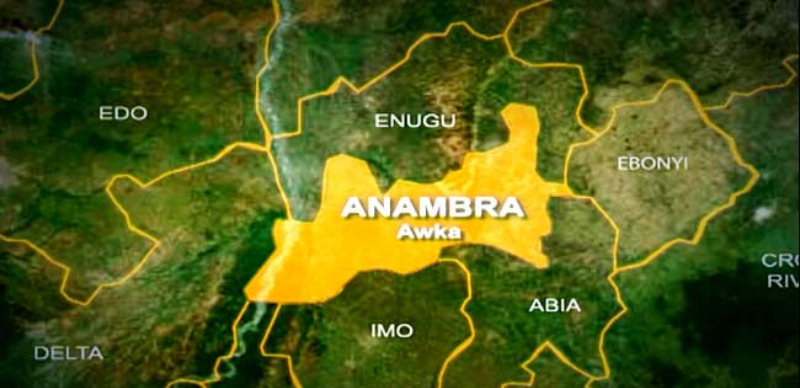
The Anambra State Commissioner for Environment, Felix Odimegwu, has vehemently denied accusations of ordering security personnel to use violence against illegal sand miners in the Ebenator community of Nnewi South Local Government Area. Online reports had alleged that Odimegwu directed operatives of Operation Clean and Healthy Anambra (OCHA Brigade) to shoot and beat individuals engaged in unauthorized sand mining at a site near the Ọfara Ime River. These allegations sparked widespread public concern and criticism regarding the conduct of state government operatives. However, Odimegwu issued a statement categorically refuting these claims, asserting that neither he nor his ministry deployed security forces to the community. He attributed the operation to the OCHA Brigade, which he stated acted independently under the directives of Governor Chukwuma Soludo.
Odimegwu clarified that the OCHA Brigade, accompanied by members of the Anambra Vigilante Group (AVG), was tasked with enforcing the governor’s directive suspending sand mining activities across the state. He emphasized that the brigade’s actions stemmed directly from the governor’s orders and were not instigated by the Ministry of Environment. The commissioner underscored the extensive erosion damage plaguing the Ebenator community and highlighted the governor’s previous approval of erosion control and reclamation projects in the area. He reiterated the governor’s commitment to mitigating further erosion and emphasized the importance of adhering to the sand mining suspension to protect the fragile environment.
The commissioner explained that the governor’s decision to suspend sand mining was motivated by the vulnerability of Anambra’s soil composition, which makes it highly susceptible to erosion. To regulate sand mining activities and ensure environmental protection, a Sand Mining Reform Committee was established. Any individual or entity seeking permission to mine sand must undergo rigorous scrutiny by the committee, whose recommendations are then submitted to the governor for final approval. Odimegwu emphasized that this process is essential to ensure responsible and sustainable sand mining practices.
According to Odimegwu, the OCHA Brigade and AVG personnel were dispatched to the Ebenator site in response to reports of illegal sand mining activities. He claimed that upon arrival, the operatives encountered a locked gate, which they subsequently forced open to gain access and exit the site. Odimegwu downplayed the incident, asserting that the situation was under control and there was no cause for alarm. He urged residents of Anambra State, particularly local government chairmen, to respect the governor’s directive on the suspension of sand mining and to follow the established procedures for obtaining approval.
Odimegwu’s statement seeks to distance himself and the Ministry of Environment from the alleged violence against illegal sand miners. He places the responsibility for the operation on the OCHA Brigade, acting under the governor’s mandate. He emphasizes the importance of adhering to the sand mining suspension to protect the environment and highlights the established procedures for obtaining mining approvals. However, the accounts of the alleged victims, who claim the ministry was involved in sending the task force, contradict Odimegwu’s narrative.
This incident underscores the complexities of regulating sand mining activities in Anambra State. The fragile environment, coupled with the economic pressures driving the demand for sand, creates a challenging scenario for enforcing regulations. The conflicting accounts of the incident necessitate further investigation to determine the precise sequence of events and the roles played by various actors. The need for transparent and accountable governance in managing natural resources is evident, as is the importance of ensuring that law enforcement operations are conducted with due regard for human rights and the rule of law.









