





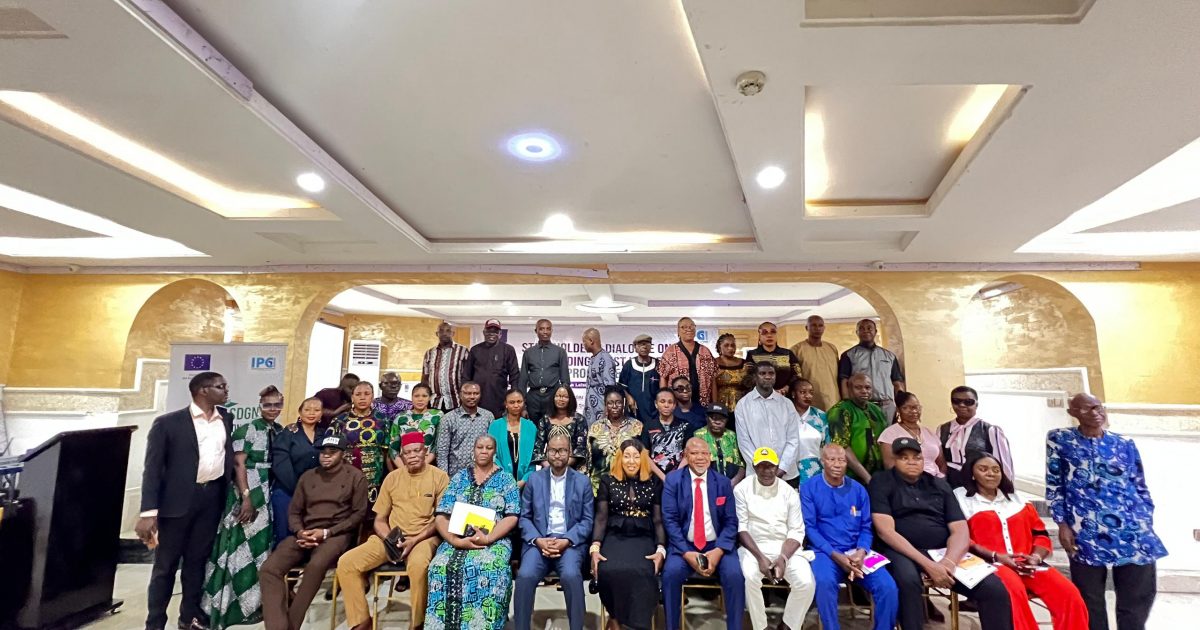
Dr. Elizabeth Agwu, the Resident Electoral Commissioner (REC) for Anambra State’s Independent National Electoral Commission (INEC), has asserted her commitment to ensuring credible elections in the state. Reflecting on her three-year tenure, she proudly declared that she has successfully repelled attempts by politicians to manipulate the electoral process through financial inducements, making it “unpurchasable.” Agwu’s declaration came during a two-day stakeholder dialogue organized by the International Press Centre in Awka, themed “Rebuilding Trust in the Electoral Process and Elections.” The dialogue, held in anticipation of the upcoming Anambra South Senatorial District by-election and the 2025 governorship election, sought to foster open discussions among key stakeholders involved in elections and democratic governance.
Agwu’s tenure as REC has been marked by a staunch resistance against vote buying, a pervasive issue in Nigerian politics. She recounted how she deterred politicians attempting to buy elections by setting an exorbitant price of N3 billion, a sum deliberately designed to be unattainable. This tactic, she explained, allowed her to conduct elections free from undue influence, ensuring that the votes of the Anambra people truly counted. She further emphasized the importance of voter participation and cautioned against the selling of Permanent Voter Cards (PVCs), describing it as self-sabotage. Agwu also highlighted Anambra’s impressive record in PVC distribution, an initiative she championed to enhance voter participation.
Despite her efforts, Agwu acknowledged challenges within the electoral system. She recounted an incident where an electoral official, a Supervisory Polling Officer, compromised electoral materials by selling them to political parties. This incident, which necessitated a repeat election, underscores the vulnerability of the electoral process to internal sabotage. While INEC’s mandate is constitutionally defined and independent of external influence, Agwu noted that politicians often attempt to sway the commission’s actions.
Looking ahead, Agwu reassured stakeholders of INEC’s preparedness for the forthcoming Anambra South Senatorial District by-election and the 2025 governorship election. While the Senate had yet to formally notify INEC of Senator Ifeanyi Ubah’s death, a necessary step to trigger the by-election process, Agwu affirmed the commission’s readiness to conduct both elections with transparency and credibility. She urged Anambra residents, particularly politicians, to adhere to electoral rules, assuring them that their votes would be respected.
However, not all stakeholders share Agwu’s confidence in INEC. Dr. Nwachukwu Orji, a former INEC REC in Anambra and a lecturer at the University of Nigeria, Nsukka, expressed a vote of no confidence in the commission. He criticized the prevalence of vote buying and unprofessional conduct among some INEC officials, arguing that these issues have eroded public trust in the electoral body. Orji traced the decline in the integrity of the electoral process back to the 2015 general elections, noting a further deterioration in the 2023 elections, attributing this to the unprofessionalism of certain INEC officials.
The International Press Centre, the organizer of the stakeholder dialogue, aimed to address the negative perceptions surrounding elections in Nigeria. Mr. Lanre Arogundade, the Executive Director, emphasized the importance of rebuilding public trust and fostering collaboration among stakeholders to enhance the credibility of elections. The dialogue served as a platform to discuss and mitigate these challenges, with the goal of strengthening the electoral process in preparation for the 2025 governorship election and subsequent elections in 2027. The event underscored the need for continued dialogue and collaboration between INEC, civil society organizations, and the public to ensure free, fair, and credible elections in Nigeria.
The contrasting perspectives of Agwu and Orji highlight the complexities of electoral reform in Nigeria. While Agwu’s efforts demonstrate a commitment to upholding the integrity of the electoral process at the state level, Orji’s criticism points to systemic issues that require broader attention. The dialogue itself represents a crucial step towards addressing these challenges through open discussion and collaborative efforts. The success of future elections will depend on INEC’s ability to address these concerns and restore public confidence in the electoral system. The forthcoming by-election and the 2025 governorship election will serve as critical tests of the effectiveness of these efforts and the overall health of Nigeria’s democratic process.








