









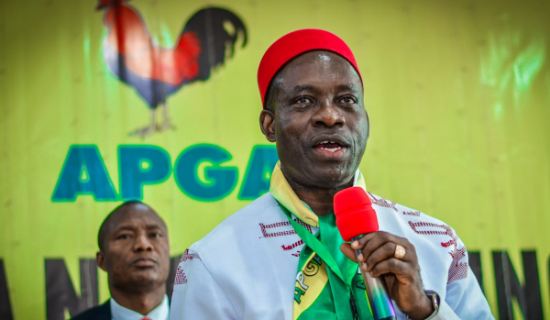
Amara Oyeka, the Senior Special Assistant to Anambra State Governor Chukwuma Soludo on Internally Generated Revenue (IGR), announced a significant increase in the state’s monthly IGR, rising from N2.2 million in 2023 to N5.2 billion in 2024. This remarkable achievement was revealed during a presentation validating research conducted across 21 major markets in Anambra’s three senatorial zones. The research, part of the Tax for Service (T4S) Project, was a collaborative effort involving the Tax Justice and Governance Platform, the Civil Society Legislative Advocacy Centre (CISLAC), and Oxfam Nigeria. The project aimed to analyze the state’s revenue generation landscape and identify areas for improvement.
Despite the substantial IGR growth, Oyeka highlighted a persistent challenge: tax evasion by wealthy citizens and revenue diversion into private pockets. He emphasized the need for collaborative efforts among stakeholders to ensure the state receives its due revenue. Oyeka lamented the situation where revenue collectors, due to systemic laxity and loopholes, have become wealthier than the government they serve. He called for concerted action to address these issues, urging citizens to participate in sanitizing the revenue collection system. Oyeka stressed the correlation between higher revenue and the government’s capacity to provide public goods, urging citizens to view tax payment as an investment in their own well-being.
The T4S project, as explained by Ugochi Ehiahuruike, Executive Director of the Social and Integral Development Centre (SIDEC) and host of the Tax Justice and Governance Platform in Anambra, was designed to bridge the gap between taxpayers and service providers. By promoting transparency and accountability, the project seeks to bolster public trust in governance. The research findings presented during the validation exercise will serve as a roadmap for strategic interventions aimed at enhancing tax compliance and improving public service outcomes. Ehiahuruike emphasized the importance of stakeholder participation and input in ensuring the project’s success and its alignment with local realities.
Various stakeholders expressed their commitment to supporting the government’s revenue drive. Ikechukwu Offorkansi, Vice President of the Anambra State Association of Town Unions (ASATU), pledged the association’s support while advocating for the protection of taxpayers from the multiple taxation that has plagued the system in the past. He urged a forward-looking approach, emphasizing the need to move beyond past failures and embrace a more efficient and equitable revenue collection system. Dr. Greg Ezeilo, Chairman of the Anambra State Board of Internal Revenue Service (AIRS), represented by Herbert Ofomata, Director of Taxes and Head of the Assessment Department, acknowledged that the state’s current revenue profile doesn’t accurately reflect its economic potential. He highlighted the significant economic contribution of Anambra’s markets, referring to them as the state’s “oil wells.” He emphasized the need to prioritize market revenue collection to adequately fund public services.
Eze-Igwe Chiedozie, National Chairman of the Anambra State Market Amalgamated Traders Association (ASMATA) Aguata Zone, speaking on behalf of traders, expressed satisfaction with the visible impact of tax revenue on public services. This positive feedback reinforces the importance of tax compliance and encourages continued payment of taxes. Chiedozie commended SIDEC for organizing the research and validation exercise, recognizing its contribution to improving the state’s revenue generation framework.
The research findings, presented by consultant Dr. David Agu, exposed a critical problem: over 50% of market revenue is diverted into private pockets. This staggering level of leakage explains the state’s historically low IGR. This revelation underscores the urgency of addressing corruption and strengthening revenue collection mechanisms. The findings provide a clear direction for government intervention, focusing on plugging leakages and ensuring that collected revenue reaches the state coffers. This, in turn, will enable the government to better provide essential public services and improve the lives of Anambra citizens. The successful implementation of the T4S project’s recommendations promises a more prosperous and equitable future for the state.









