









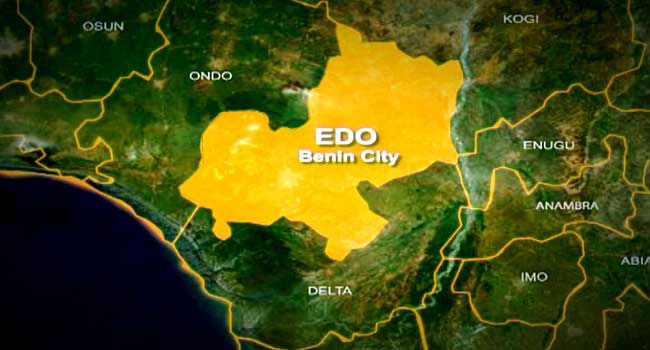
The political landscape of Edo State has been recently marred by accusations and counter-accusations regarding attacks on three local government council secretariats. The Peoples Democratic Party (PDP), through its state chairman, Tony Aziegbemi, pointed fingers at Governor Godwin Obaseki, accusing him of orchestrating the attacks using thugs and armed men. However, Jarrett Tenebe, the Acting Chairman of the All Progressives Congress (APC) in Edo State, has vehemently denied these allegations, asserting that they are baseless, misleading, and politically motivated. Tenebe maintains that the attacks stemmed from internal conflicts and power struggles within the PDP itself, rather than being instigated by the Governor.
Tenebe’s defense of Governor Obaseki hinges on the Governor’s established reputation for upholding the rule of law and respecting democratic processes. He highlights the Governor’s commitment to good governance, transparency, and accountability, arguing that these qualities are incompatible with the alleged actions. Tenebe underscores that Obaseki’s administration has consistently prioritized these principles, earning him widespread respect and admiration from the people of Edo State. Therefore, according to Tenebe, it is highly improbable that the Governor would resort to such undemocratic tactics.
The APC’s investigation into the incidents, as presented by Tenebe, paints a different picture from the PDP’s narrative. Rather than being a top-down operation orchestrated by the Governor, the attacks are depicted as arising from simmering tensions and power struggles within the local government councils. These internal conflicts, according to Tenebe, have been festering for several months, finally erupting in the violence witnessed at the council secretariats. The APC’s findings suggest that the PDP’s accusations are a deliberate attempt to deflect attention from their internal wrangling and cast blame on the Governor.
Further strengthening their counter-narrative, Tenebe cites eyewitness accounts and stakeholder testimonies that corroborate their version of events. These individuals, according to Tenebe, confirmed that the violence and destruction were perpetrated by rival factions within the councils, specifically within the PDP. The aim of these factions, as per the APC’s investigation, was to assert control and dominance over the secretariats, escalating their internal power struggle into physical confrontation. This internal strife, Tenebe argues, is the root cause of the attacks, not any directive from the Governor.
Tenebe also emphasizes the Governor’s active role in seeking peaceful resolutions to the ongoing conflicts within the local government councils. He portrays the Governor as a mediator working to ensure the councils operate peacefully and democratically, in stark contrast to the image of a leader inciting violence. This portrayal further reinforces the APC’s argument that the Governor is committed to peaceful governance and would not be involved in the alleged attacks.
Finally, Tenebe presents documented evidence that purportedly demonstrates the Governor’s compliance with all court orders and injunctions related to the local government councils. This adherence to legal processes, according to Tenebe, further underscores the Governor’s commitment to the rule of law and contradicts the PDP’s accusations of unlawful actions. By presenting this evidence, the APC aims to solidify their defense of the Governor and portray the PDP’s accusations as a politically motivated smear campaign. The situation in Edo State remains tense, with both parties presenting conflicting narratives. The truth behind the attacks on the local government council secretariats remains a matter of ongoing investigation and political debate.









