









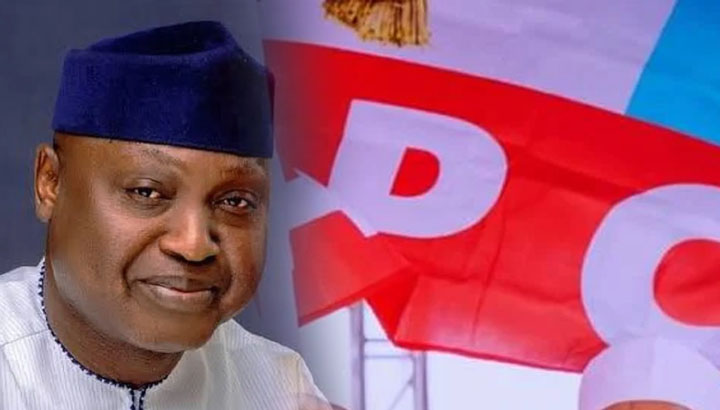
The political landscape in Ekiti State is heating up as the 2026 gubernatorial election approaches. The ruling All Progressives Congress (APC) and the opposition Peoples Democratic Party (PDP) are engaging in a war of words, each side exuding confidence in their ability to secure victory. The APC, through its Publicity Secretary, Segun Dipe, has dismissed the PDP’s ambitions as a “mission impossible,” citing Governor Biodun Oyebanji’s purported remarkable performance and the PDP’s perceived internal disunity. Dipe argues that the PDP is in such disarray that it cannot mount a credible challenge in 2026, suggesting they should instead focus on the 2030 election. He points to the defection of key PDP members to the APC as further evidence of the opposition’s weakness.
In contrast, a group within the PDP, the Ekiti State PDP Frontier Group, is rallying the party to unite and unseat Governor Oyebanji in 2026. The group’s coordinator, Hakeem Adebomojo, stresses the importance of a united front to achieve this objective. He characterizes the Oyebanji administration as an “affliction” that must be ended, urging all segments of the party to collaborate. This call for unity comes amidst acknowledgement of internal divisions within the PDP, highlighting the challenge the party faces in presenting a cohesive front against the incumbent governor.
The PDP’s zonal representatives have expressed support for the Frontier Group’s efforts to revitalize the party. They commend the group’s dedication and resilience in defending the party’s interests. Notably, Sanya Atofarati, the APC Southwest Publicity Secretary, praised the PDP’s efforts, highlighting the complexity of the political landscape and the potential for cross-party alliances. The representatives also lauded the leadership of Chief Dare Adeleke, chairman of the PDP State Caretaker Committee, for his role in fostering unity within the party over the past six months. This suggests that the PDP is actively working to address its internal divisions and build a stronger foundation for the upcoming election.
A key point of contention between the two parties is Governor Oyebanji’s performance. The APC insists that the governor has performed exceptionally well, highlighting the completion of the cargo airport, the construction of a bridge, road improvements, consistent salary payments, and a swift response to the new salary structure. They argue that the PDP is deliberately ignoring these achievements. Conversely, the PDP contends that the people of Ekiti State are not receiving value for the resources allocated to the state and local governments under the Oyebanji administration. They believe that public dissatisfaction with the governor’s performance will be reflected in the 2026 election results.
The PDP’s argument centers on the perceived lack of commensurate value for the funds received by the state. They imply mismanagement or ineffective utilization of resources, suggesting that the visible improvements touted by the APC are not sufficient to justify the level of funding. This sets up a crucial debate for the upcoming election: the APC’s narrative of progress and development versus the PDP’s claim of inadequate returns on public investment. The electorate will ultimately decide which narrative resonates more strongly with their lived experiences.
The 2026 Ekiti State gubernatorial election promises to be a closely contested race. The APC, confident in its incumbency and perceived achievements, faces a PDP striving to overcome internal divisions and capitalize on public sentiment regarding the governor’s performance. The contrasting narratives of progress versus mismanagement, unity versus disarray, will likely dominate the campaign discourse. The outcome will depend on which party can effectively mobilize its base and convince the electorate of its vision for Ekiti State.









