









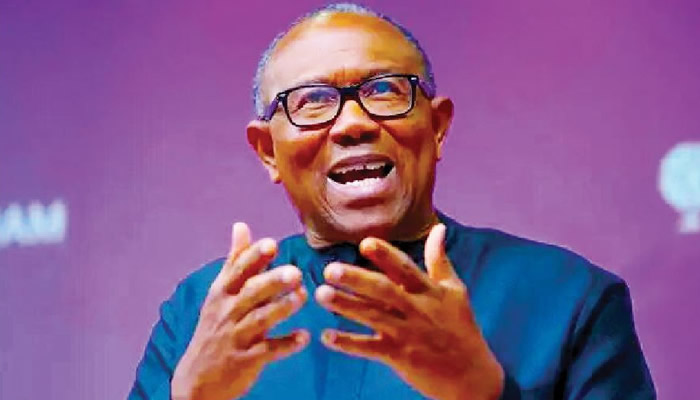
A heated exchange erupted between the ruling All Progressives Congress (APC) and supporters of the Labour Party’s 2023 presidential candidate, Peter Obi, following an interview on Arise Television. The controversy stemmed from comments made by the APC’s National Publicity Secretary, Felix Morka, who accused Obi of “crossing the line” with his criticisms of President Bola Tinubu’s administration. Morka contended that Obi’s remarks were not constructive opposition but rather malicious attempts to destabilize the government, concluding with a veiled warning that Obi would face consequences for his actions.
Morka’s statements ignited a firestorm of reactions, particularly from Obi’s supporters, known as “Obidients.” They interpreted Morka’s words as a direct threat to Obi’s life and safety. Yunusa Tanko, the National Coordinator of the Obidient Movement, vehemently condemned the APC’s stance, warning against any attempts to intimidate or arrest Obi. Tanko argued that Obi’s criticisms were legitimate expressions of concern about governance and fell well within the bounds of democratic discourse. He emphasized that any action against Obi would be met with strong resistance from the Nigerian people. He called upon security agencies to investigate Morka’s statement, emphasizing the need to hold the APC accountable for such pronouncements.
Peter Obi himself responded to the alleged threat, expressing concern over the potential danger to his family and associates. He reiterated his commitment to speaking truth to power, emphasizing the importance of freedom of expression in a democratic society. Obi framed the APC’s reaction as symptomatic of a growing authoritarianism in Nigeria, where dissent is increasingly stifled. He called upon Nigerians to defend their democratic rights and resist any attempts to suppress free speech. He also invited anyone to point out exactly where he “crossed the line,” maintaining that his intentions were purely to offer constructive criticism.
The APC, however, downplayed the controversy. Bala Ibrahim, the National Publicity Director of the APC, expressed disappointment over the reactions from Obi’s supporters. He argued that Morka’s words had been misinterpreted and that there was no intention to threaten or insult Obi. Ibrahim called on Obi to restrain his supporters and promote a more mature political discourse, devoid of threats and insults. He asserted that the APC’s intention was not to stifle criticism but to encourage responsible engagement. He posited that the intensity of the Obidients’ reaction was disproportionate to Morka’s statement.
The incident underscored the existing tensions between the ruling party and the opposition, particularly in the aftermath of the closely contested 2023 presidential election. The “Obidients” interpreted the APC’s response as an attempt to silence dissenting voices and suppress legitimate criticism of the government. They viewed Obi’s pronouncements not as incitements to violence but as expressions of concern about the direction of the country. Conversely, the APC portrayed Obi’s criticisms as inflammatory and destabilizing, accusing him of attempting to undermine the government’s legitimacy.
The exchange also highlighted the broader issue of freedom of expression in Nigeria’s political landscape. While the constitution guarantees this right, its practical application often faces challenges. The incident raised questions about the boundaries of acceptable political discourse and the potential for intimidation and suppression of dissenting views. The “Obidients” viewed the APC’s stance as an attempt to muzzle criticism and create a climate of fear, while the APC maintained that it was simply responding to what it perceived as irresponsible and dangerous rhetoric. The police, meanwhile, claimed to be unaware of the situation, adding another layer of complexity to the unfolding narrative. The controversy left observers questioning the future of political discourse in Nigeria and the potential for further escalation of tensions between the ruling party and the opposition.









