









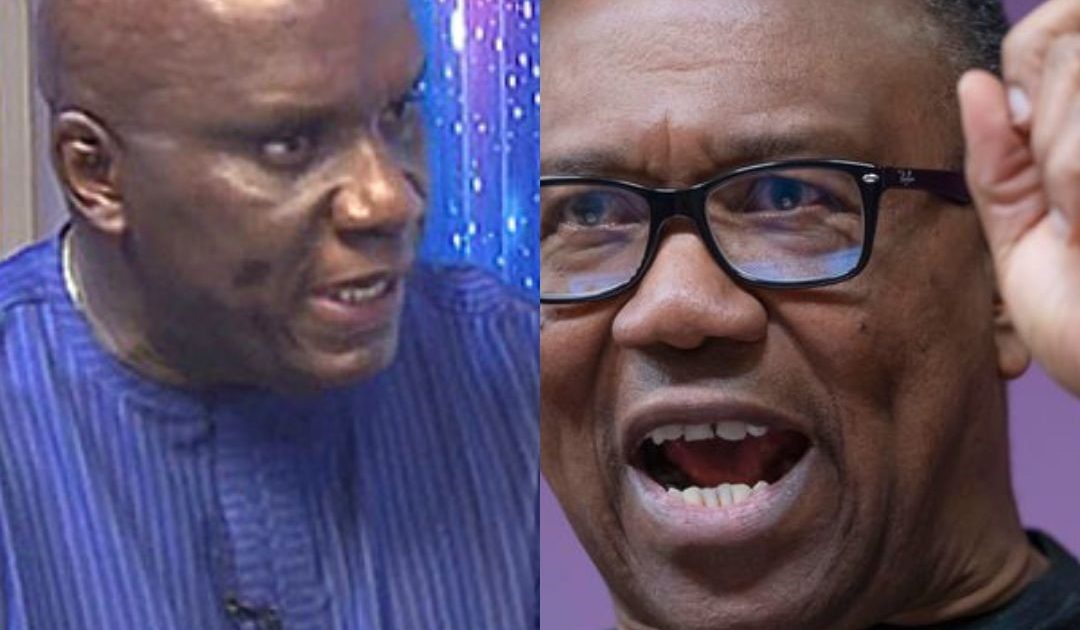
A heated exchange between All Progressives Congress (APC) spokesperson, Felix Morka, and Labour Party’s Peter Obi unfolded following Obi’s New Year message, which contained criticisms of President Tinubu’s administration. Obi subsequently claimed on social media that Morka had threatened his life and that of his family in response to the message. This allegation stemmed from Morka’s remarks during an Arise TV interview where he stated that Obi had “crossed the line so many times” and would have to “manage” the consequences. Morka vehemently denies making any threats, characterizing Obi’s accusations as a deliberate misinterpretation of his words and an attempt to manipulate public sentiment.
Morka insists his comments were solely directed at Obi’s political rhetoric, not his personal safety. He points to the context of the Arise TV interview, where he was responding to questions about the strong language used against Obi by members of the APC, such as “prophet of doom” and “voodoo economics.” Morka maintains that his statement about Obi “crossing the line” referred solely to the perceived negativity and inaccuracy of Obi’s political commentary, specifically his New Year message which the APC considered excessively critical and misleading. Morka argues that Obi’s interpretation of his words as a threat is a deliberate distortion designed to garner sympathy and portray himself as a victim.
Furthermore, Morka asserts that Obi’s accusations are a strategic attempt to stifle legitimate political discourse. He emphasizes that free speech is a right enjoyed by all Nigerians, including himself, and that Obi does not have a monopoly on expressing his political views. Morka contends that Obi’s critiques of the current administration are often based on misinformation and that challenging those critiques should not be construed as a threat. He points out Obi’s frequent and outspoken use of various platforms to disseminate his political perspectives, arguing that Obi himself is a prominent practitioner of free speech and should therefore expect counter-arguments and criticism.
The core of Morka’s argument rests on the assertion that his words were taken out of context and manipulated to create a false narrative of threat. He meticulously dissects his statement from the Arise TV interview, underscoring that the phrase “he has what’s coming to him” did not imply physical harm or any form of violence. Instead, Morka explains, it was a figurative expression meaning that Obi should be prepared to face the political repercussions and public scrutiny that naturally follow from making controversial statements. He highlights the interview transcript as evidence, urging a close reading that he believes clearly demonstrates the absence of any threatening language.
Morka further dismisses Obi’s accusations as an attempt to deflect from the substance of his criticisms and to avoid engaging in meaningful political debate. He accuses Obi of resorting to “attention-seeking, playing-the-victim, emotional blackmail” tactics instead of addressing the merits of the arguments against his New Year message. Morka portrays Obi’s reaction as a diversionary tactic to shift public focus away from the content of his political pronouncements and onto a manufactured controversy about alleged threats. This, Morka suggests, is a convenient way for Obi to avoid accountability for what he views as irresponsible political pronouncements.
In summary, the dispute hinges on the interpretation of Morka’s statement about Obi “crossing the line.” While Obi perceives it as a direct threat to his safety and that of his family, Morka insists it was a figurative expression pertaining solely to the political consequences of Obi’s actions. Morka accuses Obi of twisting his words to create a false narrative, arguing that his comments were made within the context of a political debate and should not be construed as personal threats. He defends his right to challenge Obi’s criticisms and emphasizes the importance of open political dialogue in a democratic society. The incident highlights the volatile nature of political discourse and the potential for misinterpretations and escalating tensions, particularly in a highly charged political climate.









