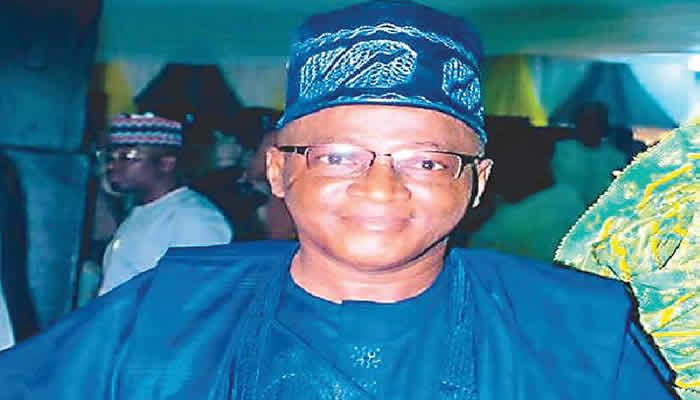
In a recent interview, Tunde Oladunjoye, the Publicity Secretary of the All Progress Congress (APC) in Ogun State, addressed the allegations of violence and election manipulation that arose following the recent local government elections in the state. Oladunjoye criticized the People’s Democratic Party (PDP) for what he identified as a pattern of behavior wherein they only praised the electoral body, the Independent National Electoral Commission (INEC), during their victories and blamed it when they lost. He cited examples of the PDP’s reactions in Edo State and Ondo State, where they quickly condemned elections after failures. According to him, the PDP’s persistent complaints indicate a lack of maturity in their approach to democracy, which detracts from the development of a healthy political environment.
Oladunjoye also addressed the PDP’s accusations of rigging and manipulation, asserting that the APC campaigned vigorously across all 236 wards and 5,050 polling units in Ogun State. He dismissed the PDP’s divisive internal conflicts, as the party faced a factional struggle led by Ladi Adebutu and Sikirulliah Ogundele, which he claims weakened their electoral chances. In his view, it was unrealistic for the PDP—divided and disorganized—to expect a victory against the APC, which has a stable footing in Ogun State. He pointedly remarked on the alleged violence instigated by the PDP, pointing to instances where their members were documented justifying violent acts committed by their supporters. The APC’s claims of violence against them were starkly contrary to the PDP’s narrative.
In response to specific allegations of thuggery and the use of security operatives to oppress PDP members, Oladunjoye maintained that the APC operated within legal bounds, while he painted Adebutu as desperate. He referred to pictures of apprehended individuals wielding dangerous weapons as evidence of the chaos surrounding the elections, arguing that such desperation was unwarranted. The narrative of a supportive military force was dismissed, with Oladunjoye clarifying that the military had no involvement in the elections, thereby criticizing the PDP for obstructing a military patrol vehicle and threatening soldiers. He recognized that maintaining order was essential, asserting that no one was silencing dissent but rather calling for lawful conduct from all party members.
As regards the allegations that Governor Dapo Abiodun diverted local government funds, Oladunjoye countered claims of fiscal mismanagement by emphasizing the governor’s consistent advocacy for local government autonomy. He urged the need for local government chairmen to accept responsibility for their roles, especially in the context of funding allocation. He argued that autonomy should not become an excuse for failures in governance and administration, and highlighted that traditional rulers, pensioners, and local government employees should be prioritized in budgetary considerations.
Furthermore, Oladunjoye stressed that the current state of local government administration in Ogun State was consistent with legislative expectations and accountability standards. His emphasis on fiscal responsibility ties back to his earlier points about proper governance and transparency, countering allegations that financial resources were being misappropriated. He argued that any returns to past systems should not undermine the effectiveness of local governance. In this light, he urged for a collaborative spirit between local government entities and the state government to ensure the needs of the populace were adequately met.
In summary, Oladunjoye’s interview serves as a defense of the APC’s actions and a criticism of the PDP’s alleged misconduct during the recent local elections. He called for a high standard of democracy and political engagement, emphasizing the importance of accountability and serving constituents. By painting the APC as a responsible party committed to the welfare of Ogun State and its people, he sought to shift the narrative back to a focus on governance rather than on the turbulence of election processes, urging all parties to engage in civil, responsible politics while respecting the rule of law.