









Paragraph 1: The Arrest Warrant and Investigation
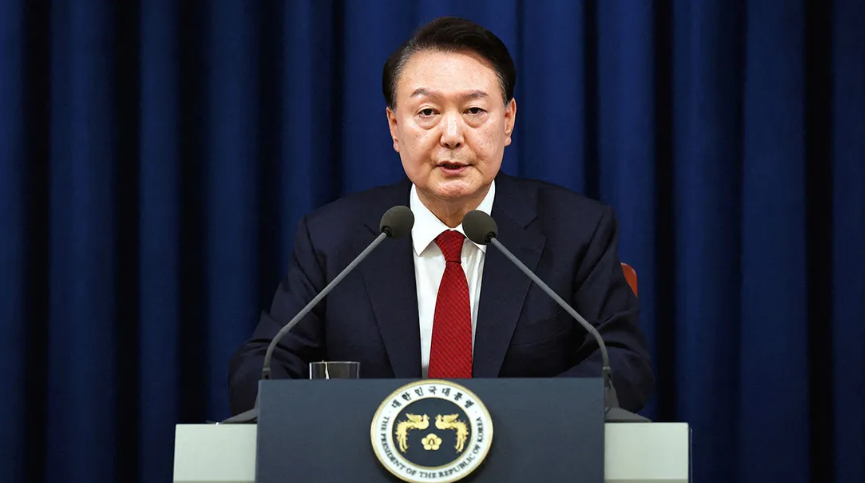
A political earthquake struck South Korea on Tuesday as a court issued an arrest warrant for suspended President Yoon Suk Yeol, marking an unprecedented moment in the nation’s history. The Corruption Investigation Office (CIO) is at the heart of the legal proceedings, pursuing an investigation into Yoon’s controversial attempt to impose martial law on December 3rd. This drastic measure, quickly rescinded due to overwhelming public opposition, has plunged the country into a state of political turmoil. The CIO’s pursuit of an arrest warrant followed Yoon’s repeated refusal to comply with three summonses for questioning, a defiance interpreted by some as an attempt to obstruct the investigation.
Paragraph 2: The Martial Law Controversy and its Aftermath
Yoon’s ill-fated attempt to declare martial law sent shockwaves through South Korea, a nation with a history of military rule. The move, justified by Yoon as a necessary measure to protect the nation from unspecified "anti-state forces," was met with fierce resistance from the public and political opponents alike. The swift reversal of the declaration just hours after its announcement did little to quell the growing political crisis. The incident exposed deep fissures within the government and raised serious questions about Yoon’s judgment and leadership.
Paragraph 3: Impeachment and Political Instability
The fallout from the martial law declaration culminated in the National Assembly’s vote to impeach Yoon on December 14th. This decision further destabilized the already fragile political landscape, initiating a process of constitutional review by the Constitutional Court. The court now faces the critical task of determining the legality of the impeachment vote, a decision that will ultimately determine Yoon’s political fate. The ongoing legal proceedings have left South Korea in a state of suspense, awaiting a resolution that will shape the country’s future leadership.
Paragraph 4: The Presidential Security Service’s Intervention
Adding another layer of complexity to the unfolding crisis is the intervention of the Presidential Security Service (PSS). This agency, tasked with protecting the president, has actively impeded the CIO’s investigation by blocking access to Yoon’s office and residence. The PSS cited military security concerns as the justification for their actions, raising questions about the potential influence of security considerations on the pursuit of justice. This obstruction has further fueled tensions between the investigative body and the executive branch, hindering the progress of the legal proceedings.
Paragraph 5: Acting Presidency and Political Vacuum
With Yoon suspended from office, South Korea has experienced a rapid succession of acting presidents. Choi Sang Mok assumed the role of acting president on Friday, following the impeachment of his predecessor, Han Duck Soo. This swift turnover in leadership underscores the volatile political climate and the challenges of maintaining stability during a period of intense uncertainty. The frequent changes in acting presidency have created a sense of political vacuum, further complicating the ongoing crisis.
Paragraph 6: The Path Ahead: Uncertainty and Constitutional Crisis
South Korea now grapples with a complex constitutional crisis. The Constitutional Court’s upcoming decision on the legality of Yoon’s impeachment will be pivotal in determining the nation’s political trajectory. The court’s deliberations will weigh heavily on the country’s democratic institutions and the rule of law. Meanwhile, the CIO’s investigation continues under the cloud of the PSS’s obstruction, raising questions about the transparency and independence of the legal process. The coming weeks and months will be crucial for South Korea, as it navigates this unprecedented period of political instability and seeks a path towards resolution. The outcome of these intertwined legal and political processes will shape the country’s future and determine the lasting consequences of this tumultuous chapter in its history.









