





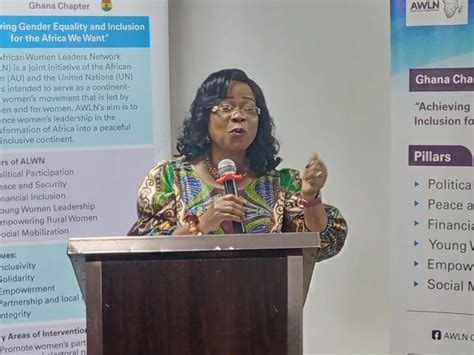
The Call for Gender Parity in Ghanaian Politics: Dr. Binka’s Advocacy for Women’s Leadership
Dr. Charity Binka, a prominent advocate for women’s rights and the Chairperson of the African Women Leaders Network (AWLN), Ghana Chapter, has issued a compelling call to action, urging President John Mahama to prioritize gender equality in his government appointments. Her appeal centers on the President’s manifesto commitment to allocate 30% of government positions to women, a pledge that resonates with the broader goals of women’s empowerment and increased political participation. Dr. Binka’s advocacy underlines the critical need for deliberate action and political will to address the historical underrepresentation of women in leadership roles. She emphasizes that fulfilling the 30% commitment is not merely a symbolic gesture but a crucial step towards achieving substantive gender equality and fostering a more inclusive and representative democracy in Ghana.
Central to Dr. Binka’s argument is the instrumental role of the Affirmative Action Act, a landmark piece of legislation passed in 2024. This Act sets forth a clear roadmap for achieving gender parity in leadership positions, mandating a progressive increase in women’s representation over time. The law stipulates a 30% target by 2026, rising to 35% between 2027 and 2028, and ultimately culminating in 50% representation – true parity – by 2030. Dr. Binka contends that adhering to this legal framework will equip the Mahama administration with the necessary tools to dismantle systemic barriers hindering women’s full participation in political and public life. She points to the limited four-year term of the administration as a further impetus for swift and decisive action. The call for urgency underscores the need to capitalize on the existing political momentum and prioritize the implementation of concrete measures to advance women’s representation at all levels of government.
Dr. Binka’s advocacy extends beyond the immediate call for 30% representation. She envisions a future where gender equality is ingrained in the fabric of Ghanaian governance. Her appeal targets not only the current administration but also future governments, emphasizing the importance of sustained commitment to women’s empowerment. She advocates for the consistent application of the 30% quota across a spectrum of appointments, encompassing Board of Directors, Chief Executive Officers, Ambassadors, and High Commissioners. This comprehensive approach underscores the need for a systemic shift that permeates all levels of leadership, ensuring that women have equitable opportunities to contribute their expertise and perspectives to the nation’s governance. By advocating for widespread inclusion, Dr. Binka champions a future where women are not merely token representatives but integral participants in shaping Ghana’s political and economic trajectory.
Furthermore, Dr. Binka highlights the profound symbolic significance of Professor Jane Naana Opoku-Agyemang’s election as Ghana’s first female Vice President. She hails this historic achievement as a testament to the capabilities of women and a powerful affirmation of their potential to excel in the highest echelons of leadership. Professor Opoku-Agyemang’s tenure serves as a compelling example of female leadership, demonstrating the capacity of women to not only occupy high office but to contribute meaningfully and effectively to the governance process. Dr. Binka’s praise for the former Vice President extends beyond her mere presence in office; she commends her grace, energy, and the unique perspective she brought to the political landscape, qualities that resonated deeply with the electorate.
Dr. Binka portrays Professor Opoku-Agyemang’s vice presidency as a watershed moment, a symbol of progress and a source of inspiration for aspiring female leaders. Her election shattered long-held stereotypes about women’s leadership capabilities and demonstrated that women can not only compete but excel in the demanding arena of national politics. This breakthrough serves as a powerful catalyst for change, paving the way for future generations of female leaders and encouraging greater participation of women in all spheres of public life. Dr. Binka’s heartfelt tribute to Professor Opoku-Agyemang underscores her conviction that women’s leadership is not just desirable but essential for a thriving democracy.
In essence, Dr. Binka’s advocacy encapsulates a multifaceted approach to achieving gender equality in Ghana. She combines a firm grounding in legal frameworks, as exemplified by her emphasis on the Affirmative Action Act, with a passionate belief in the transformative power of female leadership. Her call to action is not simply a plea for numerical representation but a call for a fundamental shift in attitudes and practices. She envisions a future where women are not just included but empowered to lead, to shape policy, and to contribute fully to the development of their nation. Her advocacy serves as a potent reminder that gender equality is not just a matter of fairness but a prerequisite for a just, prosperous, and truly representative society.








