









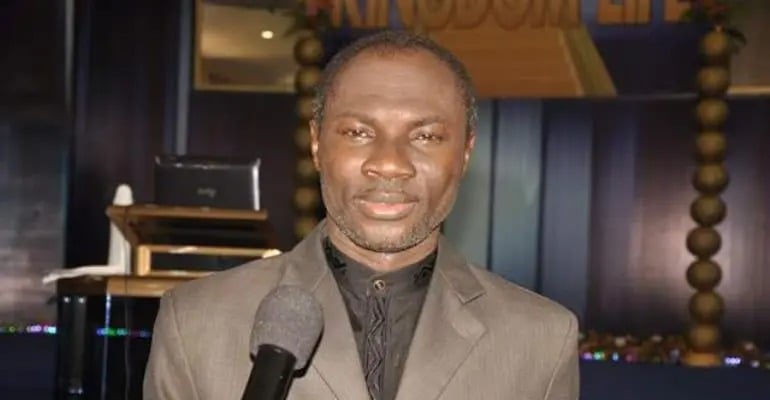
Prophet Emmanuel Badu Kobi, the charismatic leader of the Glorious Wave Church, has ignited controversy with his claims of divine intervention in the 2024 Ghanaian presidential election. He asserts that God directly instructed him to orchestrate voter apathy in Kumasi, a traditional stronghold of the New Patriotic Party (NPP), to pave the way for John Mahama’s victory. This alleged divine mandate, according to Badu Kobi, was crucial in securing the win for Mahama’s National Democratic Congress (NDC). The prophet’s pronouncements, delivered during a sermon on December 22nd, 2024, have been met with mixed reactions, sparking debates about the role of religion in politics and the credibility of such claims. His narrative portrays a divinely orchestrated political strategy, with Badu Kobi acting as the instrument of God’s will in influencing the election outcome.
Badu Kobi detailed his actions on election day, describing how he strategically positioned himself and members of his church in different locations. While other pastors were deployed to Accra and rural areas, Badu Kobi claims he was specifically tasked with disrupting voting activities in Kumasi. He portrays himself as actively working to suppress voter turnout in the NPP stronghold, directly attributing his actions to divine instructions. This account paints a picture of a coordinated effort, orchestrated by the prophet, to manipulate the electoral process in Kumasi, a city known for its significant NPP support. His narrative reinforces his claim of a divine strategy to ensure Mahama’s victory by suppressing the NPP vote.
The crux of Badu Kobi’s claim revolves around a purported divine prediction. He alleges that God forewarned him about the potential for a runoff election if NPP voter turnout was high. According to the prophet, God revealed that while a runoff would have still resulted in Mahama’s victory, it would have been an even more resounding triumph, with Mahama securing over 60% of the vote. This hypothetical scenario, as presented by Badu Kobi, suggests a divine preference for not just a Mahama victory, but a landslide victory. The prophet’s narrative emphasizes the supposed inevitability of Mahama’s presidency, regardless of voter turnout in Kumasi.
This claim of divine manipulation raises several questions about the validity of the election results and the ethical implications of such intervention. Critics argue that attributing political outcomes to divine intervention undermines the democratic process and disrespects the will of the people. Furthermore, it raises concerns about the potential for religious leaders to exploit their influence for political gain. While Badu Kobi presents his actions as divinely guided, skeptics view his claims as an attempt to take credit for the NDC’s victory and solidify his position as a prophetic figure.
The official results declared by the Electoral Commission of Ghana on December 9th, 2024, confirmed John Mahama’s victory with 6,328,397 votes, while his opponent, Dr. Mahamudu Bawumia of the NPP, received 4,657,304 votes. This outcome, coupled with the NDC’s majority win in Parliament, marked a significant political shift in Ghana. However, Badu Kobi’s claims add a layer of controversy to the election results, prompting debate about the fairness and transparency of the process. His narrative challenges the conventional understanding of electoral outcomes, suggesting that divine forces played a decisive role.
The prophet’s pronouncements have generated significant public discourse, with many questioning the appropriateness of religious leaders intervening in political affairs. The controversy surrounding Badu Kobi’s claims highlights the complex interplay between religion and politics in Ghana. While some believe in the possibility of divine intervention, others view such claims with skepticism, emphasizing the importance of upholding democratic principles and the sanctity of the electoral process. The debate sparked by Badu Kobi’s pronouncements is likely to continue, raising important questions about the boundaries between religious belief and political action.









