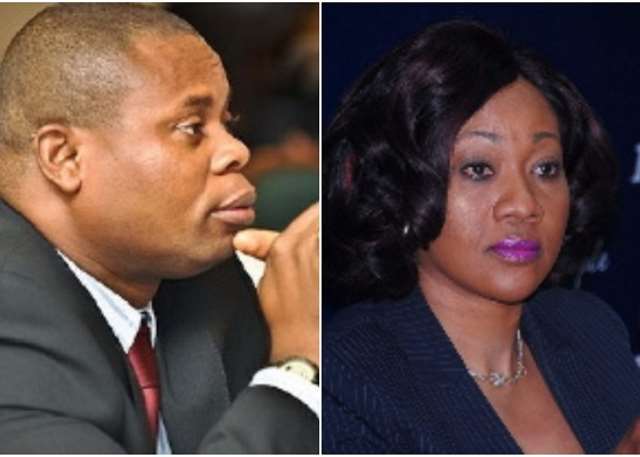
Franklin Cudjoe, the Founder and President of IMANI Africa, has criticized the Electoral Commission (EC) of Ghana for engaging in questionable practices that appear to be designed to elicit public reactions. His comments come in light of the EC’s announcement regarding shortages of ballot papers in certain constituencies within the Volta Region as Ghana approaches its 2024 general elections. Cudjoe took to social media to express his concerns, arguing that the EC’s actions are not simply cases of incompetence but rather calculated maneuvers to provoke public responses. He has characterized the EC’s behavior over the past six years as “clownish,” suggesting that it reflects a deliberate strategy to gauge popular dissatisfaction before retracting potentially controversial decisions.
In his critique, Cudjoe highlights previous instances where public outcry led the EC to reverse decisions, including a controversial directive that restricted media coverage of ballot counting at collation centers. According to him, such patterns indicate a troubling trend within the Commission—one characterized by erratic behavior aimed at testing public limits. He emphasizes that the leadership’s actions seem to follow a pattern where they only backtrack when faced with significant backlash, which raises questions about their commitment to upholding electoral integrity. This behavior, he argues, has eroded public confidence in the EC and calls into question its ability to conduct free and fair elections.
Cudjoe expanded his criticism to include logistical issues within the voter registration process, noting the limited timeframes and the constraints faced by voters due to fewer registration centers. He sees these challenges as part of a broader strategy where the Commission may intentionally create barriers to citizen participation in the electoral process. By highlighting these logistical shortcomings, Cudjoe seeks to illustrate what he perceives as the EC’s negligence towards ensuring a smooth and accessible voting experience for all Ghanaians, further contributing to a sense of disenfranchisement among the electorate.
Moreover, Cudjoe has raised alarms about recent issues with the serialisation of ballot papers, suggesting that these could be indicative of a broader attempt to manipulate the electoral outcome. He views these reported “mistakes,” particularly the shortage of ballots in strategically important regions, as symptomatic of a “surreptitiously dangerous ploy” that could compromise the election’s integrity. His statements reflect a growing concern among civil society and political observers regarding the possibility of electoral manipulation, which could undermine the democratic process in Ghana.
In light of these allegations, Cudjoe urges the public to remain vigilant and proactive as the elections approach, indicating that citizen awareness and involvement are crucial to ensuring free and fair elections. He acknowledges the important role that public sentiment plays in shaping the EC’s actions, thus highlighting the need for voters to express their opinions clearly and forcefully to prevent any dubious electoral practices that might be fostered by the Commission’s leadership. This call to action is indicative of a broader plea for civic engagement and scrutiny, particularly in an electoral climate that appears fraught with challenges.
As Ghana prepares for the December 7 elections, Cudjoe’s comments serve as a rallying cry for citizens to prioritize electoral vigilance. His criticisms of the EC encapsulate deep concerns regarding competence, transparency, and accountability within the Commission, spotlighting the critical importance of these factors in the democratic process. By illuminating these issues, Cudjoe aims not only to prompt a more informed electorate but also to foster a climate where electoral integrity is fiercely defended against any potential undermining, thereby emphasizing the pivotal role of civic duty in safeguarding democracy.