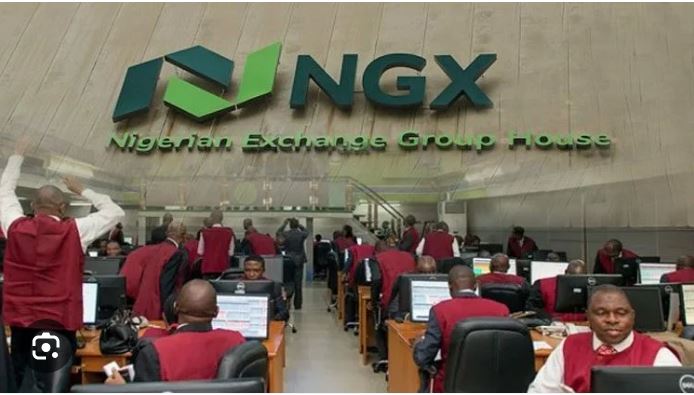
The Nigerian equity market experienced a remarkable surge during the period from July 2023 to June 2024, achieving an impressive 64.11% gain and closing at 100,057.49 points. This robust performance was propelled by a confluence of factors, including renewed investor interest from both domestic and foreign portfolios and the buoying effect of strong corporate earnings across various sectors. Notably, certain sectors emerged as significant contributors to this overall growth, demonstrating the diverse nature of the Nigerian economy and its potential for investment.
Delving into the sectoral performance, the Industrial Goods Index emerged as the frontrunner with an astounding 88.43% return, primarily attributed to the impressive share price movement of Dangote Cement, a major player in the construction and manufacturing sectors. The Oil and Gas Index followed closely with an 82.95% return, energized by the robust activities of key players like Seplat, TotalEnergies, and Oando, reflecting the ongoing significance of the oil and gas sector in the Nigerian economy. Meanwhile, the Fast-Moving Consumer Goods (FMCG) Index registered a substantial 75.84% appreciation, propelled by increased buying interest in major companies such as BUA Foods, Dangote Sugar, Flour Mills, and Honeywell, further boosted by the acquisition of NASCON, a prominent player in the salt industry.
The financial sector also contributed significantly to market growth, although at a more moderate pace. The Banking sector index climbed by 20.46% despite navigating regulatory changes related to recapitalization, net open position, cash reserve ratio, asymmetry corridor, and adjustments to the monetary policy rate. These measures, while aimed at stabilizing the financial system, also presented challenges to the banking sector. The Insurance sector, on the other hand, witnessed a healthy 38.42% return, driven primarily by investor demand for key players like AIICO and Mansard.
However, this period of economic growth was not without its challenges. Inflationary pressures persisted and intensified throughout the period, rising from 21.82% in January 2023 to a staggering 28.92% by December 2023. This upward trend continued into the first half of 2024, reaching 34.19% by June 2024. Several factors contributed to this persistent inflation, including the continued devaluation of the naira, disruptions to food supply chains, the removal of the petrol subsidy, which increased transportation costs, and persistent infrastructure deficiencies in transportation and storage facilities.
In response to these inflationary pressures, the Central Bank of Nigeria (CBN) implemented a series of monetary policy adjustments, primarily focusing on raising the benchmark interest rate. The rate was incrementally increased from 22.75% in February 2024 to 24.75% in March and further to 26.25% by May 2024. These interest rate hikes were accompanied by adjustments to other monetary parameters such as the cash reserve ratio and the asymmetry corridor, all aimed at controlling money supply and attracting foreign investment.
Despite the challenges posed by inflation and the CBN’s subsequent monetary tightening, the Nigerian economy demonstrated resilience, albeit with slower-than-expected growth. Real GDP growth reached 2.74% in 2023, falling short of the 3.75% target set in the government’s expenditure framework. Growth picked up slightly in the latter half of 2023, reaching 3.00%, and continued this momentum into the first half of 2024 with a 3.08% growth rate. This modest growth was supported by increased government spending, sustained consumer demand, and moderate export performance. However, the Fund Manager’s Report attributed the overall slow growth to the persistent headwinds of inflation, high interest rates, and the adverse impact of external factors, including global conflicts and foreign exchange challenges.
The global economic landscape also presented challenges during this period. Global economic growth decelerated to 3.0% in 2023 from 3.5% in 2022, reflecting a broader slowdown in economic activity. While the United States maintained a reasonable growth rate of 3.1%, major economies like China experienced slower expansion due to weak domestic demand and reduced foreign investment. The African continent also felt the impact of this global slowdown, with economic growth declining to 3.2% in 2023 from 4.1% in 2022.
The fixed-income market mirrored the prevailing economic conditions, with nominal yields on government securities rising significantly. Notably, the 364-day Treasury Bill rates jumped from 5.94% to 20.68%, reflecting the government’s efforts to attract investment and manage liquidity. However, the high inflation rate effectively eroded real returns, diminishing the attractiveness of these fixed-income instruments for investors.
Looking ahead, fund managers are adopting strategic approaches to navigate the challenging economic environment. Ajediran Omololu, the fund manager referenced in the report, highlighted the need for portfolio adjustments to target growth sectors in the new financial year. This strategic realignment aims to mitigate the risks posed by high inflation, elevated interest rates, and persistent exchange rate volatility. By focusing on sectors with strong growth potential, fund managers aim to deliver positive returns for investors despite the prevailing economic headwinds.