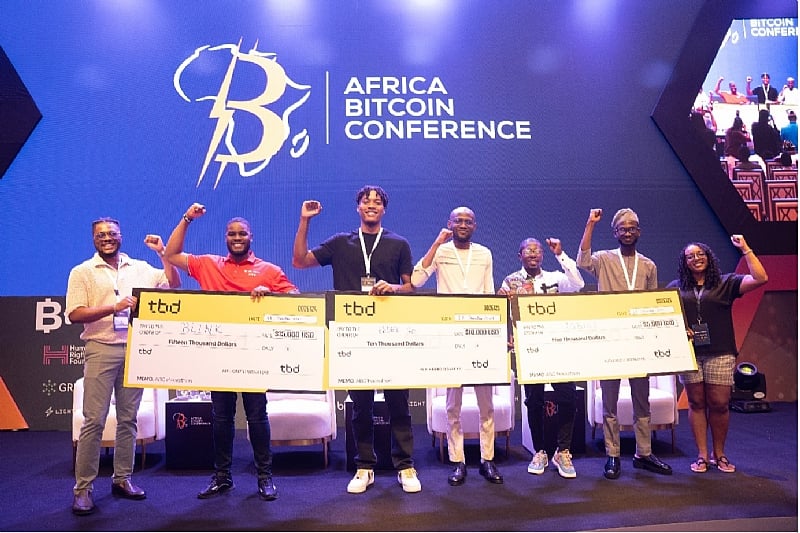
Block, a prominent global technology company specializing in financial services, recently concluded its TBD Hackathon, a coding competition designed to spur innovation in the African payments landscape. Held in conjunction with the Africa Bitcoin Conference, the hackathon challenged developers to devise inventive payment solutions using tbDEX, TBD’s open-source monetary protocol. The event attracted a diverse pool of talented developers who showcased remarkable creativity and technical prowess in addressing the complex challenges plaguing Africa’s financial systems.
The hackathon’s grand prize winner, Emmanuel Kufre from Nigeria, developed Blink, a decentralized wallet application acting as a payment processor for freelancers. This innovative solution directly addresses the burgeoning African gig economy, estimated at $28 billion. Blink, currently undergoing beta testing across five countries, enables freelancers to seamlessly accept global payments, mitigating the limitations of traditional banking systems and facilitating cross-border transactions. Kufre’s winning project earned him a $15,000 prize in Bitcoin, recognizing the potential of Blink to revolutionize how freelancers conduct business in Africa.
Beyond the grand prize, the TBD Hackathon highlighted several other noteworthy projects that demonstrated a deep understanding of the African financial landscape. “tbDEX Go,” developed by Andrew Glago and Eloke Ikiliagwu, offers a localized payment solution for travelers and tourists within Africa, simplifying transactions and enhancing convenience. Another standout project, “Igbigi,” created by Achego Tamunobelema and Fabari Agbora, facilitates instant app-to-bank and app-to-app money transfers while prioritizing user privacy. These projects, awarded $10,000 and $5,000 in Bitcoin respectively, underscore the breadth of innovation fostered by the hackathon and the potential for these solutions to positively impact the lives of individuals across the continent.
The success of the TBD Hackathon was facilitated by the partnership between Block and the Africa Bitcoin Conference, a platform dedicated to cultivating a robust Bitcoin ecosystem in Africa. Farida Bemba Nabourema, Convener of the Africa Bitcoin Conference, emphasized the event’s significance in showcasing the immense talent and creativity within the African developer community. The innovative solutions presented hold the key to tackling some of the continent’s most pressing financial challenges, including financial inclusion, cross-border payments, and transparency. The hackathon served as a testament to the transformative power of technology in addressing these issues and empowering individuals and businesses.
Angie Jones, Global VP of Developer Relations at Block, expressed profound admiration for the ingenuity and technical expertise displayed by the participants. She underscored the significance of the winning teams as representatives of the future of financial solutions in Africa. Their deep understanding of the challenges inherent in the current pan-African payment system, coupled with their development of potentially transformative solutions, highlights the promise of these innovations in reshaping the future of financial transactions. Block’s commitment to fostering innovation and supporting the developer community was evident throughout the event.
While the TBD business unit itself has since been wound down, its legacy in decentralized identity work continues through the Decentralized Identity Foundation. The TBD Hackathon served as a powerful demonstration of Block’s dedication to open-source technologies and empowering developers to create impactful solutions. Although the specific TBD initiative has concluded, Block remains committed to supporting open-source development and driving innovation in the financial technology space. Interested individuals can explore Block’s ongoing open-source endeavors and contribute to the collective effort by visiting their Open Source GitHub organization. The TBD Hackathon leaves behind a legacy of innovation, inspiring continued development in the pursuit of more accessible and efficient financial systems, particularly in regions facing significant financial inclusion challenges.