





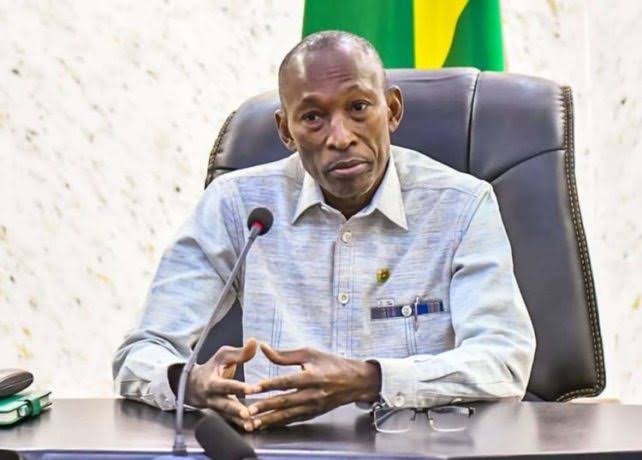
Burkina Faso, a landlocked nation in West Africa, finds itself grappling with political instability and a persistent jihadist insurgency. The recent dismissal of Prime Minister Apollinaire Joachim Kyelem de Tambela marks another twist in the nation’s turbulent political landscape, raising questions about the trajectory of the ruling military junta and its approach to addressing the multifaceted challenges facing the country. This dismissal, enacted via presidential decree, comes without explicit justification, adding to the air of uncertainty surrounding the government’s internal dynamics. Kyelem de Tambela, appointed in October 2022 following the coup led by Captain Ibrahim Traore, had navigated three successive cabinet reshuffles, suggesting a degree of resilience within the junta’s power structure. His abrupt removal signals potential shifts within the ruling regime and possibly reflects internal disagreements on policy or strategy.
The current political turmoil is rooted in a series of coups that have rocked Burkina Faso in recent years. In January 2022, Lieutenant-Colonel Paul-Henri Sandaogo Damiba seized power, ousting the elected president, Roch Marc Christian Kabore. Damiba’s rule proved short-lived, as he was overthrown just eight months later by Captain Traore, who now leads the military junta. This internal power struggle reflects the fragility of the political landscape and the ongoing competition for control within the armed forces. Damiba’s exile in neighboring Togo highlights the precariousness of power and the potential for further instability.
The junta, under Traore’s leadership, has prioritized the restoration of national sovereignty, often expressing skepticism towards Western influence, particularly from former colonial power France. This sentiment has driven Burkina Faso closer to Russia, aligning with fellow Sahel nations Mali and Niger, both of which are also under military rule following coups. This shift in alliances reflects a broader regional trend of distancing from traditional Western partners and exploring alternative relationships, particularly with Russia, which has positioned itself as a security partner in the fight against jihadist groups.
The growing ties with Russia are manifested in various forms of cooperation, including military training and support. Burkina Faso’s Foreign Minister, Karamoko Jean-Marie Traore, articulated the perceived benefits of this partnership, suggesting that Russia’s approach is “better suited” to the country’s needs than the historical relationship with France. This statement underscores the junta’s desire to assert its independence and pursue partnerships that it considers more aligned with its national interests.
The regional implications of this realignment are significant. Burkina Faso, Mali, and Niger have collectively withdrawn from the Economic Community of West African States (ECOWAS), accusing the organization of being unduly influenced by France. This departure signifies a growing rift between these countries and the regional bloc, potentially complicating efforts to address shared challenges such as security and economic development. The shared experiences of military coups and struggles against jihadist violence have forged a sense of solidarity among these nations, prompting them to seek alternative alliances and strategies.
Underlying the political instability is the persistent threat of jihadist violence, which has plagued the Sahel region for over a decade. Originating in northern Mali in 2012, the insurgency spread to Niger and Burkina Faso in 2015, causing widespread displacement and humanitarian crisis. The conflict has claimed the lives of thousands, including both civilians and security forces, and has forced millions to flee their homes. The ongoing violence underscores the urgent need for effective security strategies and the importance of regional cooperation in addressing the root causes of the conflict. The influx of displaced populations has strained resources and created humanitarian challenges, further exacerbating the complex situation.
Russia’s involvement in the region, including the deployment of military instructors to Burkina Faso and other African countries, represents a significant development in the geopolitical landscape. This engagement adds another layer of complexity to the ongoing conflict and raises questions about the long-term implications of Russia’s expanding influence in the region. The efficacy of Russian support in combating jihadist groups remains to be seen, and the potential for increased competition and tensions among international actors operating in the region is a concern.
The dismissal of the prime minister in Burkina Faso underscores the fluid political situation and the ongoing challenges facing the country. The junta’s focus on national sovereignty and its pivot towards Russia reflect a broader regional trend of reassessing alliances and seeking alternative partnerships. The persistent jihadist insurgency continues to be a major security threat, displacing populations and fueling instability. The evolving political dynamics, coupled with the complex security environment, necessitate a comprehensive approach that addresses both the immediate security concerns and the underlying factors contributing to the crisis. The international community must engage constructively to support efforts towards stability and sustainable peace in the region, while respecting the sovereignty of nations and promoting inclusive governance. The future of Burkina Faso hinges on its ability to navigate these complex challenges and forge a path towards greater stability and security for its people.








