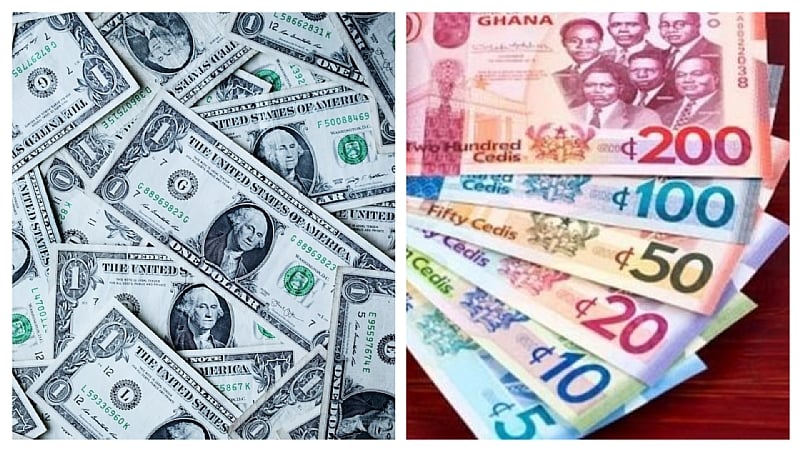
The Ghanaian Cedi has demonstrated a sustained period of appreciation against the United States dollar, marking a significant positive trend in the Ghanaian economy. As of Saturday, May 24, 2025, the Cedi traded at a buying rate of GHS11.18 per dollar and a selling rate of GHS11.98, indicating a strengthened position for the local currency. This upward trajectory translates to increased purchasing power for Ghanaians importing goods and services priced in dollars and potentially contributes to lower inflation rates. The observed appreciation signifies a positive shift in market dynamics, potentially influenced by increased investor confidence, positive economic indicators, or favorable trade balances.
A comparative analysis of exchange rates across different market segments reveals variations that reflect the nuances of currency trading. Forex bureaus, which cater to individual transactions, offered rates of GHS11.70 for buying dollars and GHS12.50 for selling dollars. This difference, known as the spread, represents the bureau’s profit margin. The interbank market, where larger financial institutions trade currencies, displayed tighter spreads with buying and selling rates of GHS10.94 and GHS10.96 per dollar respectively. This smaller spread reflects the higher volumes and lower transaction costs associated with interbank trading. The variations in exchange rates across these platforms highlight the importance of market awareness for individuals and businesses seeking to optimize their currency exchanges.
Extending the analysis to other major international currencies reveals a similar pattern of Cedi strength. Against the British Pound, the average exchange rate stood at GHS15.09 for buying pounds and GHS16.17 for selling them. Similarly, the Euro traded at GHS12.67 for purchases and GHS13.60 for sales. These rates, when compared with historical data, likely demonstrate a positive trend for the Cedi, indicating a strengthening of the Ghanaian currency in the global market. The relative strength of the Cedi against these major currencies can influence import and export dynamics, impacting the overall balance of trade.
A comparison of interbank rates provided by the Bank of Ghana further underscores the prevailing market trends. The Bank of Ghana quoted a selling rate of GHS14.79 for the Pound and GHS12.42 for the Euro. These rates, often considered benchmark rates, provide insights into the official valuation of the currencies and play a crucial role in regulating the foreign exchange market. The relatively lower rates offered by the Bank of Ghana compared to forex bureaus highlight the competitive dynamics within the currency exchange ecosystem.
The emergence of digital money transfer platforms has introduced a new dimension to the currency exchange landscape. Companies like LemFi and Afriex offer competitive rates for remittances from the US and UK to Ghana. For dollar transfers, LemFi provided a rate of GHS11.51 per dollar, while Afriex offered GHS11.70. For Pound transfers, LemFi’s rate was GHS15.84, and Afriex offered GHS15.47. Euro transfers saw Afriex offering GHS13.32 and LemFi providing GHS13.05. These digital platforms often provide more convenient and cost-effective solutions for international money transfers, contributing to increased financial inclusion and facilitating cross-border transactions.
Furthermore, the rates for digital subscription payments using Visa and Mastercard for services like Netflix, Spotify, and Apple Music were consistent at GHS11.34 per dollar. This standardized rate for digital subscriptions simplifies transactions for consumers and ensures predictable costs for accessing these global services. The overall analysis paints a picture of a robust Cedi, appreciating against major international currencies, with a diverse and competitive foreign exchange market catering to various transaction needs, from individual exchanges at forex bureaus to international remittances via digital platforms and digital subscriptions. This positive trend in the Cedi’s value bodes well for the Ghanaian economy, signifying increased financial stability and improved purchasing power for consumers.