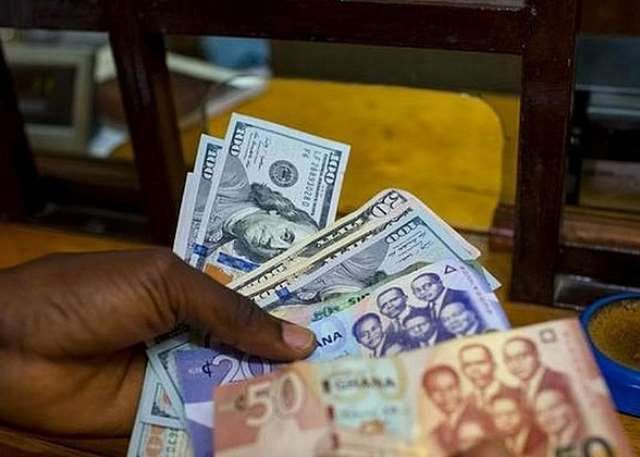
The Ghanaian Cedi has demonstrated a sustained period of appreciation against the United States dollar, reaching a buying rate of GHS11.50 and a selling rate of GHS12.19 per dollar as of May 23, 2025. This positive trend signifies a strengthening of the Cedi, offering more purchasing power for Ghanaians acquiring goods and services priced in dollars. The data, collated from Cedirates.com, a reliable source for currency information in Ghana, reflects the prevailing market dynamics and suggests a favorable economic climate for the local currency. This appreciation can be attributed to a confluence of factors, potentially including increased foreign investment, improved export performance, or effective monetary policies implemented by the Bank of Ghana. The observed rates suggest a narrower spread between buying and selling prices compared to previous periods, indicating greater stability and reduced volatility in the currency market.
Forex bureaus, which represent a significant segment of the currency exchange market, are offering slightly different rates. Those wishing to exchange dollars for cedis can obtain a rate of GHS11.70, while those converting cedis to dollars will receive a rate of GHS12.50. This difference, known as the bid-ask spread, represents the profit margin for the forex bureaus and reflects the inherent costs associated with currency exchange operations. The slightly higher rates at forex bureaus compared to the interbank market can be attributed to factors such as operational overheads and market competition. However, the relatively narrow spread between the interbank and forex bureau rates suggests a well-functioning and competitive market.
The interbank market, where financial institutions trade currencies directly with each other, offers more competitive rates. The buying rate for dollars stands at GHS11.62, while the selling rate is GHS11.64. This smaller spread compared to forex bureaus reflects the larger volumes and lower transaction costs associated with interbank trading. The interbank market plays a crucial role in determining the overall exchange rate and serves as a benchmark for other market segments. The robust performance of the Cedi on the interbank market further underscores its strengthening position against the dollar and reinforces the positive outlook for the Ghanaian economy.
Turning to other major international currencies, the Cedi also exhibits a strong performance against the British pound and the Euro. The average exchange rate for converting pounds to cedis is GHS15.42, while converting cedis to pounds fetches a rate of GHS16.38. Similarly, the Euro is trading at GHS12.97 for exchanging euros for cedis and GHS13.82 for converting cedis to Euros. These figures highlight the broad-based strength of the Cedi and its competitiveness in the international currency market. The relatively stable exchange rates against these major currencies contribute to greater predictability for businesses engaged in international trade and reduce the risks associated with currency fluctuations.
On the Bank of Ghana interbank market, the Pound is selling at GHS15.63, while the Euro is trading at GHS13.13. These rates, set by the central bank, serve as a reference point for the entire market and reflect the Bank of Ghana’s monetary policy objectives. The alignment of these rates with those observed in the wider market indicates the effectiveness of the central bank’s interventions and its commitment to maintaining stability in the currency market. The relatively strong performance of the Cedi against both the Pound and the Euro on the interbank market further solidifies its positive trajectory.
For money transfers, popular platforms like LemFi and Afriex offer competitive rates for remittances from the US or the UK to Ghana. LemFi offers a rate of GHS11.70 per dollar, while Afriex provides a rate of GHS12.44. For the British pound, LemFi’s rate is GHS15.70, and Afriex’s rate is GHS16.77. For the Euro, Afriex offers GHS14.10, while LemFi’s rate stands at GHS13.23. These variations reflect the different business models and cost structures of each platform. The competitive landscape in the remittance market benefits consumers by offering choices and potentially lower transfer fees. The relatively favorable exchange rates provided by these platforms further enhance the value of remittances sent to Ghana, contributing to the overall economic well-being of recipients.
Finally, for digital subscription payments using Visa and Mastercard for services like Netflix, Spotify, or Apple Music, the exchange rate is GHS12.47 for both cards. This unified rate simplifies transactions for consumers and provides transparency in pricing. The fact that this rate is competitive with prevailing market rates ensures that consumers are not disadvantaged when making international digital payments. This consistency in pricing across different platforms streamlines the process for users and contributes to the seamless integration of global digital services into the Ghanaian market. The overall picture painted by these exchange rates is one of a strengthening Cedi, a stable and competitive currency market, and a positive outlook for the Ghanaian economy.