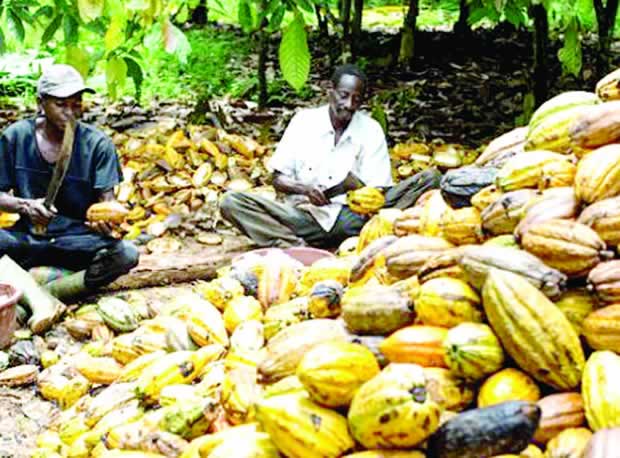
The Nigerian cocoa industry stands at a crossroads, its potential hampered by structural deficiencies and a history of mismanagement. The Cocoa Farmers Association of Nigeria (CFAN) advocates for a regulatory approach to revitalize the sector, emphasizing the need for a National Cocoa Management Board (NCMB) focused solely on oversight and development, rather than direct involvement in cocoa trading. CFAN President, Adeola Adegoke, argues that government participation in cocoa sales stifles growth and that a regulatory board, free from commercial interests, is crucial for fostering a thriving and sustainable cocoa industry. He draws parallels to the defunct Nigerian Cocoa Marketing Board, highlighting its initial success in promoting quality and incentivizing production, but also acknowledging its eventual downfall due to corruption and price manipulation that ultimately harmed farmers.
Adegoke contends that the abolishment of the marketing board in 1986 left the cocoa industry adrift, operating without a clear regulatory framework and leaving farmers vulnerable to exploitation by middlemen. This lack of coordination across different government ministries responsible for various aspects of the cocoa value chain – from production to trade and export promotion – has created a fragmented and inefficient system. He emphasizes the need for a centralized body dedicated to research, enforcement of regulations, and promoting sustainable practices, leaving commercial activities to the private sector. This, he believes, will attract investment, ensure fair pricing, and protect farmers’ livelihoods.
The CFAN’s vision for the NCMB revolves around a multi-pronged approach. Firstly, it calls for a focused mandate on research and development, emphasizing the need for adequately funded research institutes to address challenges like aging cocoa trees and promote higher yields. Secondly, it stresses the importance of enforcing regulations related to child labor and pesticide use, ensuring ethical and sustainable practices within the industry. Thirdly, it advocates for the development of a coordinated national cocoa agenda involving state and local governments, recognizing their crucial role as custodians of the land where cocoa is cultivated. This national agenda should encompass targets for land area under cultivation, preferred cocoa varieties, and expected yields, providing a roadmap for growth and development.
Adegoke warns against allowing the NCMB to engage in commodity trading, arguing that such involvement would create a conflict of interest, compromising its ability to enforce contracts and protect investments. He believes that a regulatory board entangled in commercial activities would deter investors and undermine the very purpose it is meant to serve. Instead, he advocates for a clear separation of roles, with the NCMB focusing on creating a conducive environment for private sector participation and ensuring a level playing field for all stakeholders. This, he argues, will foster trust and attract the necessary investment to revitalize the industry.
Regarding the NCMB’s ambitious target of increasing cocoa production from 280,000 to 500,000 metric tonnes, Adegoke expresses confidence that this is achievable within two years, provided the right policies are implemented. He points to the potential of Nigeria’s 22 cocoa-producing states, suggesting that even without expanding cultivated land, significant gains can be made through rehabilitating existing farms and adopting improved agricultural practices. He emphasizes the need for targeted interventions like grafting aged trees, rather than uprooting them, and stresses the importance of supporting research institutes to develop and disseminate best practices.
Beyond production targets, Adegoke identifies other critical areas requiring the NCMB’s attention. He highlights the need for improved infrastructure in cocoa-producing communities, including schools and healthcare facilities, as essential for attracting younger generations to cocoa farming. He also emphasizes the importance of addressing land access issues and promoting environmentally sustainable practices to ensure the long-term viability of the industry. By creating a more attractive and sustainable cocoa sector, he believes Nigeria can not only increase production but also improve the livelihoods of cocoa farmers and contribute to the overall economic development of the country. Ultimately, Adegoke’s message is clear: the key to unlocking Nigeria’s cocoa potential lies in a well-structured and empowered regulatory board focused on governance, sustainability, and creating an enabling environment for private sector growth, avoiding the pitfalls of past mismanagement. This requires strong political will and a commitment to implementing sound policies that prioritize the long-term interests of the cocoa industry and the farmers who are its backbone. While the government aims to increase cocoa processing, recognizing the higher value of processed cocoa products, the CFAN’s focus remains on establishing a robust regulatory framework as the foundation for a thriving cocoa sector.