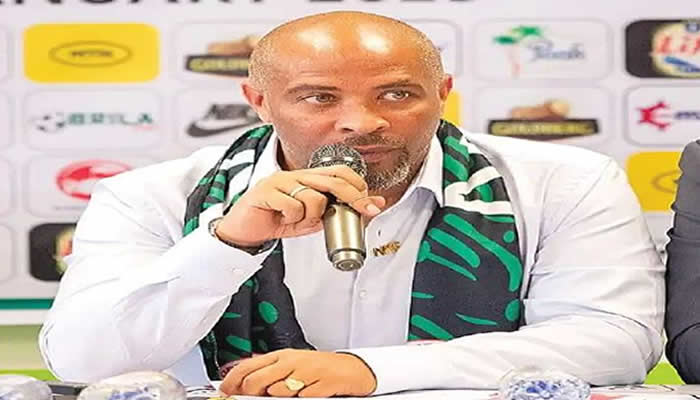
Eric Chelle, the head coach of the Super Eagles, has robustly defended his decision to include Kano Pillars captain Ahmed Musa and nine other Nigeria Premier Football League (NPFL) players in his squad for the upcoming Unity Cup exhibition tournament and the international friendly against Russia. This selection has sparked debate, given the perceived disparity in quality between domestic leagues and European leagues where many Nigerian internationals ply their trade. Chelle’s justification centers on several key arguments, including providing opportunities for home-based talent, assessing their compatibility with his tactical vision, and recognizing the inherent qualities these players bring to the national team. The Unity Cup, featuring Nigeria, Ghana, Jamaica, and Trinidad & Tobago, offers a platform for these players to showcase their abilities on an international stage.
Chelle’s first line of defense emphasizes the vast pool of talent within Nigeria’s domestic league. He argues that it’s imperative to give these players a chance to demonstrate their quality and potentially earn a permanent spot in the national team setup. This approach not only broadens the selection pool but also fosters healthy competition among players, pushing them to elevate their performance. Ignoring this domestic talent pool would be a disservice to these players and potentially limit the overall strength of the Super Eagles. By including them in the squad, Chelle provides a valuable opportunity for them to gain experience at the international level and compete against high-caliber opponents.
Furthermore, Chelle highlights the importance of evaluating players within the context of his specific game plan and tactical approach. He aims to build a cohesive team with a distinct identity, and this requires selecting players who can readily grasp and adapt to his tactical vision. The Unity Cup provides a low-stakes environment to experiment with different systems and assess how various players fit into the overall strategy. This experimentation is crucial for building a team that can perform effectively in competitive matches, such as the upcoming friendly against Russia and future qualifiers.
Chelle’s selection process wasn’t arbitrary; it was informed by his direct observation of the NPFL. He recently spent time in Nigeria, attending several league matches and meticulously analyzing the performance of potential candidates. This firsthand assessment allowed him to form his own judgment of their abilities and determine their suitability for the national team. He emphasizes his confidence in their quality and their potential contribution to the Super Eagles. This hands-on approach underscores Chelle’s commitment to identifying talent regardless of where they play, challenging the notion that European-based players are inherently superior.
Beyond technical skills, Chelle also values the intangible qualities these home-based players bring to the table. He believes they possess a unique blend of intensity, aggressiveness, and a burning desire to represent their country. These attributes, often honed in the competitive environment of the NPFL, can inject much-needed dynamism and passion into the national team. Chelle views these qualities as crucial complements to the technical skills and experience of the European-based players, creating a more balanced and competitive squad.
Specifically addressing the inclusion of Ahmed Musa, Chelle leaves no room for ambiguity. He unequivocally states Musa’s talent, acknowledging him as a great player well-known throughout Nigeria. This endorsement emphasizes Musa’s continued relevance and value to the national team, despite playing in the domestic league. Chelle’s unwavering belief in Musa’s abilities dispels any doubts surrounding his selection and reinforces the message that talent transcends league affiliations. By highlighting Musa’s inclusion, Chelle underscores his commitment to selecting players based on merit, regardless of their club affiliation.
In conclusion, Eric Chelle’s decision to include ten home-based players, including Ahmed Musa, in the Super Eagles squad for the Unity Cup and the friendly against Russia is a strategic move based on several well-defined principles. He aims to provide opportunities for deserving domestic players, assess their suitability for his tactical vision, and integrate their unique qualities into the national team dynamic. Chelle’s hands-on approach, coupled with his firm belief in these players’ abilities, demonstrates his commitment to building a strong and competitive Super Eagles squad, drawing on talent from both domestic and foreign leagues. This inclusive approach not only strengthens the national team but also provides a valuable platform for home-based players to shine on the international stage.