





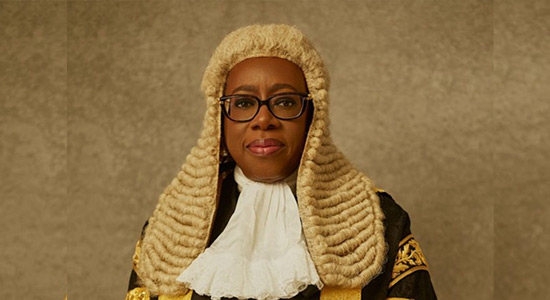
Justice Kudirat Kekere-Ekun, the Chief Justice of Nigeria (CJN), has issued a clarion call to stakeholders within the justice sector, urging them to actively address the escalating negative public perception of the judiciary. This appeal was made during the opening of the Court of Appeal’s 2024 Justices Annual Conference, themed “Judicial Introspection,” held in Abuja. The CJN acknowledged the National Judicial Council’s (NJC) role in receiving complaints against judges, but stressed that frivolous accusations would not be entertained. She emphasized the NJC’s commitment to supporting judges and justices while simultaneously exploring ways to impose consequences for baseless allegations. The conference served as a platform for addressing critical concerns surrounding the judiciary’s image and effectiveness.
The CJN highlighted the growing problem of conflicting court orders, acknowledging its prominence as a major concern within the judicial community. She attributed this issue, in part, to insufficient deliberation among judicial panels, stressing the importance of pre-judgment conferences. Kekere-Ekun underscored the significance of these conferences for appellate courts, emphasizing that multiple perspectives enhance decision-making. She advocated for timely consultations to resolve conflicting opinions before rulings are issued. Furthermore, she emphasized the need for a thorough review of trial court judgments and their rationale before cases reach the Court of Appeal, citing a recent case where a misinterpretation of a Court of Appeal decision led to an erroneous ruling in the trial court. The CJN’s remarks underscored the need for greater communication and collaboration within the judiciary to ensure consistency and accuracy in judicial decisions.
Justice Monica Dongban-Mensem, President of the Court of Appeal, echoed the CJN’s concerns while also emphasizing the evolving role of technology within the justice system. She acknowledged the benefits of social media in facilitating communication and information dissemination but also recognized the challenges it presents for the judiciary. These challenges include managing online reputation, addressing cyberbullying and harassment, and ensuring the integrity of digital evidence. Dongban-Mensem stressed the need for continuous intellectual development and the regular review of judicial practices to adapt to the digital age. She also addressed the growing integration of artificial intelligence (AI) within the judiciary, highlighting its potential to revolutionize justice administration. However, she cautioned that AI should be viewed as a tool to enhance judicial efficiency and decision-making, not as a replacement for judges, and emphasized the importance of addressing concerns related to bias, transparency, and accountability in the use of AI.
Attorney General of the Federation, Lateef Fagbemi (SAN), emphasized the crucial role of judicial independence in a democratic society. He asserted that an independent judiciary, free from external pressures, forms the bedrock of the rule of law. Fagbemi acknowledged the persistent challenges to judicial independence, ranging from political interference to public opinion, particularly on social media, and even well-intentioned reforms. He stressed the importance of vigilance and steadfastness in defending the judiciary’s autonomy. Fagbemi’s remarks highlighted the need for continuous efforts to safeguard the judiciary from undue influence and maintain its integrity.
Adegboyega Awomolo (SAN), Chairman of the Body of Benchers, urged stakeholders to disregard the National Bureau of Statistics data on corruption within the judiciary, labeling it as unjustified, unverified, and contentious. He defended the integrity of Nigerian judges and justices, emphasizing their value as national assets deserving of respect and dignity. Awomolo called for accountability and responsibility within the legal profession, urging judges to remain steadfast and courageous. He emphasized the judiciary’s importance in upholding justice, protecting freedoms, and preventing oppression. His remarks reflect a strong defense of the judiciary’s character and its role in safeguarding democratic values.
Former Attorney General, Chief Kanu Agabi (SAN), provided a keynote address that challenged the NJC to shift its focus from prosecuting judges to defending them. He encouraged judges to actively shape their own narratives rather than allowing others to define them, particularly in light of negative portrayals. Agabi highlighted the pervasive nature of corruption within the nation and the unpredictable environment in which judges operate. He criticized the increasing use of social media to attack judges and preempt NJC proceedings, arguing that the NJC should prioritize the defense of judges against frivolous accusations. Agabi’s remarks emphasized the need for greater empathy and a more supportive approach within the judicial community, particularly given the challenging context in which judges work. He also urged judges to be sympathetic in their judgments, understanding the societal pressures influencing individuals’ actions.








