





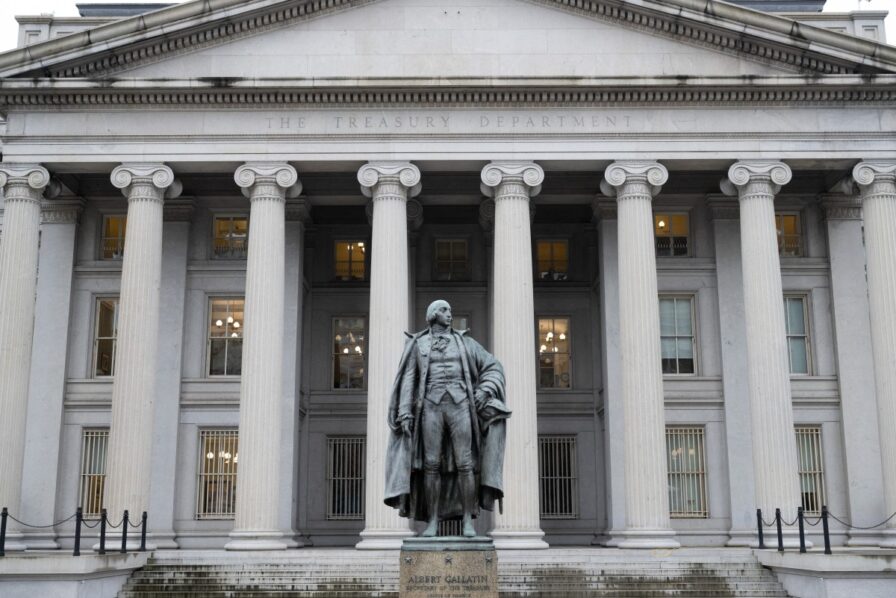
The US Treasury Department recently disclosed a cybersecurity breach, attributing it to a China state-sponsored Advanced Persistent Threat (APT) actor. This revelation immediately ignited a diplomatic tussle between the United States and China, with the latter vehemently denying any involvement and accusing the US of spreading baseless accusations for political gain. The incident underscores the growing concern over state-sponsored cyberattacks and the escalating tensions in cyberspace between global powers.
The breach, which occurred earlier in July 2024, involved unauthorized access to certain Treasury workstations. The attack vector was a compromised third-party cybersecurity service provider, BeyondTrust, which allowed the threat actor remote access to Treasury systems. While the Treasury Department has not disclosed specifics regarding the extent of the breach or the information accessed, they have confirmed that the compromised service has been taken offline and that there is no evidence of continued access. A supplemental report promising more detailed information is expected in the future. The incident has been referred to law enforcement agencies, who are working with the Treasury and the Cybersecurity and Infrastructure Security Agency (CISA) to assess the full impact of the breach.
China’s response to the accusation was swift and categorical. Foreign ministry spokeswoman Mao Ning reiterated China’s longstanding position against all forms of hacker attacks, asserting that the accusations were groundless and lacked evidence. She further accused the United States of using such claims to further a political agenda against China. This exchange of accusations is not an isolated incident, but rather the latest chapter in an ongoing cyber-conflict narrative between the two countries. The US has repeatedly accused China of sponsoring cyber espionage campaigns targeting government agencies, businesses, and critical infrastructure. China, in turn, denies these accusations and accuses the US of engaging in similar activities.
The term “Advanced Persistent Threat” (APT) describes a sophisticated cyberattack characterized by sustained, undetected access to a target network. APT actors, often state-sponsored, typically pursue long-term objectives like espionage, data exfiltration, or sabotage. They employ advanced techniques to infiltrate networks, evade detection, and maintain access for extended periods. Their methods often involve social engineering, malware deployment, and exploitation of software vulnerabilities. The prolonged and stealthy nature of APT attacks makes them particularly challenging to detect and mitigate.
This specific incident involving the US Treasury Department echoes a pattern of alleged Chinese cyber activity targeting US government agencies. In 2023, Microsoft reported that a Chinese-based hacking group, Storm-0558, breached the email accounts of various US government agencies, including those of the State Department and Commerce Secretary Gina Raimondo. This intrusion was aimed at gathering intelligence information. Earlier in 2024, US authorities announced the disruption of “Volt Typhoon,” a hacking group allegedly operating under Chinese government direction, which targeted critical infrastructure, including water treatment plants and transportation systems. These incidents highlight the vulnerability of even highly secure networks to sophisticated state-sponsored cyberattacks.
The escalating tension between the US and China in the cyber domain is a reflection of their broader geopolitical rivalry. Cyberspace has become a new battleground where nations compete for economic and strategic advantage. State-sponsored cyberattacks are increasingly used to gather intelligence, disrupt critical infrastructure, and exert political influence. The lack of clear international norms and regulations governing cyberspace further complicates the situation, creating a grey zone where attribution and accountability are challenging to establish. The attribution of this latest attack to a Chinese state-sponsored actor, regardless of whether definitively proven, will likely further strain US-China relations and fuel the ongoing debate about the need for greater cybersecurity cooperation and the development of international norms to regulate state behavior in cyberspace. The ongoing exchange of accusations surrounding cyberattacks underscores the need for a robust international framework to address these escalating threats and maintain stability in the digital realm. Without such a framework, the risk of miscalculation and escalation in the cyber domain remains significant.








