





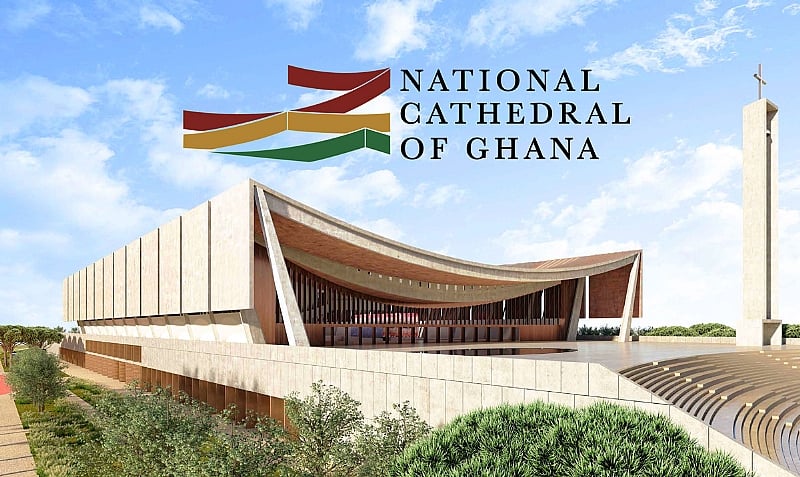
The Commission on Human Rights and Administrative Justice (CHRAJ) has recommended the prosecution of the Board of Trustees of the National Cathedral Project for violating Ghana’s procurement laws. This recommendation comes in the wake of an investigation triggered by a petition from North Tongu Member of Parliament, Samuel Okudzeto Ablakwa, who alleged corruption and mismanagement associated with the handling of the National Cathedral project. The CHRAJ’s investigation highlighted significant irregularities in how the contract was awarded, particularly concerning a deal made with Ribade Company Ltd, which did not adhere to the mandatory provisions outlined in the Public Procurement Act, Act 663, as amended by Act 914.
CHRAJ’s report, released on November 25, disclosed that the agreement with Ribade Company Ltd was deemed void ab initio, meaning it was invalid from the start due to the failure to comply with statutory requirements. The Commission emphasized the fundamental nature of these lapses as acts against the law, recommending immediate intervention by the Public Procurement Authority (PPA). Specifically, CHRAJ urged the PPA Board to exercise its authority under the Procurement Act to annul the contract, reinforcing the necessity for adherence to legal procurement processes in government initiatives.
Furthermore, the report calls for a forensic audit of the National Cathedral Board of Trustees’ actions. This audit aims to investigate potential misconduct and to pave the way for accountability by prosecuting individuals involved in the unlawful awarding of the contract. CHRAJ’s statements underscore the gravity of the situation, indicating that these procurement law violations not only break domestic laws but also pose a threat to Ghana’s reputation on an international stage. The commission warned that such breaches could lead to international embarrassment, particularly due to the involvement of Ribade Company Ltd, which may affect Ghana’s standing in global diplomatic and economic contexts.
The findings and recommendations by CHRAJ are likely to provoke further public discourse on the National Cathedral project, which has increasingly been scrutinized for its lack of transparency and accountability. Issues surrounding the project’s funding, planning, and execution have drawn criticism from various quarters, including civil society organizations and political figures. As a symbol of national unity and faith, the National Cathedral project also raises questions regarding the appropriateness of public investment in religious infrastructure, especially amid pressing socio-economic challenges in Ghana.
In light of the ongoing discussions, the call for accountability and prosecution resonates with a growing demand for ethical governance in the country’s administrative practices. The case serves as a pivotal moment for stakeholders, including government officials, civil society, and the general public, to reassess their roles in fostering transparency and integrity within public service. The allegations of corruption linked to the National Cathedral project not only emphasize the need for rigorous enforcement of procurement laws but also reflect broader themes of governance, ethics, and public trust in state institutions.
As the implications of CHRAJ’s report unfold, the dialogue surrounding the National Cathedral project is expected to deepen, prompting stakeholders to engage in critical reflections on governance practices in Ghana. This situation may galvanize calls for reforms aimed at enhancing oversight mechanisms in public procurement and reducing opportunities for corruption. Ultimately, the outcome of these proceedings could play a significant role in shaping the future of public projects in Ghana, influencing both domestic policy and the country’s international reputation.








