









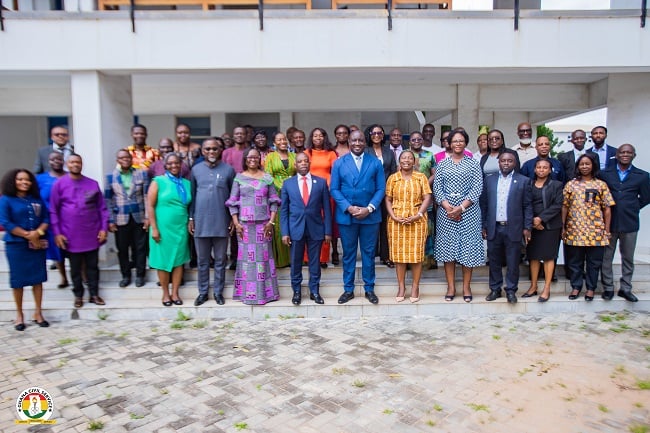
The effectiveness of the Civil Service is fundamental to the success of Ghana’s development agenda and democratic governance, according to Dr. Evans Aggrey Darko, the Head of the Civil Service. During the inauguration of a seven-week training course at the Ghana Institute of Public Administration (GIMPA) aimed at enhancing the capacity of Directors and similar ranks within the Civil Service, Dr. Aggrey-Darkoh emphasized the pivotal roles that these individuals play in shaping policies, delivering essential public services, and promoting national progress. He noted that the Civil Service functions as the permanent administrative apparatus of the government, facilitating the implementation of policies while ensuring that the institutional knowledge remains intact through different political administrations. Thus, it acts as a crucial intermediary between government initiatives and effective execution, thereby ensuring continuity in Ghana’s national development endeavors.
Dr. Aggrey-Darkoh highlighted the importance of lifelong learning, particularly in response to the growing complexity of global affairs that influences both professional responsibilities and individual growth. He stressed that as the world evolves, the need for continuous education becomes increasingly critical to meeting both personal and professional challenges. In this regard, the training program reflects the ongoing commitment of the Civil Service to enhance the capabilities of its workforce. By encouraging participants to engage fully with the course content, Dr. Aggrey-Darkoh underscored the benefits to be gained from the experience and expertise shared by facilitators throughout the training.
The collaboration established between the Civil Service and GIMPA received commendation from Dr. Kwaku Agyeman-Budu, the Dean of the GIMPA Faculty of Law. He expressed gratitude to Dr. Aggrey-Darkoh for strengthening this partnership, which aims to furnish Civil Service personnel with essential knowledge and skills tailored for their leadership roles. Dr. Agyeman-Budu conveyed GIMPA’s dedication to providing cutting-edge education and practical skills that would enable participants to navigate the complex challenges of senior management. This commitment to delivering relevant training underscores the significance of effective leadership, which transcends technical prowess and encompasses emotional intelligence and critical thinking.
As part of the training program, various significant topics will be covered, including Bureaucracy, Political Accountability, Public Procurement Laws, Public Financial Management laws, and Leadership. These subjects are crucial for developing well-rounded leaders who can address the multifaceted demands of contemporary governance. By delving into these areas, participants will not only gain insights into the operational aspects of public administration but also develop the strategic mindset necessary for leadership in a dynamically changing environment.
Furthermore, the emphasis on leadership excellence in the course highlights a growing recognition that the success of the Civil Service relies on its leaders’ ability to adapt and innovate. Mastery of bureaucratic processes, coupled with a strong sense of accountability and governance fundamentals, prepares participants to take on prominent roles within the public sector. By fostering a culture of learning and professional growth, the Civil Service aims to ensure that its Directors are equipped with the tools needed to lead with integrity and vision, thereby reinforcing the foundation of democratic governance in Ghana.
Ultimately, the training organized by GIMPA serves as a vital step toward empowering leaders within the Civil Service to drive significant national development and implement government policies effectively. With ongoing efforts to enhance the skills of its workforce, the Civil Service seeks to fortify its role as an indispensable entity in Ghana’s public sector landscape. This continuous investment in human capital not only benefits the individual professionals involved but also enriches the overall societal landscape, fostering a more efficient and responsive governance structure capable of meeting the challenges of an increasingly complex world.









