





Paragraph 1: The Assertion of Impending Victory
The Nigerian political landscape buzzed with the confident assertion by Daniel Bwala, Special Adviser to President Bola Tinubu on Public Communication and Media, that the ruling All Progressives Congress (APC) and President Tinubu were guaranteed victory in the 2027 presidential election. Bwala, speaking at the APC national secretariat in Abuja, dismissed any possibility of an upset similar to the recent Ghanaian election, where the incumbent party lost. He grounded his optimism in the belief that Nigerians prioritize tangible improvements in their daily lives over political rhetoric or affiliations, and that President Tinubu’s performance would resonate with the electorate, securing their support for a second term.
Paragraph 2: The Basis of Optimism
Bwala’s confidence stemmed from the perceived positive impact of President Tinubu’s governance. He pointed to the administration’s efforts to steer the economy in a positive direction, contrasting the situation with the economic challenges faced by Ghana in the lead-up to its recent election. He argued that Nigerians would recognize and reward Tinubu’s focus on addressing their immediate concerns, such as the cost of living and economic stability. This focus, Bwala contended, would supersede any potential political maneuvering by the opposition and ultimately secure a resounding victory for the incumbent in 2027.
Paragraph 3: Focus on Governance, Not Politics
Bwala emphasized that President Tinubu’s priority was effective governance and fulfilling his promises to the Nigerian people, rather than engaging in premature electioneering. He portrayed the President as dedicated to alleviating hunger, tackling everyday problems, and improving the lives of ordinary citizens. This dedication, he argued, would organically translate into popular support and pave the way for a second term. Bwala strategically downplayed the political aspect, portraying Tinubu as a statesman focused on service rather than a politician angling for re-election.
Paragraph 4: A Dissenting Voice from the Opposition
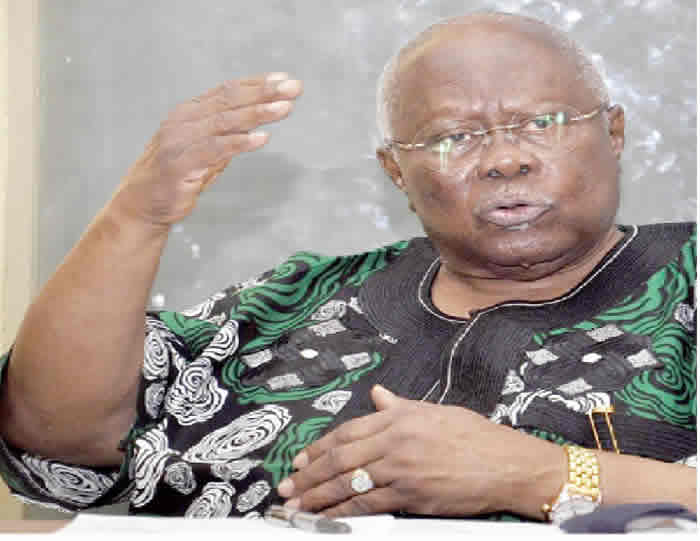
In stark contrast to Bwala’s optimism, Chief Bode George, a prominent figure in the opposition Peoples Democratic Party (PDP), vehemently disagreed with the prediction of a Tinubu victory in 2027. George, addressing journalists in Lagos, criticized Tinubu’s performance, arguing that widespread dissatisfaction among Nigerians due to economic hardships and unfulfilled promises would prevent his re-election. He painted a picture of a nation grappling with anger and hunger, sentiments he believed would translate into a rejection of the incumbent administration.
Paragraph 5: A Challenge and a Proposal
George challenged President Tinubu to demonstrate genuine concern for the plight of Nigerians by drastically reducing the price of petrol. He proposed a temporary price reduction to N300 per litre as a tangible demonstration of goodwill, suggesting that such a move would earn the President the support and prayers of the people. He even invoked the First Lady’s recent charitable donation, implying that similar resources could be directed towards alleviating the fuel price burden on citizens. This challenge served as a public test of Tinubu’s commitment to addressing the economic hardships faced by ordinary Nigerians.
Paragraph 6: Criticism of the Electoral Commission
Beyond his critique of President Tinubu’s performance, George also took aim at the Chairman of the Independent National Electoral Commission (INEC), Professor Mahmood Yakubu. He expressed disappointment in Yakubu’s performance, contrasting it unfavorably with his past reputation. George’s criticism extended to Yakubu’s sharing of lessons learned from the Ghana elections, suggesting it was inappropriate given the perceived flaws in Nigeria’s own electoral processes. This criticism added another layer to the political discourse, raising concerns about the integrity and impartiality of the electoral body itself.








