









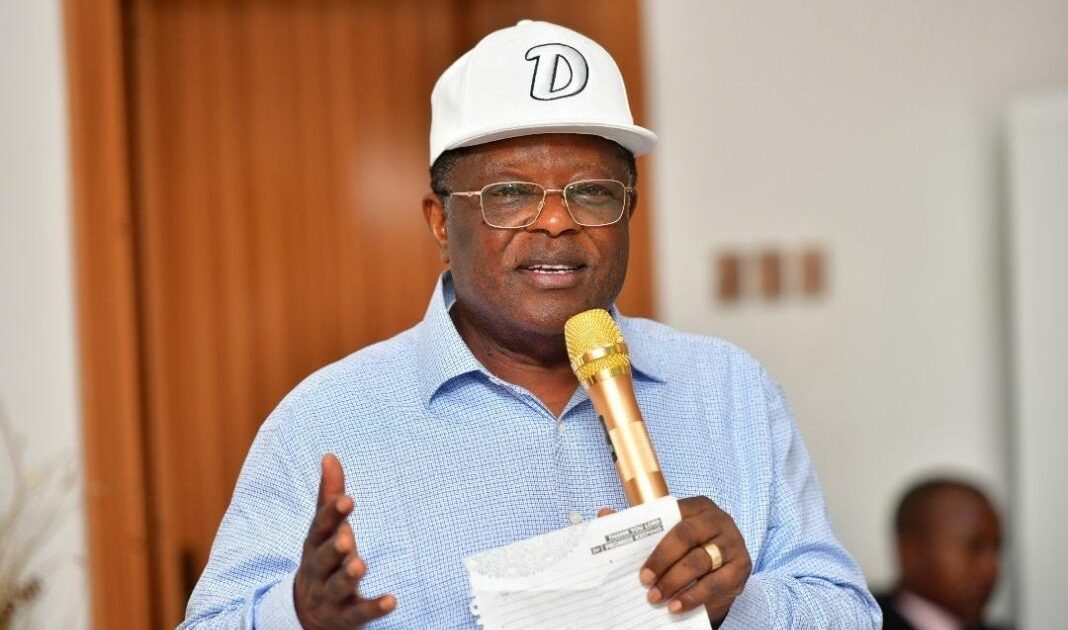
Minister Umahi Provides Update on Sokoto-Badagry Superhighway and Other Key Infrastructure Projects
Minister of Works, David Umahi, has reaffirmed the government’s commitment to the Sokoto-Badagry Superhighway project, a critical infrastructure initiative designed to enhance connectivity and facilitate economic growth across Nigeria. Construction is actively progressing on the initial 120-kilometer stretch within Sokoto State, undertaken by Hitech Construction Company utilizing concrete paving technology. Parallel construction activities are also underway on the 250-kilometer Kebbi State section. The Minister expressed confidence in achieving a significant milestone by May 29, 2025, with the targeted commissioning of approximately 20 kilometers in each of these sections. This ambitious timeline underscores the government’s dedication to expeditious project delivery and its focus on tangible progress.
Beyond the Sokoto-Badagry Superhighway, Minister Umahi highlighted concurrent advancements on the Lagos-Calabar Coastal Highway, another pivotal infrastructure project. He anticipates inaugurating the first 20 kilometers of section one and 10 kilometers of section two by the same target date of May 29, 2025. The minister attributed this momentum to President Bola Tinubu’s unwavering support and strategic allocation of resources, despite competing demands across various critical sectors. He commended the President’s vision for prioritizing legacy projects strategically designed to interconnect key economic corridors and bolster the transportation network across Nigeria’s six geopolitical zones.
A noteworthy aspect of these infrastructure initiatives is the incorporation of integrated rail lines, a forward-thinking approach aimed at maximizing the projects’ long-term impact and promoting multimodal transportation. Minister Umahi revealed that construction of the rail track for the Lagos-Calabar Coastal Highway is slated to commence in 2025, further solidifying the government’s commitment to a comprehensive and interconnected transportation system. This integrated approach promises to revolutionize travel and logistics, fostering seamless movement of goods and people across the country.
The Lagos-Calabar Coastal Highway is also envisioned to incorporate a range of value-added features that extend beyond its primary transportation function. These enhancements include planned tree planting initiatives to mitigate environmental impact and the strategic placement of lay-bys at five-kilometer intervals. These lay-bys will serve as hubs for CCTV camera networks and security personnel, ensuring rapid response times in emergencies and enhancing overall safety along the highway. This focus on security and environmental considerations reflects a holistic approach to infrastructure development, aiming to create a sustainable and secure transportation network.
In contrast to the positive progress reported on the Sokoto-Badagry and Lagos-Calabar projects, Minister Umahi previously expressed concerns regarding the Abuja-Minna federal road. During a site visit in November 2024, he noted a significant discrepancy between the reported 84.5% completion rate and the observable lack of progress on the 125-kilometer Niger State section of the Sokoto-Badagry Superhighway. This highlights the importance of rigorous monitoring and oversight to ensure that projects adhere to established timelines and quality standards.
The government’s commitment to these ambitious infrastructure projects signifies a critical step towards transforming Nigeria’s transportation landscape. These initiatives hold immense potential to stimulate economic growth, create employment opportunities, and enhance connectivity across the nation. The integrated approach, incorporating rail lines and other value-added features, further underscores the long-term vision for a modern and sustainable transportation system. The progress achieved on the Sokoto-Badagry and Lagos-Calabar projects, coupled with the ongoing efforts to address challenges on other routes, reflects the government’s dedication to delivering tangible improvements to Nigeria’s infrastructure network. Continued monitoring, efficient resource allocation, and unwavering commitment to quality will be crucial for the successful completion and long-term impact of these transformative projects.









