Dr. Jamal Tonzua Seidu, an energy, environmental law, and sustainability consultant, has raised constitutional concerns regarding the recent deployment of military personnel by the Ghanaian government to combat illegal mining, popularly known as “galamsey.” During an interview on the Citi Breakfast Show on October 15, he emphasized that while the military has a role in internal security, its primary mandate is to defend against external threats. Dr. Seidu argued that using the military for internal security matters should be secondary and must not lead to the abuse of constitutional provisions. He cited Article 210, Clause 3 of the Ghanaian Constitution, which outlines the military’s defense mandates, warning that the current approach undermines these legal foundations.
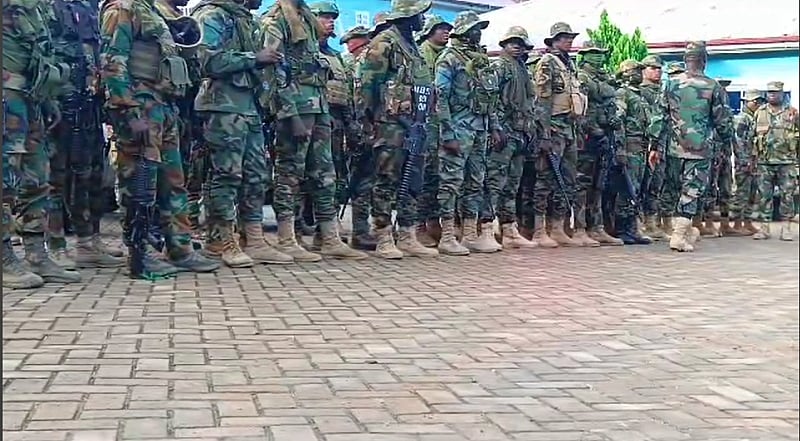
On October 10, the government took a decisive step by deploying over 100 armed military personnel to various water bodies as part of a renewed campaign against illegal mining activities. This move is in response to mounting pressure from more than 50 state and private civil society organizations that have vehemently called for action against the environmental devastation inflicted by galamsey operations. These activities have resulted in significant degradation of Ghana’s natural resources, notably its water bodies, farmlands, and forests, which has serious implications for the country’s ecological balance and the livelihoods of many citizens.
Dr. Seidu also pointed out that there are dissenting voices within the military regarding this deployment. While the military is generally known for its conservative and non-confrontational nature, some personnel are reportedly uncomfortable with being used as a tool for addressing policy issues instead of engaging in constructive dialogue. The consultant suggested that this reflects a broader issue wherein the government resorts to militarizing problems rather than addressing underlying causes effectively. This militarization approach can be seen as a lack of innovative problem-solving and an inclination towards security-based resolutions.
The environmental consultant further shared insights on the broader implications of military involvement in civilian matters, asserting that this not only contradicts constitutional principles but also risks alienating military personnel. The soldiers, according to Dr. Seidu, find themselves in a challenging position, caught between their duties and the unethical context of the operations they are deployed for. The consultant suggested that the ongoing operations are laden with corruption, making it difficult for personnel to emerge unblemished, which undermines military integrity and public trust in the armed forces.
Moreover, Dr. Seidu highlighted the significance of addressing the root causes of illegal mining instead of merely employing military force as a deterrent. He advocates for a more nuanced approach that combines law enforcement with environmental education and community engagement. By understanding the socio-economic drivers behind galamsey, the government could adopt more sustainable solutions that involve local communities in conservation efforts, rather than enforcing top-down military measures that may yield temporary results but fail to address the underlying issues.
In conclusion, the deployment of military personnel to combat illegal mining in Ghana raises critical constitutional and ethical questions. Dr. Seidu’s concerns illustrate the potential risks involved in militarizing civilian issues and emphasize the necessity for the government to pursue comprehensive approaches that prioritize dialogue, accountability, and sustainability. A shift in strategy towards holistic environmental management, coupled with community involvement, could lead to more effective and lasting solutions to the challenges posed by galamsey, fostering both ecological preservation and socioeconomic development in Ghana.