









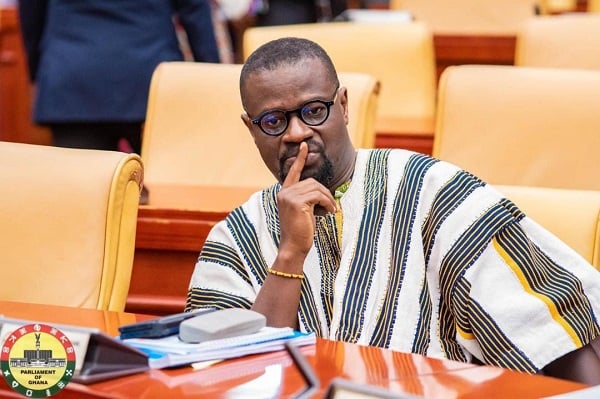
The political landscape of Ghana’s Nsawam-Adoagyiri constituency is currently embroiled in a legal tussle following the December 7, 2024 parliamentary elections. Frank Annoh-Dompreh, the incumbent Member of Parliament and Majority Chief Whip representing the New Patriotic Party (NPP), has vehemently challenged the legal proceedings initiated by his opponent, Amenorpe Philibert Fummey, the National Democratic Congress (NDC) parliamentary candidate. The core of the dispute lies in the procedural approach adopted by Fummey to contest the election results. Annoh-Dompreh contends that Fummey’s reliance on a writ of summons and statement of claim is fundamentally flawed and contradicts the established legal framework governing parliamentary election disputes in Ghana.
Annoh-Dompreh’s legal argument hinges on the specific procedure outlined in Ghanaian law for challenging parliamentary election results. He emphasizes that the only valid legal avenue for contesting such results is through the filing of an election petition. This petition, according to Annoh-Dompreh, can only be submitted after the official declaration and gazetting of the election results. He argues that Fummey’s use of a writ of summons is a “completely misconceived” approach, highlighting a fundamental misunderstanding of the prescribed legal process. This procedural irregularity, in Annoh-Dompreh’s view, invalidates the legal challenge brought forth by Fummey.
In response to what he considers a flawed legal challenge, Annoh-Dompreh has taken proactive legal steps. He has filed a plea with the court requesting the dismissal of Fummey’s writ of summons and statement of claim. He believes that by adhering to incorrect legal procedures, Fummey’s challenge undermines the integrity of the electoral process. Furthermore, Annoh-Dompreh’s legal action seeks clarity and finality in the determination of the Nsawam-Adoagyiri parliamentary election outcome. His plea underscores the importance of adhering to established legal procedures to ensure the credibility and transparency of the electoral system.
Beyond seeking the dismissal of Fummey’s legal challenge, Annoh-Dompreh has requested the court to compel the Electoral Commission (EC) to fulfill its constitutional mandate. He calls for a court order directing the EC to collate and declare the official results of the Nsawam-Adoagyiri Constituency Parliamentary Election. This request emphasizes Annoh-Dompreh’s belief in the EC’s authority as the ultimate arbiter of election results and highlights the importance of upholding its constitutional role. He seeks a court-supervised conclusion to the election process, ensuring transparency and adherence to legal procedures.
Recognizing the potential for tension and unrest surrounding the election dispute, Annoh-Dompreh has also requested the court to direct the Inspector General of Police to provide adequate security at the collation center. He specifically requests the deployment of armed security personnel to ensure the safety and security of EC officials as they carry out their duties. This request demonstrates Annoh-Dompreh’s concern for maintaining order and preventing any disruption to the electoral process. By requesting security presence, he aims to create a secure environment for the EC to complete its work without fear of intimidation or violence.
In summary, the legal battle in the Nsawam-Adoagyiri constituency revolves around a procedural dispute regarding the proper method for challenging parliamentary election results. Annoh-Dompreh, arguing for the strict adherence to established legal procedures, has challenged the validity of Fummey’s legal action. He has requested the court to dismiss Fummey’s case, compel the EC to declare the official results, and provide adequate security for the collation process. This legal dispute highlights the critical importance of adherence to due process in electoral matters and the need for a transparent and secure environment for the execution of electoral duties. The outcome of this legal battle will significantly impact the political landscape of the Nsawam-Adoagyiri constituency and could potentially set a precedent for future election disputes in Ghana.









