









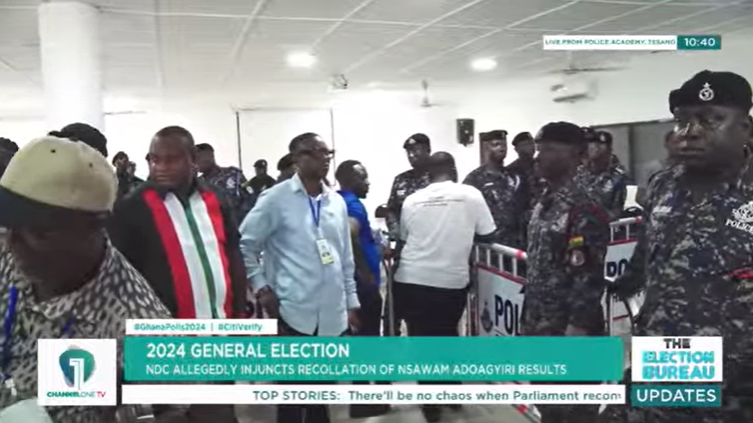
The National Democratic Congress (NDC) has taken legal action to halt the re-collation of parliamentary results for the Nsawam Adoagyiri constituency, escalating the tension surrounding the disputed election outcome. The party secured a court injunction against the Electoral Commission (EC), effectively freezing the ongoing re-collation process, which was initiated to address alleged discrepancies in the initial collation. This legal maneuver underscores the deepening mistrust between the NDC and the ruling New Patriotic Party (NPP), with both sides claiming irregularities and demanding a transparent resolution to the contested results. The Nsawam Adoagyiri constituency is one of four in the Eastern Region – including Suhum, Fanteakwa North, and Akwatia – where the EC ordered a re-collation, highlighting the volatile political landscape in these areas. The court injunction throws the electoral process into further uncertainty, raising questions about the timeline for resolving the disputes and declaring a definitive winner.
The EC’s decision to re-collate the results in these four constituencies stemmed from concerns about the accuracy and integrity of the original collation process. Allegations of inconsistencies, missing documentation, and potential manipulation of figures prompted calls for a more thorough examination of the results. The re-collation exercise, intended to bring clarity and build confidence in the outcome, was initiated at the National Police Training School in Tesano, Accra. However, the process was marred by disagreements and accusations between the NDC and NPP representatives, further fueling the political tension and casting doubt on the re-collation’s effectiveness in resolving the dispute. The NDC’s decision to seek a court injunction highlights the party’s dissatisfaction with the handling of the re-collation and their belief that the process itself was flawed and potentially biased.
The re-collation exercise, scheduled to address the initial discrepancies, instead became a source of further contention. The NDC and NPP representatives clashed over various aspects of the process, including the interpretation of figures on the pink sheets, the official documents used to record results at polling stations. These disagreements prevented a smooth and conclusive re-collation, ultimately leading to the extension of the process into a second day. The ongoing disputes and the lack of consensus between the two main parties underscore the fragile state of the electoral process and the urgent need for a transparent and impartial mechanism to resolve the impasse. The NDC’s subsequent discovery of alleged discrepancies in the EC’s original pink sheets further deepened their suspicion and ultimately contributed to their decision to seek legal intervention.
The alleged discrepancies in the EC’s original pink sheets, discovered by the NDC during the re-collation process, added another layer of complexity to the already contentious situation. These discrepancies, which involved variations in recorded figures between different copies of the pink sheets, raised serious questions about the accuracy and reliability of the initial collation data. The NDC argued that these discrepancies constituted evidence of potential manipulation or errors that could have significantly influenced the outcome of the election in the disputed constituencies. The revelation of these inconsistencies further eroded trust in the EC’s handling of the election and intensified the calls for a more thorough and independent investigation into the matter.
The NDC’s decision to seek a court injunction reflects their growing concern about the transparency and fairness of the electoral process. The party’s representatives argued that the ongoing re-collation, marred by disagreements and alleged discrepancies, was unlikely to produce a credible and acceptable outcome. By seeking a court injunction, the NDC aims to halt the re-collation and potentially initiate a more comprehensive review of the election results in the disputed constituencies. This legal challenge represents a significant escalation of the post-election tensions and highlights the deep divisions within the Ghanaian political landscape.
The court injunction halting the re-collation of parliamentary results in Nsawam Adoagyiri has significant implications for the overall electoral process in Ghana. The injunction introduces further delays in the declaration of final results and adds to the uncertainty surrounding the composition of the parliament. Furthermore, it underscores the importance of addressing the underlying issues of transparency and accountability in the electoral system. The court’s decision will likely necessitate a thorough investigation into the alleged discrepancies and may lead to further legal challenges. The resolution of this dispute is crucial for restoring public confidence in the electoral process and ensuring a peaceful transition of power. The situation in Nsawam Adoagyiri, and the other disputed constituencies, represents a critical test for Ghana’s democracy and its ability to resolve electoral disputes fairly and effectively.









